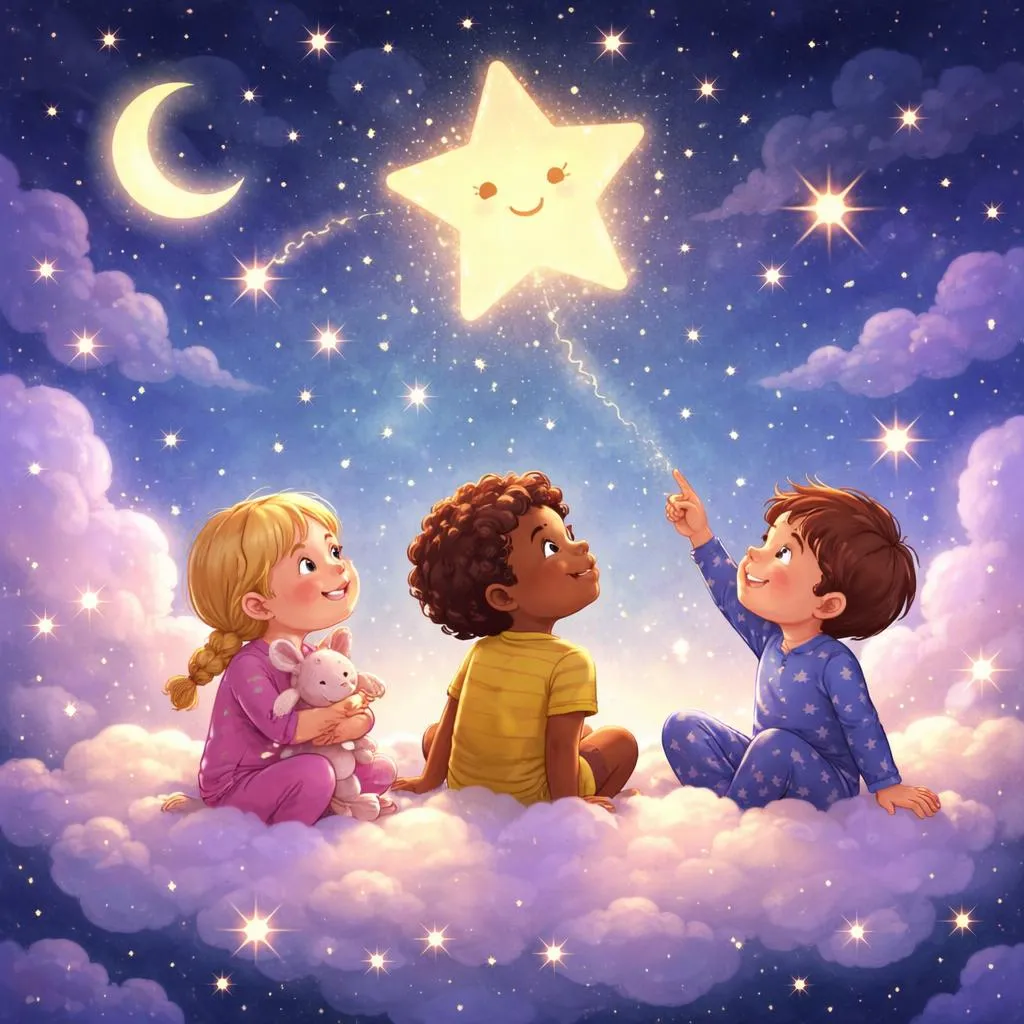

There is a melody that every child seems to know. It is gentle. It is simple. It asks a question about the night sky. The phrase "twinkle twinkle little star song lyrics" brings to mind a quiet evening and a sky full of light. This lullaby has been sung for centuries. It crosses cultures and generations. As teachers, we can use this beloved song to teach poetry, vocabulary, and even a little science about the world above us. Let's explore how to bring this starry song into our classroom.
What is the "Twinkle Twinkle Little Star" Rhyme? This is one of the most famous English lullabies. The lyrics come from a poem written by Jane Taylor in the early 1800s. The poem was called "The Star." Later, it was set to a simple, gentle tune. The tune is the same as "Baa, Baa, Black Sheep" and the "Alphabet Song."
The song is a question and a reflection. The speaker looks up at the night sky. They wonder what the star is. They compare it to a diamond. The phrase "twinkle twinkle little star song lyrics" captures this sense of wonder. It turns a scientific object into something magical and friendly. This combination of curiosity and comfort makes it perfect for young children.
The Lyrics of the Nursery Rhyme Let us look at the most common version of the lyrics.
Twinkle, twinkle, little star, How I wonder what you are! Up above the world so high, Like a diamond in the sky.
Twinkle, twinkle, little star, How I wonder what you are!
When the blazing sun is gone, When he nothing shines upon, Then you show your little light, Twinkle, twinkle, all the night.
Twinkle, twinkle, little star, How I wonder what you are!
The pattern is simple and repetitive. The first verse is the most famous. The phrase "twinkle twinkle little star song lyrics" usually refers to these first few lines that everyone knows by heart.
Vocabulary Learning: Words from the Song This gentle song introduces several useful words.
Twinkle: To shine with a flickering light. Stars seem to blink on and off.
Little: Small in size. The opposite of big or large.
Star: A bright ball of gas in the night sky.
Wonder: To think about something with curiosity. To want to know more.
World: The Earth. Everything around us.
High: Far above the ground.
Diamond: A very hard, shiny, precious stone.
Sky: The space above the Earth where we see clouds, the sun, the moon, and stars.
Blazing: Burning very brightly. The sun is blazing.
Shines: Gives out light.
These words create a beautiful picture. They contrast the bright, blazing sun with the gentle, twinkling star. The opening line "twinkle twinkle little star" introduces the main character of our song.
Phonics Points: Sounds in the Song The song is excellent for phonics practice, especially rhyming.
Rhyming Patterns: The song uses couplets. Two lines that rhyme with each other.
Star and are.
High and sky.
Gone and upon.
Light and night.
We can point out these rhymes. We can ask students to listen for words that sound the same at the end. This builds phonemic awareness.
The "T" Sound: "Twinkle" starts with the /t/ sound. It is a light, quick sound. We practice saying "t-t-twinkle."
The "L" Sound: "Little" has two /l/ sounds. We feel our tongue touch the roof of our mouth. We practice saying "lit-tle."
The "S" Sound: "Star" and "sky" start with the /s/ sound. We feel the air hiss out between our teeth.
The gentle repetition in "twinkle twinkle little star song lyrics" gives us many chances to hear and practice these sounds.
Grammar Patterns: Language in the Song The song contains several useful grammar patterns.
Adjectives: The song uses descriptive words. "Little star," "blazing sun," "little light." We can talk about how adjectives describe nouns. We can find other adjectives to describe a star. "Bright star," "shiny star," "faraway star."
Questions: The line "How I wonder what you are!" is really an exclamation, but it contains a question within it. "What are you?" We can practice asking questions about things we see. "What is that?" "What is in the sky?"
Prepositions: The song uses "up above" and "in the sky." We can practice using these prepositions. "The bird is up above." "The plane is in the sky."
Pronouns: The song calls the sun "he." "When he nothing shines upon." This is personification. It gives human qualities to the sun. For young learners, we simply note that sometimes we talk about the sun as "he" and the moon as "she" in stories and songs.
The simple structure of "twinkle twinkle little star song lyrics" makes it perfect for introducing these grammar concepts.
Learning Activities: Bringing the Song to Life Here are some activities to deepen the learning experience.
Activity 1: Starry Night Art We provide dark blue or black paper. We provide yellow or white paint and cotton swabs. Students dip the swabs in paint and make "twinkling" stars on their paper. They can practice saying "twinkle, twinkle" as they make each star. This connects the song to a creative activity.
Activity 2: Diamond Comparison We talk about the line "like a diamond in the sky." We show students a picture of a diamond. We talk about how diamonds sparkle when light hits them. We compare this to how stars seem to sparkle. This builds observation and comparison skills.
Activity 3: Day and Night Discussion The song talks about the sun being gone and the stars coming out. We discuss the difference between day and night. What do we see in the day sky? What do we see at night? This connects the song to basic science concepts.
Activity 4: Twinkling Movements We play the song. Students move like stars. When the music is soft, they twinkle gently. When the music is louder, they shine brighter. This creative movement activity connects music to physical expression.
Printable Materials: Visuals for the Classroom Printables support the lesson and provide independent practice.
Vocabulary Flashcards: We create cards for key words. Star, diamond, sky, sun, night. Pictures help children remember the meanings.
Sequencing Cards: We create cards showing different parts of the song. A star in the sky. A diamond. The blazing sun. The stars at night. Students put the cards in order as they sing.
Coloring Page: We provide a coloring page showing a night sky with a large, twinkling star. Students can color the scene. They can practice writing the key phrase "twinkle twinkle little star" at the bottom.
Educational Games: Making Learning Playful Games turn the song into an interactive experience.
Game 1: Star Finder We cut out many small paper stars. We hide them around the room. Students become "star finders." When they find a star, they must say the line "Twinkle, twinkle, little star" before placing it in a basket. This combines movement with the song.
Game 2: What Am I? We describe something from the song without naming it. "I am very high in the sky. I come out at night. I twinkle. What am I?" Students guess "a star." This builds listening and inference skills.
Game 3: Rhyming Match We take words from the song. We write them on cards: star, are, high, sky, gone, upon, light, night. Students work in pairs to find the rhyming pairs. This reinforces the rhyming pattern.
Game 4: Twinkle Freeze We play the song. Students dance and twinkle like stars. When the music stops, they freeze in a star shape. This is a fun, energetic way to enjoy the music.
Game 5: Create a New Verse We challenge students to create a new verse for the song. What else might they wonder about? "Twinkle, twinkle, little moon, how I wonder if you'll zoom." This extends creativity and language skills. It builds on the pattern of "twinkle twinkle little star song lyrics" .
By using these strategies, we transform a simple lullaby into a rich learning unit. We explore vocabulary, phonics, grammar, and science. The star in the song becomes a friend. It guides us through language and wonder. It reminds us to look up at the sky and ask questions about the beautiful world above us.