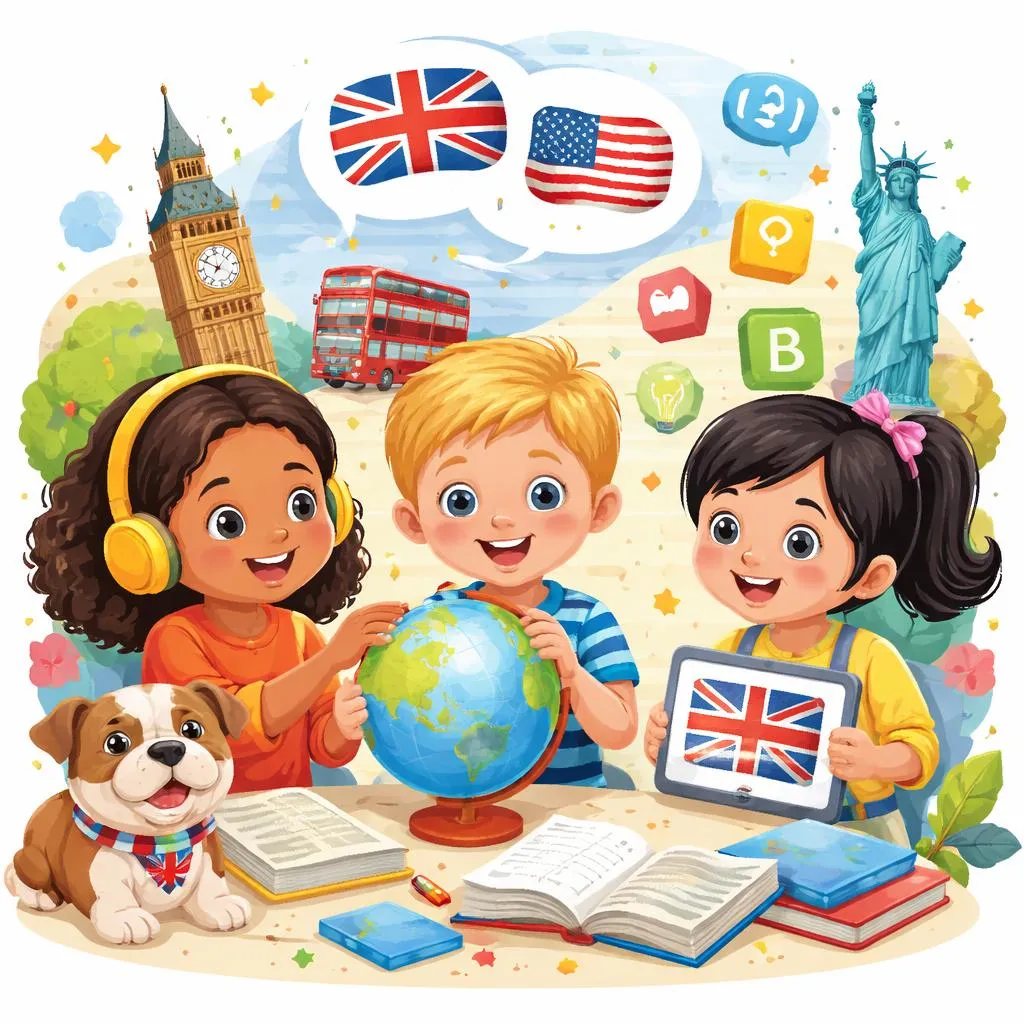

Hello, dedicated teachers and caring parents! Today we explore a wonderful journey. This journey opens doors to the world. It connects young minds with new cultures. It builds skills for a bright future. We are talking about learning English for children. English is a global language. It appears in books, movies, and songs. It helps people communicate across countries. For children, learning English early brings many gifts. It builds confidence. It sharpens the mind. It prepares them for school and life. Let us discover how to make this journey joyful and effective. Let us explore the best ways to help young learners grow.
What Is Learning English for Children? Learning English for children means teaching the language in ways that suit young minds. It is different from adult learning. Children learn best through play, songs, and stories. They absorb language naturally. They do not worry about grammar rules. They focus on communication and fun.
This type of learning focuses on basic skills. Listening comes first. Children hear English words and phrases. They begin to understand meaning from context. Speaking comes next. They try simple words and sentences. Reading and writing develop later. The process feels natural, like learning their first language.
The goal is not perfection. The goal is communication and confidence. Children learn to express themselves. They learn to understand others. They build a foundation for future language growth. This early start gives them a gift that lasts a lifetime.
Meaning and Explanation of Early Language Learning Young children have special abilities for learning languages. Their brains are like sponges. They soak up new sounds and patterns easily. They mimic pronunciation naturally. They do not feel shy about making mistakes.
Language learning at this age happens best in context. Children learn words when they connect to real things. A child learns "apple" by seeing and touching an apple. They learn "jump" by jumping. This physical connection makes words stick.
Social interaction matters greatly. Children learn by talking with others. They learn by playing with friends. They learn by singing with a group. These social experiences make language meaningful. They create positive feelings about using English.
Repetition is also important. Children need to hear words many times. They need to use them in different situations. This repetition builds strong neural pathways. It moves words from short-term to long-term memory.
Categories or Lists of Learning Approaches Many effective approaches exist for teaching English to children. Each has its own strengths.
Play-Based Learning: This approach uses games and play. Children learn while having fun. They might play shop and learn food words. They might play house and learn family words. Play creates a low-stress environment. Children feel safe to try new words.
Story-Based Learning: Stories capture children's imaginations. They introduce vocabulary in a memorable context. Children hear repeated phrases. They see pictures that support meaning. They want to know what happens next. This motivation drives learning.
Song-Based Learning: Music and language connect deeply in the brain. Songs teach rhythm and pronunciation. They repeat vocabulary naturally. Children remember songs for years. They sing them without effort. This makes songs powerful teaching tools.
Total Physical Response: This approach connects words with movement. Children hear a command and do the action. "Stand up." "Sit down." "Touch your nose." The physical response reinforces meaning. It works well for active children.
Project-Based Learning: Children work on a project over time. They might make a book about animals. They might create a poster about their family. This deep work builds vocabulary and skills. It gives children something to be proud of.
Daily Life Examples of Language Learning Learning English happens best when it connects to daily life. Small moments throughout the day become learning opportunities.
Morning routines offer many chances. Getting dressed introduces clothing words. "Put on your blue socks." Eating breakfast introduces food words. "Do you want cereal or toast?" These simple phrases repeat every day. Children learn them naturally.
Playtime provides rich language experiences. Playing with toys introduces names and actions. "The car goes fast." "The doll is sleeping." Playing with friends introduces social language. "My turn." "Can I have the ball?"
Bedtime routines create cozy learning moments. Reading a story together introduces new words. Singing a lullaby soothes and teaches. Talking about the day reviews events and feelings. "What made you happy today?" These conversations build vocabulary and connection.
Outings expand the learning world. A trip to the supermarket introduces food and numbers. A visit to the park introduces nature and action words. Each new place brings new words and experiences.
Printable Flashcards for English Learning Flashcards remain valuable tools for language learning. They provide clear visual support for new words. They can be used in many ways.
Picture-Word Cards: One side shows a picture. The other side shows the word. Children look at the picture and say the word. They can check their answer by looking at the back. This builds vocabulary recognition.
Theme Sets: Create sets around topics. A food set includes apple, banana, bread. An animal set includes cat, dog, elephant. A clothing set includes hat, shoe, coat. These themed sets help children learn related words together.
Action Cards: These cards show people doing actions. A child running, a girl eating, a boy sleeping. Children say what the person is doing. This teaches verb vocabulary in context.
Question Cards: These cards have simple questions. "What is your name?" "How old are you?" "What color is this?" Children practice answering the questions. This builds conversation skills.
Cards can be used for games. Spread them on the floor. Call out a word and have children find it. Play memory match with pairs of cards. Use them for sorting activities. The possibilities are endless.
Learning Activities or Games for English Games make learning English feel like play. Children participate eagerly. They practice without pressure.
Simon Says: This classic game teaches body parts and actions. "Simon says touch your nose." "Simon says jump." Children must only follow commands with "Simon says." This builds listening skills and vocabulary.
I Spy: This game works anywhere. "I spy with my little eye, something blue." Children guess what it is. "Is it the sky?" "Is it a book?" This practices descriptive language and question forms.
Color Hunt: Ask children to find something of a certain color. "Find something red." They run and bring back an object. "I found a red apple." This teaches colors and object names.
Story Dice: Make dice with pictures on each side. Children roll the dice and must include that item in a story. One roll shows a cat. Another shows a house. "The cat lives in the house." This builds creativity and sentence skills.
Bingo: Create bingo cards with pictures or words. Call out the words. Children cover the matching picture. This builds listening and word recognition. The excitement of winning keeps children engaged.
Shopping Game: Set up a pretend shop with toys or food items. Children take turns being shopkeeper and customer. "How much is this?" "I would like an apple, please." This practices real conversation skills.
These activities turn learning into an adventure. Children forget they are studying. They focus on playing and communicating. The language sticks because it connects to positive experiences. Through play, songs, stories, and daily moments, learning English for children becomes a joyful journey. It builds skills for school and life. It opens windows to the world. It gives children a gift they will carry forever.