
What is the rhyme?
Let's begin our journey through time with a song. One of the most joyful ways to learn about the months of the year is through a classic nursery rhyme or chant. This isn't a long story with characters, but a simple, rhythmic list set to music. It turns the twelve names into a catchy sequence that is easy to remember and fun to say aloud.
This musical approach is powerful. It uses rhythm and repetition to make the names stick. Singing feels like play, not work. It builds confidence as learners can quickly recite the months in order. Today, we'll use this friendly chant as our starting point to explore, practice, and master the months of the year together.
The lyrics of the rhyme
The most common version of this chant is clear and direct. The lyrics focus solely on naming the months in their correct order. We often say or sing it like this:
January, February, March, and April, May, June, July, and August, September, October, November, December, These are the months of the year.
Sometimes, you might hear a version that starts with “These are the twelve months of the year, all in a row!” The core list remains the same. We can chant the words first, clapping on each syllable to feel the rhythm. Then, we can add a simple, familiar tune. The goal is to make the list fluid and familiar. Repeating this rhyme is our first step toward mastery.
Vocabulary learning
This rhyme introduces twelve essential vocabulary words. Learning all twelve at once can feel like a big task. Let's break them down into smaller, friendly groups. We can group them by season or simply by chunking the list.
Our first group is the beginning of the year: January, February, March. These names can feel longer and have unique sounds. Our next group is April, May, June. These are often linked with spring and early summer. Then we have the heart of summer: July and August. Finally, we finish the year with September, October, November, December.
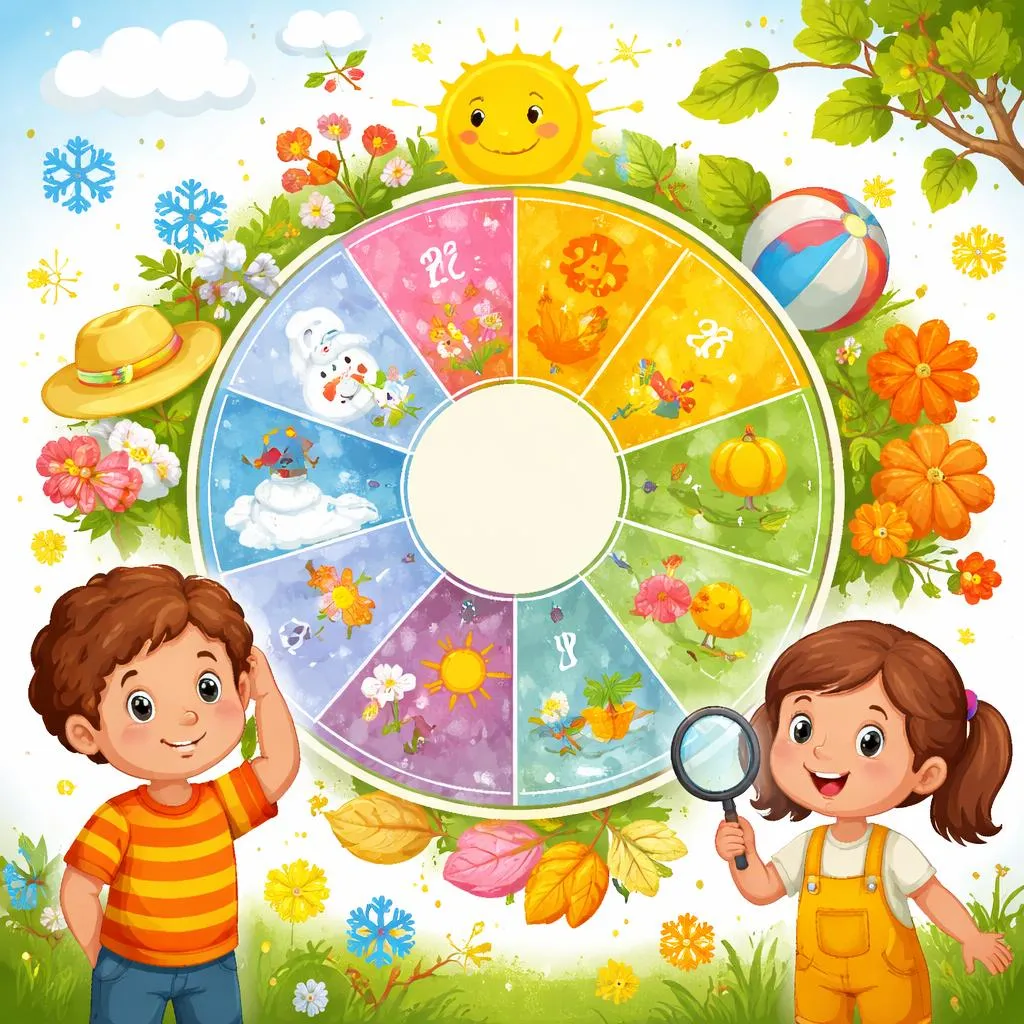
Connecting each month to a simple image, color, or holiday helps. For example, January might be a snowflake, June a bright sun, and October a pumpkin. This creates a mental picture for each word. It transforms abstract names into something we can visualize, making remembering each member of the months of the year much easier.
Phonics points
The names of the months of the year offer wonderful practice for early phonics skills. We can spotlight several common letter sounds and patterns. Notice how many months begin with the capital letter 'J' (January, June, July) or 'M' (March, May). We can emphasize the sound these letters make.
Look at the long vowel sounds within the words. For example, the long 'A' in April, the long 'U' in June, and the long 'I' sound in July. We also see common vowel teams like the 'au' in August which makes the /ɔː/ sound, and the 'er' at the end of September, October, November, December. Pointing out these patterns helps learners decode the words, not just memorize them. Saying the months of the year aloud is great phonics practice.
Grammar patterns
While learning this rhyme, we can gently introduce key grammar concepts. The most important one is that all month names are proper nouns. This means they must always begin with a capital letter. It doesn't matter where they are in a sentence. Compare “My birthday is in june” with “My birthday is in June.” The first is incorrect; the second is correct because ‘June’ is a name.
We can also practice the preposition “in.” We use “in” when talking about something happening during a specific month. We say, “School starts in September,” or “It is cold in January.” Creating simple sentences like this helps learners use the months of the year accurately in context. It moves the words from a simple list to useful language.
Learning activities
Now, let's make this knowledge active with engaging learning activities. A fantastic hands-on game is “Month Line-Up.” Write each month name on a separate card. Mix them all up. The challenge is to put the cards in the correct order on the floor or table. This can be a timed race or a cooperative team effort.
Another creative activity is “My Month Poster.” Assign or let learners choose their favorite month from the months of the year. They create a poster for it. They draw the weather, write the name in big colorful letters, and list holidays or activities for that month. This personalizes the learning and deepens understanding of each month's character.
Printable materials
Printable resources provide excellent visual and tactile support. A “Months of the Year Wheel” is a perfect tool. Create a printable with two circles. The large bottom circle is divided into twelve sections, each labeled with a month. The top, smaller circle has a window. Attach the top circle with a brad so it can spin. Learners can spin to the current month, their birthday month, or different seasons.
Printable “Trace and Write” sheets are also very helpful. These sheets show each month name in a large, dotted font for tracing, with blank lines for independent writing below. This combines spelling practice with fine motor skills. Learners can color a related picture next to each month, reinforcing their vocabulary associations for the months of the year.
Educational games
Games turn practice into pure fun. Let's play “Which Month is Missing?” Lay out all twelve month cards in order. Have learners close their eyes while you remove one card. They open their eyes and must figure out which month from the months of the year has disappeared. This sharpens sequential memory and attention to order.
A more active game is “Month March.” Place month cards in a large circle on the floor to resemble a year-long clock. Play music. Learners walk around the circle. When the music stops, call out a month-related clue like “This month has Halloween!” or “This month is the first month!” Everyone must quickly find and stand on the correct month card. This game connects months to events and reinforces their position in the cycle.
By weaving together song, phonics, grammar, and playful games, learning the months of the year becomes a dynamic and memorable adventure. The key is repetition in varied and enjoyable ways. Soon, naming the months will be as natural and rhythmic as singing their favorite song. Keep the atmosphere light and encouraging, celebrating each step of progress along this year-long path. This knowledge helps build a sense of time, sequence, and the beautiful rhythm of the year itself.