
“Sydney,” said Mr. Stryver, on that self-same night, or morning, to his jackal; “mix another bowl of punch; I have something to say to you.”
Sydney had been working double tides that night, and the night before, and the night before that, and a good many nights in succession, making a grand clearance among Mr. Stryver’s papers before the setting in of the long vacation. The clearance was effected at last; the Stryver arrears were handsomely fetched up; everything was got rid of until November should come with its fogs atmospheric, and fogs legal, and bring grist to the mill again.
Sydney was none the livelier and none the soberer for so much application. It had taken a deal of extra wet-towelling to pull him through the night; a correspondingly extra quantity of wine had preceded the towelling; and he was in a very damaged condition, as he now pulled his turban off and threw it into the basin in which he had steeped it at intervals for the last six hours.
“Are you mixing that other bowl of punch?” said Stryver the portly, with his hands in his waistband, glancing round from the sofa where he lay on his back.
“I am.”
“Now, look here! I am going to tell you something that will rather surprise you, and that perhaps will make you think me not quite as shrewd as you usually do think me. I intend to marry.”
“DO you?”
“Yes. And not for money. What do you say now?”
“I don’t feel disposed to say much. Who is she?”
“Guess.”
“Do I know her?”
“Guess.”
“I am not going to guess, at five o’clock in the morning, with my brains frying and sputtering in my head. if you want me to guess, you must ask me to dinner.”
“Well then, I’ll tell you, said Stryver, coming slowly into a sitting posture. “Sydney, I rather despair of making myself intelligible to you, because you are such an insensible dog.
“And you,” returned Sydney, busy concocting the punch, “are such a sensitive and poetical spirit—”
“Come!” rejoined Stryver, laughing boastfully, “though I don’t prefer any claim to being the soul of Romance (for I hope I know better), still I am a tenderer sort of fellow than YOU.”
“You are a luckier, if you mean that.”
“I don’t mean that. I mean I am a man of more—more—”
“Say gallantry, while you are about it,” suggested Carton.
“Well! I’ll say gallantry. My meaning is that I am a man,” said Stryver, inflating himself at his friend as he made the punch, “who cares more to be agreeable, who takes more pains to be agreeable, who knows better how to be agreeable, in a woman’s society, than you do.”
“Go on,” said Sydney Carton.
“No; but before I go on,” said Stryver, shaking his head in his bullying way, I’ll have this out with you. You’ve been at Doctor Manette’s house as much as I have, or more than I have. Why, I have been ashamed of your moroseness there! Your manners have been of that silent and sullen and hangdog kind, that, upon my life and soul, I have been ashamed of you, Sydney!”
“It should be very beneficial to a man in your practice at the bar, to be ashamed of anything,” returned Sydney; “you ought to be much obliged to me.”
“You shall not get off in that way,” rejoined Stryver, shouldering the rejoinder at him; “no, Sydney, it’s my duty to tell you—and I tell you to your face to do you good—that you are a devilish ill-conditioned fellow in that sort of society. You are a disagreeable fellow.”
Sydney drank a bumper of the punch he had made, and laughed.
“Look at me!” said Stryver, squaring himself; “I have less need to make myself agreeable than you have, being more independent in circumstances. Why do I do it?”
“I never saw you do it yet,” muttered Carton.
“I do it because it’s politic; I do it on principle. And look at me! I get on.”
“You don’t get on with your account of your matrimonial intentions,” answered Carton, with a careless air; “I wish you would keep to that. As to me—will you never understand that I am incorrigible?”
He asked the question with some appearance of scorn.
“You have no business to be incorrigible,” was his friend’s answer, delivered in no very soothing tone.
“I have no business to be, at all, that I know of,” said Sydney Carton. “Who is the lady?”
“Now, don’t let my announcement of the name make you uncomfortable, Sydney,” said Mr. Stryver, preparing him with ostentatious friendliness for the disclosure he was about to make, “because I know you don’t mean half you say; and if you meant it all, it would be of no importance. I make this little preface, because you once mentioned the young lady to me in slighting terms.”
“I did?”
“Certainly; and in these chambers.”
Sydney Carton looked at his punch and looked at his complacent friend; drank his punch and looked at his complacent friend.
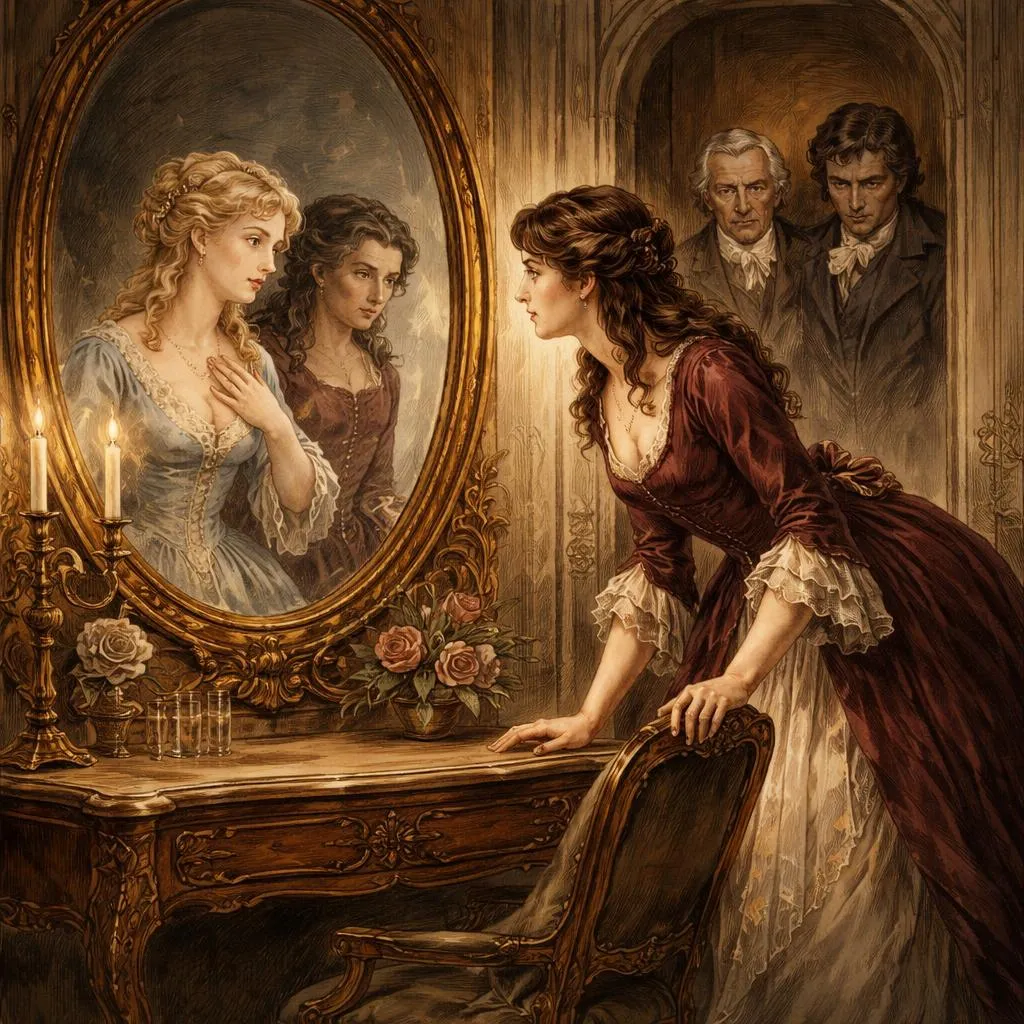
“You made mention of the young lady as a golden-haired doll. The young lady is Miss Manette. If you had been a fellow of any sensitiveness or delicacy of feeling in that kind of way, Sydney, I might have been a little resentful of your employing such a designation; but you are not. You want that sense altogether; therefore I am no more annoyed when I think of the expression, than I should be annoyed by a man’s opinion of a picture of mine, who had no eye for pictures: or of a piece of music of mine, who had no ear for music.”
Sydney Carton drank the punch at a great rate; drank it by bumpers, looking at his friend.
“Now you know all about it, Syd,” said Mr. Stryver. “I don’t care about fortune: she is a charming creature, and I have made up my mind to please myself: on the whole, I think I can afford to please myself. She will have in me a man already pretty well off, and a rapidly rising man, and a man of some distinction: it is a piece of good fortune for her, but she is worthy of good fortune. Are you astonished?”
Carton, still drinking the punch, rejoined, “Why should I be astonished?”
“You approve?”
Carton, still drinking the punch, rejoined, “Why should I not approve?”
“Well!” said his friend Stryver, “you take it more easily than I fancied you would, and are less mercenary on my behalf than I thought you would be; though, to be sure, you know well enough by this time that your ancient chum is a man of a pretty strong will. Yes, Sydney, I have had enough of this style of life, with no other as a change from it; I feel that it is a pleasant thing for a man to have a home when he feels inclined to go to it (when he doesn’t, he can stay away), and I feel that Miss Manette will tell well in any station, and will always do me credit. So I have made up my mind. And now, Sydney, old boy, I want to say a word to YOU about YOUR prospects. You are in a bad way, you know; you really are in a bad way. You don’t know the value of money, you Eve hard, you’ll knock up one of these days, and be ill and poor; you really ought to think about a nurse.”
The prosperous patronage with which he said it, made him look twice as big as he was, and four times as offensive.
“Now, let me recommend you,” pursued Stryver, “to look it in the face. I have looked it in the face, in my different way; look it in the face, you, in your different way. Marry. Provide somebody to take care of you. Never mind your having no enjoyment of women’s society, nor understanding of it, nor tact for it. Find out somebody. Find out some respectable woman with a little property—somebody in the landlady way, or lodging-letting way—and marry her, against a rainy day. That’s the kind of thing for YOU. Now think of it, Sydney.”
“I’ll think of it,” said Sydney.
背景和作者介绍
这段文字出自《双城记》,这是19世纪最伟大的英国小说家之一查尔斯·狄更斯所著的著名小说。这部小说于1859年出版,背景设定在法国大革命的动荡时期。狄更斯以其生动的人物刻画和深刻的社会评论而闻名,他经常着重描写穷人的挣扎和社会的种种不公。
故事对比了伦敦和巴黎的生活,探讨了牺牲、复活和救赎的可能性等主题。小说中的人物在政治混乱中面临道德困境和个人转变。
对这段文字的详细解读
在这个场景中,自信且略带自夸的律师斯特赖弗先生向他的朋友兼同事悉尼·卡顿透露,他打算娶曼内特小姐。悉尼性格复杂,有些自嘲,他对此的反应是既有讽刺又有冷漠。
对话揭示了关键的人物特征:斯特赖弗的野心以及通过婚姻获得社会地位的愿望,以及卡顿的愤世嫉俗和情感上的疏离。提到曼内特小姐与整个故事相关联,因为她是核心人物,她的命运深深地影响着主角们。
斯特赖弗给卡顿关于婚姻的建议很实际,但也居高临下,反映了当时的社会态度。卡顿的反应显示了他内心的冲突,并预示着他在小说后来的英勇行为。
给学生的教训和启示
-
理解人物的复杂性: 这段文字帮助学生认识到,人们往往是复杂的,既有优点也有缺点。悉尼·卡顿的幽默、悲伤和洞察力的结合使他成为一个令人难忘的人物,并在整个故事中不断成长。
-
社会责任和个人责任: 斯特赖弗关注婚姻作为安全和社会地位的手段,反映了社会压力。学生可以学会批判性地思考社会期望如何影响个人选择。
-
友谊和诚实: 尽管斯特赖弗和卡顿有所不同,但他们分享了一种坦诚的关系。这表明了朋友之间诚实沟通的价值,即使意见不同。
-
自我反思: 卡顿的讽刺言论以及最终愿意“考虑一下”表明了自我意识和接受改变的重要性。
将这些教训应用于生活和学习
-
在学校: 学生可以学会深入分析人物,理解动机和冲突,从而提高批判性思维和同理心。
-
在社交场合: 认识到人们有不同的个性和挣扎,可以帮助学生在友谊中培养耐心和善良。
-
在个人成长中: 像悉尼·卡顿一样,学生可能会面临怀疑或愤世嫉俗的时刻。反思他们的态度并对新观点持开放态度可以带来个人的进步。
-
在决策中: 了解社会影响,正如斯特赖弗的务实方法所显示的那样,可以帮助学生对自己的未来做出明智的选择,平衡个人愿望和实际考虑。
从故事中培养积极的品质
-
同理心: 通过用卡顿和曼内特等人物的视角看世界,学生可以更深入地理解他人的感受。
-
勇气和牺牲: 整部小说讲述了勇敢和舍己为人的故事,激励学生以正直的行为处事。
-
韧性: 人物面临困境,但仍继续努力争取更好的生活,鼓励学生在挑战中坚持不懈。
结论
《双城记》的这篇节选为学生提供了丰富的素材,让他们探索人性、社会动态和道德选择。通过参与这个故事,年轻的读者可以获得帮助他们以更大的智慧和同情心驾驭自己生活的见解。