
The weather was bad during the latter days of the voyage. The wind, obstinately remaining in the north–west, blew a gale, and retarded the steamer. The Rangoon rolled heavily and the passengers became impatient of the long, monstrous waves which the wind raised before their path. A sort of tempest arose on the 3rd of November, the squall knocking the vessel about with fury, and the waves running high. The Rangoon reefed all her sails, and even the rigging proved too much, whistling and shaking amid the squall. The steamer was forced to proceed slowly, and the captain estimated that she would reach Hong Kong twenty hours behind time, and more if the storm lasted.
Phileas Fogg gazed at the tempestuous sea, which seemed to be struggling especially to delay him, with his habitual tranquillity. He never changed countenance for an instant, though a delay of twenty hours, by making him too late for the Yokohama boat, would almost inevitably cause the loss of the wager. But this man of nerve manifested neither impatience nor annoyance; it seemed as if the storm were a part of his programme, and had been foreseen. Aouda was amazed to find him as calm as he had been from the first time she saw him.
Fix did not look at the state of things in the same light. The storm greatly pleased him. His satisfaction would have been complete had the Rangoon been forced to retreat before the violence of wind and waves. Each delay filled him with hope, for it became more and more probable that Fogg would be obliged to remain some days at Hong Kong; and now the heavens themselves became his allies, with the gusts and squalls. It mattered not that they made him sea–sick—he made no account of this inconvenience; and, whilst his body was writhing under their effects, his spirit bounded with hopeful exultation.
Passepartout was enraged beyond expression by the unpropitious weather. Everything had gone so well till now! Earth and sea had seemed to be at his master's service; steamers and railways obeyed him; wind and steam united to speed his journey. Had the hour of adversity come? Passepartout was as much excited as if the twenty thousand pounds were to come from his own pocket. The storm exasperated him, the gale made him furious, and he longed to lash the obstinate sea into obedience. Poor fellow! Fix carefully concealed from him his own satisfaction, for, had he betrayed it, Passepartout could scarcely have restrained himself from personal violence.
Passepartout remained on deck as long as the tempest lasted, being unable to remain quiet below, and taking it into his head to aid the progress of the ship by lending a hand with the crew. He overwhelmed the captain, officers, and sailors, who could not help laughing at his impatience, with all sorts of questions. He wanted to know exactly how long the storm was going to last; whereupon he was referred to the barometer, which seemed to have no intention of rising. Passepartout shook it, but with no perceptible effect; for neither shaking nor maledictions could prevail upon it to change its mind.
On the 4th, however, the sea became more calm, and the storm lessened its violence; the wind veered southward, and was once more favourable. Passepartout cleared up with the weather. Some of the sails were unfurled, and the Rangoon resumed its most rapid speed. The time lost could not, however, be regained. Land was not signalled until five o'clock on the morning of the 6th; the steamer was due on the 5th. Phileas Fogg was twenty–four hours behind–hand, and the Yokohama steamer would, of course, be missed.
The pilot went on board at six, and took his place on the bridge, to guide the Rangoon through the channels to the port of Hong Kong. Passepartout longed to ask him if the steamer had left for Yokohama; but he dared not, for he wished to preserve the spark of hope, which still remained till the last moment. He had confided his anxiety to Fix who—the sly rascal!—tried to console him by saying that Mr. Fogg would be in time if he took the next boat; but this only put Passepartout in a passion.
Mr. Fogg, bolder than his servant, did not hesitate to approach the pilot, and tranquilly ask him if he knew when a steamer would leave Hong Kong for Yokohama.
"At high tide to–morrow morning," answered the pilot.
"Ah!" said Mr. Fogg, without betraying any astonishment.
Passepartout, who heard what passed, would willingly have embraced the pilot, while Fix would have been glad to twist his neck.
"What is the steamer's name?" asked Mr. Fogg.
"The Carnatic."
"Ought she not to have gone yesterday?"
"Yes, sir; but they had to repair one of her boilers, and so her departure was postponed till to–morrow."
"Thank you," returned Mr. Fogg, descending mathematically to the saloon.
Passepartout clasped the pilot's hand and shook it heartily in his delight, exclaiming, "Pilot, you are the best of good fellows!"
The pilot probably does not know to this day why his responses won him this enthusiastic greeting. He remounted the bridge, and guided the steamer through the flotilla of junks, tankas, and fishing boats which crowd the harbour of Hong Kong.
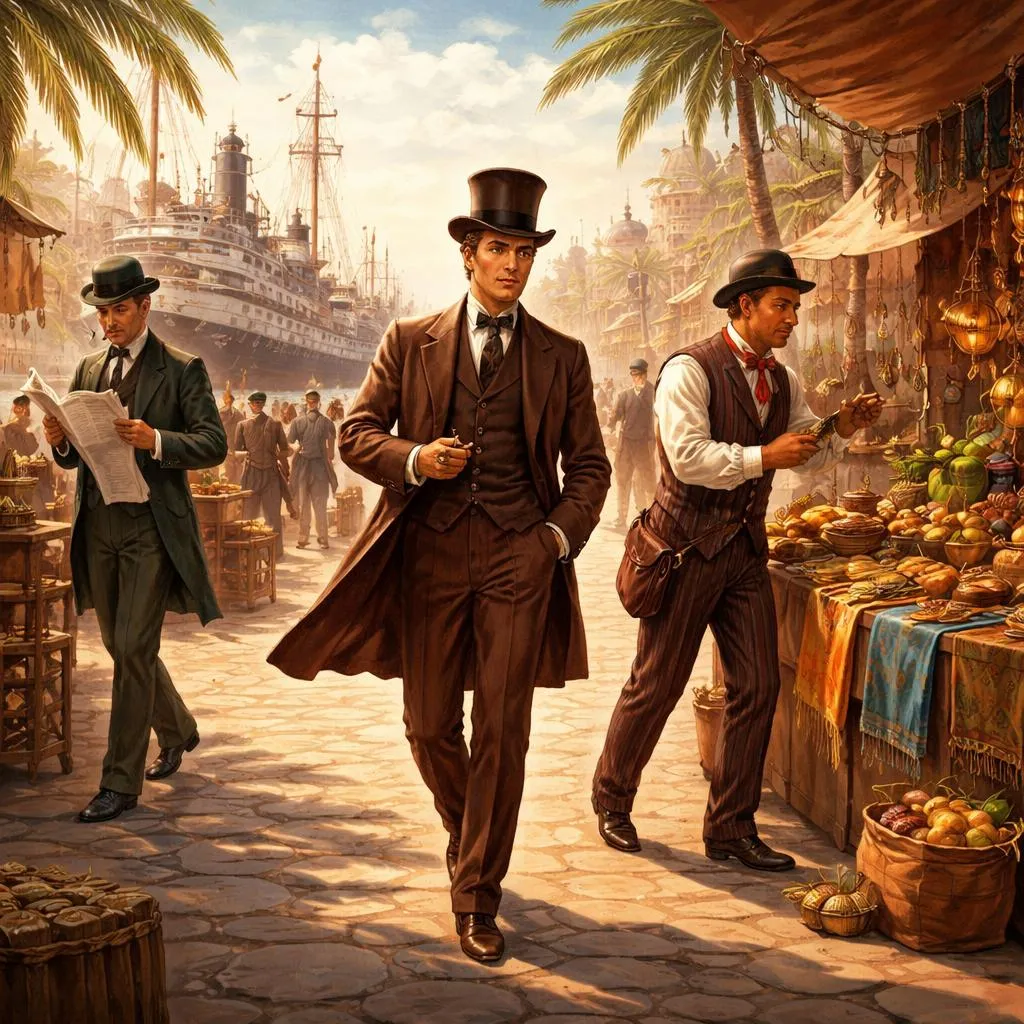
At one o'clock the Rangoon was at the quay, and the passengers were going ashore.
Chance had strangely favoured Phileas Fogg, for had not the Carnatic been forced to lie over for repairing her boilers, she would have left on the 6th of November, and the passengers for Japan would have been obliged to await for a week the sailing of the next steamer. Mr. Fogg was, it is true, twenty–four hours behind his time; but this could not seriously imperil the remainder of his tour.
The steamer which crossed the Pacific from Yokohama to San Francisco made a direct connection with that from Hong Kong, and it could not sail until the latter reached Yokohama; and if Mr. Fogg was twenty–four hours late on reaching Yokohama, this time would no doubt be easily regained in the voyage of twenty–two days across the Pacific. He found himself, then, about twenty–four hours behind–hand, thirty–five days after leaving London.
The Carnatic was announced to leave Hong Kong at five the next morning. Mr. Fogg had sixteen hours in which to attend to his business there, which was to deposit Aouda safely with her wealthy relative.
On landing, he conducted her to a palanquin, in which they repaired to the Club Hotel. A room was engaged for the young woman, and Mr. Fogg, after seeing that she wanted for nothing, set out in search of her cousin Jeejeeh. He instructed Passepartout to remain at the hotel until his return, that Aouda might not be left entirely alone.
Mr. Fogg repaired to the Exchange, where, he did not doubt, every one would know so wealthy and considerable a personage as the Parsee merchant. Meeting a broker, he made the inquiry, to learn that Jeejeeh had left China two years before, and, retiring from business with an immense fortune, had taken up his residence in Europe—in Holland the broker thought, with the merchants of which country he had principally traded. Phileas Fogg returned to the hotel, begged a moment's conversation with Aouda, and without more ado, apprised her that Jeejeeh was no longer at Hong Kong, but probably in Holland.
Aouda at first said nothing. She passed her hand across her forehead, and reflected a few moments. Then, in her sweet, soft voice, she said: "What ought I to do, Mr. Fogg?"
"It is very simple," responded the gentleman. "Go on to Europe."
"But I cannot intrude—"
"You do not intrude, nor do you in the least embarrass my project. Passepartout!"
"Monsieur."
"Go to the Carnatic, and engage three cabins."
Passepartout, delighted that the young woman, who was very gracious to him, was going to continue the journey with them, went off at a brisk gait to obey his master's order.
背景介绍和作者简介
这段文字选自法国作家儒勒·凡尔纳的经典冒险小说《八十天环游地球》。这部小说于1873年出版,讲述了精确而冷静的英国绅士福克先生打赌能在八十天内环游地球的故事。凡尔纳常被称为“科幻小说之父”,因为他富有想象力的叙事和对科技与地理的详细描述。他的作品激励了世界各地的无数读者和冒险家。
故事的详细解读和意义
在这段节选中,福克先生和他的同伴们在“仰光”号汽船上遭遇了猛烈的风暴,这威胁到他们的旅程。尽管天气恶劣,并且有错过下一班汽船的风险,福克先生仍然保持镇定和自信。他冷静的态度与他人的焦虑和沮丧形成了鲜明对比,尤其是他忠诚的仆人路路通和正在追捕他的侦探费克斯。风暴象征着生活中不可预测的挑战,而福克先生的坚定决心突出了耐心、理性思考和毅力的重要性。
这个故事也揭示了命运和机遇的主题。尽管行程延误,但福克先生的运气发生了转变,因为下一班汽船的出发由于维修而被推迟,这给了他继续旅程的第二次机会。这种转折表明,如果一个人保持希望和适应性,挫折有时会导致意想不到的机会。
给学生的教训和启示
-
逆境中的冷静: 福克先生的坚定冷静教会学生在困难时期保持镇定的价值。无论是面对考试、冲突还是个人挑战,保持清晰的头脑都有助于做出更好的决定。
-
毅力和决心: 尽管遭遇风暴和延误,福克先生并没有放弃。这种坚持对于实现长期目标至关重要。学生们可以学会即使事情没有按计划进行,也要稳步努力。
-
适应性和解决问题: 面对意想不到的障碍时,福克先生会迅速调整他的计划。这种灵活性是生活中一项至关重要的技能,鼓励学生创造性地思考并找到解决方案,而不是停滞不前。
-
团队合作和支持: 路路通渴望帮助和福克先生对奥达的关怀表明了在共同旅程中支持他人的重要性。学会有效地合作和沟通对于学校项目和社会关系至关重要。
-
希望和乐观: 费克斯的秘密希望和路路通最终的解脱提醒我们,保持希望可以在艰难时期提供力量。鼓励积极的 outlook 有助于学生勇敢地面对不确定性。
在日常生活中应用这些教训
-
在学校: 在准备考试或项目时,学生可以练习保持冷静和专注,即使出现意想不到的困难。提前计划并准备好适应有助于管理压力。
-
在社交场合: 就像福克先生对奥达和他的仆人的尊重一样,学生们应该对朋友和同学表现出友善和耐心,营造一个支持性的环境。
-
在个人成长中: 培养毅力意味着设定目标并稳步努力实现它们,理解挫折是过程的一部分。
从故事中培养积极的特质
-
自制力: 像福克先生一样,在面对压力时练习正念或深呼吸以保持冷静。
-
好奇心和学习: 就像福克先生从飞行员和其他人那里收集信息一样,学生们应该提问并寻求知识,以便做出明智的决定。
-
责任感: 路路通对主人的使命的奉献表明了认真对待责任的重要性,学生们可以在学习和承诺中效仿。
结论
儒勒·凡尔纳的《八十天环游地球》不仅仅是一场激动人心的冒险;它还是关于勇气、耐心和希望的丰富的生活教训的来源。通过探索福克先生和他的同伴们所面临的挑战,学生们可以获得宝贵的见解,从而充满信心和优雅地处理他们自己的旅程——无论是在学校、友谊还是未来的抱负中。