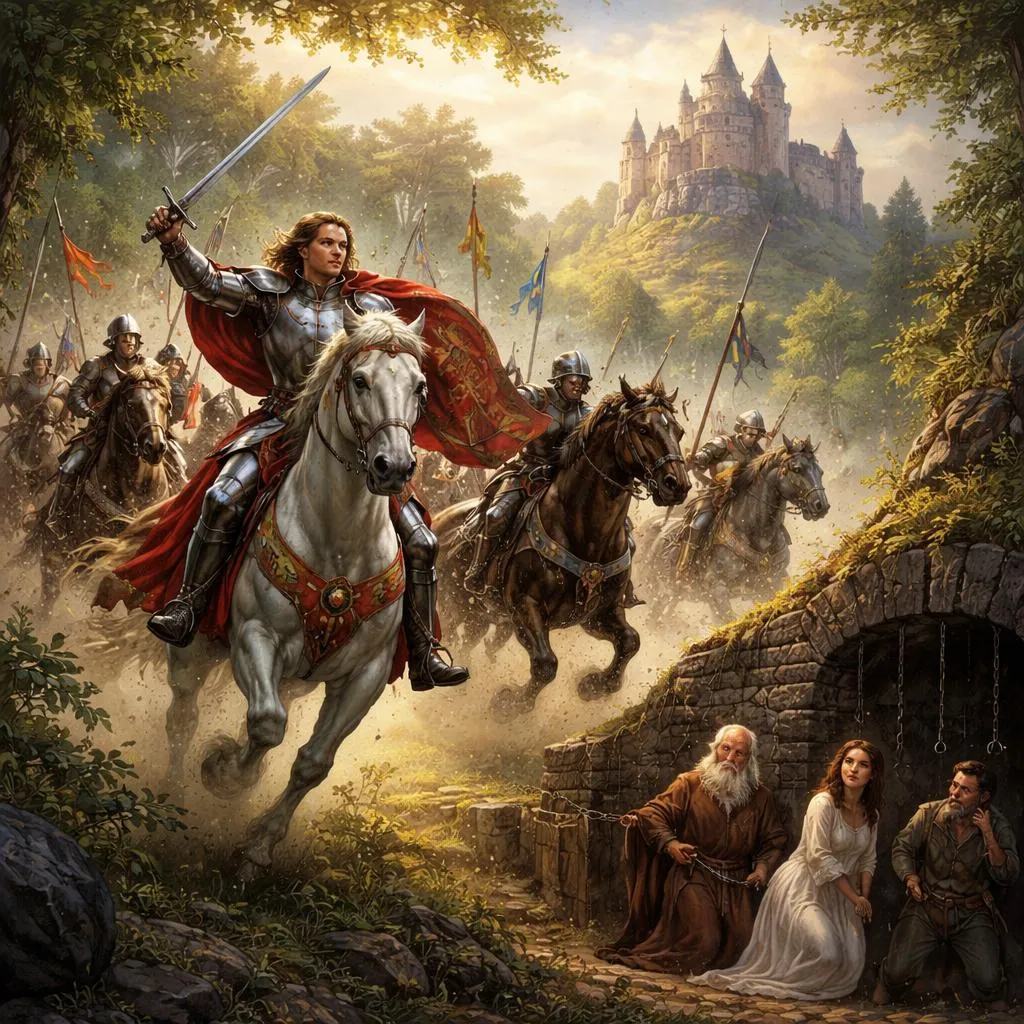

Nearing four in the afternoon. The scene was just outside the walls of London. A cool, comfortable, superb day, with a brilliant sun; the kind of day to make one want to live, not die. The multitude was prodigious and far-reaching; and yet we fifteen poor devils hadn’t a friend in it. There was something painful in that thought, look at it how you might. There we sat, on our tall scaffold, the butt of the hate and mockery of all those enemies. We were being made a holiday spectacle. They had built a sort of grand stand for the nobility and gentry, and these were there in full force, with their ladies. We recognized a good many of them.
The crowd got a brief and unexpected dash of diversion out of the king. The moment we were freed of our bonds he sprang up, in his fantastic rags, with face bruised out of all recognition, and proclaimed himself Arthur, King of Britain, and denounced the awful penalties of treason upon every soul there present if hair of his sacred head were touched. It startled and surprised him to hear them break into a vast roar of laughter. It wounded his dignity, and he locked himself up in silence. Then, although the crowd begged him to go on, and tried to provoke him to it by catcalls, jeers, and shouts of:
“Let him speak! The king! The king! his humble subjects hunger and thirst for words of wisdom out of the mouth of their master his Serene and Sacred Raggedness!”
But it went for nothing. He put on all his majesty and sat under this rain of contempt and insult unmoved. He certainly was great in his way. Absently, I had taken off my white bandage and wound it about my right arm. When the crowd noticed this, they began upon me. They said:
“Doubtless this sailor-man is his minister—observe his costly badge of office!”
I let them go on until they got tired, and then I said:
“Yes, I am his minister, The Boss; and to-morrow you will hear that from Camelot which—”
I got no further. They drowned me out with joyous derision. But presently there was silence; for the sheriffs of London, in their official robes, with their subordinates, began to make a stir which indicated that business was about to begin. In the hush which followed, our crime was recited, the death warrant read, then everybody uncovered while a priest uttered a prayer.
Then a slave was blindfolded; the hangman unslung his rope. There lay the smooth road below us, we upon one side of it, the banked multitude wailing its other side—a good clear road, and kept free by the police—how good it would be to see my five hundred horsemen come tearing down it! But no, it was out of the possibilities. I followed its receding thread out into the distance—not a horseman on it, or sign of one.
There was a jerk, and the slave hung dangling; dangling and hideously squirming, for his limbs were not tied.
A second rope was unslung, in a moment another slave was dangling.
In a minute a third slave was struggling in the air. It was dreadful. I turned away my head a moment, and when I turned back I missed the king! They were blindfolding him! I was paralyzed; I couldn’t move, I was choking, my tongue was petrified. They finished blindfolding him, they led him under the rope. I couldn’t shake off that clinging impotence. But when I saw them put the noose around his neck, then everything let go in me and I made a spring to the rescue—and as I made it I shot one more glance abroad—by George! here they came, a-tilting!—five hundred mailed and belted knights on bicycles!
The grandest sight that ever was seen. Lord, how the plumes streamed, how the sun flamed and flashed from the endless procession of webby wheels!
I waved my right arm as Launcelot swept in—he recognized my rag —I tore away noose and bandage, and shouted:
“On your knees, every rascal of you, and salute the king! Who fails shall sup in hell to-night!”
I always use that high style when I’m climaxing an effect. Well, it was noble to see Launcelot and the boys swarm up onto that scaffold and heave sheriffs and such overboard. And it was fine to see that astonished multitude go down on their knees and beg their lives of the king they had just been deriding and insulting. And as he stood apart there, receiving this homage in rags, I thought to myself, well, really there is something peculiarly grand about the gait and bearing of a king, after all.
I was immensely satisfied. Take the whole situation all around, it was one of the gaudiest effects I ever instigated.
And presently up comes Clarence, his own self! and winks, and says, very modernly:
“Good deal of a surprise, wasn’t it? I knew you’d like it. I’ve had the boys practicing this long time, privately; and just hungry for a chance to show off.”
背景介绍和作者介绍
这段生动的段落是对亚瑟王和他的骑士的传奇故事的创造性重述,背景设定在一个戏剧性和舞台化的环境中。这个故事借鉴了亚瑟王传说的丰富传统,这些传说已经被讲述和重述了几个世纪。这些传说起源于中世纪的英国,并被无数的作家、诗人、剧作家改编。这个特定叙事的作者使用了一种现代的、略带幽默的语气,为这个经典故事注入了新的活力,将历史意象与一丝讽刺和惊喜融为一体。
详细解读和意义
这一幕捕捉了一个充满紧张和壮观的时刻:被定罪的国王和他的同伴被一群充满敌意的观众嘲笑,然而国王的尊严和他骑士的忠诚最终扭转了局面。骑士们骑着自行车出现,这是一个幽默和时代错乱的转折,象征着希望、勇敢,以及正义战胜残忍和不公正。这个故事探讨了忠诚、勇气、逆境中的尊严和领导力的力量等主题。
国王拒绝被人群的嘲笑击垮,突出了内在力量和自尊的重要性。骑士们的戏剧性救援展示了为正义而战的价值,即使胜算渺茫。这个故事也触及了真正的贵族精神并非来自外表或社会地位,而是来自行动和品格的观点。
给学生的教训和见解
-
勇气和韧性: 国王和他的追随者面临羞辱和危险,但没有放弃。学生们可以学习到在他们的信仰和价值观上站稳脚跟的重要性,即使其他人嘲笑或反对他们。
-
忠诚和友谊: 骑士们对国王的忠诚教会了我们支持朋友和在困难时期团结一致的价值。
-
领导力和尊严: 国王平静而庄严的风度,尽管他衣衫褴褛,伤痕累累,表明真正的领导力在于品格,而不仅仅是权力或外表。
-
正义和公平: 故事的高潮,骑士们从不公正的处决中救出国王,鼓励学生们思考公平以及捍卫正义的勇气。
在日常生活中应用这些教训
-
在学校: 学生们可以通过在面对挑战时永不放弃来锻炼韧性,例如困难的科目或社会压力。他们也可以通过支持同学和反对欺凌来表现忠诚。
-
在友谊中: 像骑士一样,学生们应该成为可靠和支持的朋友,互相帮助度过难关。
-
在领导力方面: 无论是在小组项目中还是在俱乐部中,学生们都可以学会以尊严和公平的方式领导,并通过他们的榜样激励他人。
-
在社交场合: 以小的方式捍卫正义和公平,有助于创建一个更友善和更受尊重的社区。
从故事中培养积极的品质
-
建立内在力量: 培养自信和冷静,尤其是在面对批评或挫折时。
-
培养忠诚: 重视和培养友谊,表现出友善和支持。
-
拥抱勇气: 勇敢地迎接挑战,并对不公正发声。
-
实践领导力: 以身作则,以尊重和正直的方式领导。
反思和欣赏
这个故事邀请读者反思真正高贵和勇敢的含义。它挑战我们超越外表,重视勇气、忠诚和正义。通过参与这样的故事,学生们可以培养同情心、道德意识和对人类品格更深入的理解。这些品质不仅在文学方面,而且在生活的各个领域都将对他们有所帮助。
总而言之,这个对亚瑟王时刻的富有想象力的重述不仅仅是一个有趣的故事。对于年轻读者来说,它是一个丰富的灵感和指导来源,鼓励他们培养美德,这将帮助他们成长为有思想、勇敢和富有同情心的人。