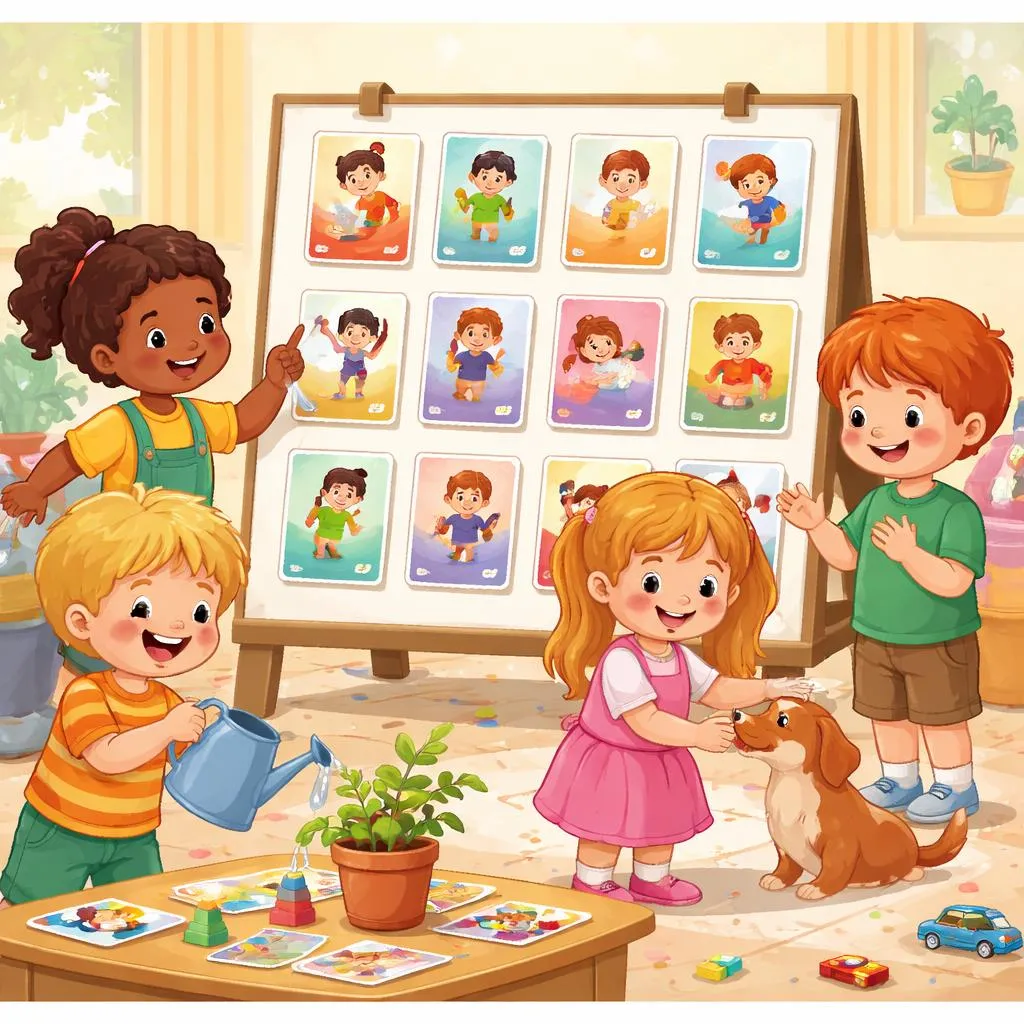

Children at age four are building sentences. They put words together to share ideas. Every complete sentence has two parts. One part is the subject. The other part is the predicate. The predicate tells what the subject does or is. It gives action and life to words. Teaching your child common predicates helps them create full sentences. This article shares the 50 most common predicates for 4-year-olds. These will help your child speak in complete thoughts.
What Is a Predicate for a Four-Year-Old? A predicate is the action part of a sentence. It tells what someone or something does. In "The dog runs," the word "runs" is the predicate. In "Mommy is cooking," the words "is cooking" are the predicate. Predicates can be one word or several words. They always include a verb. Four-year-olds use predicates naturally. They say "ball rolls" and "daddy eats." The words "rolls" and "eats" are predicates. Learning predicates helps children build longer sentences.
Meaning and Explanation of Common Predicates Predicates give sentences their meaning. Without a predicate, we do not know what happens. The subject just sits there. The predicate adds action or description. "The cat" tells us nothing. "The cat sleeps" tells us everything. For young children, predicates are often action words. They talk about what they do, see, and feel. As they grow, predicates become more complex. They learn to describe and explain.
Categories of Common Predicates for Preschoolers We group these predicates into categories. This helps children understand different kinds of actions. Here are the main groups:
Action Predicates: These show movement or activity. Examples include "runs fast" and "jumps high."
Feeling Predicates: These express emotions. Like "feels happy" or "looks sad."
Being Predicates: These describe a state. Such as "is tired" or "are hungry."
Having Predicates: These show possession. For instance "has a toy" or "want milk."
Saying Predicates: These involve speech. Like "says hello" or "asks why."
Location Predicates: These tell where something is. Such as "stays here" or "goes there."
Daily Life Examples of These Predicates Predicates appear in everything children say. When they play, they use action predicates. "I jump." "You run." When they feel, they use feeling predicates. "I am happy." "She looks sleepy." When they want something, they use having predicates. "I want cookie." "He has ball." Parents can point out predicates in daily talk. "You just said 'runs fast.' That is a predicate." This builds awareness.
Action Predicates Children Use runs fast
jumps high
kicks ball
draws picture
builds tower
throws far
catches it
climbs up
slides down
swings high
Feeling Predicates for Emotions feels happy
looks sad
seems tired
gets scared
feels sick
looks funny
seems nice
feels better
looks pretty
seems big
Being Predicates for Describing is good
are nice
am tired
is hot
are cold
is soft
are loud
is quiet
am ready
is broken
Having Predicates for Wants and Needs want milk
need help
have toy
has book
want play
need sleep
have fun
has food
want hug
need bath
Saying Predicates for Talking says hi
asks why
tells story
shouts loud
whispers soft
sings song
calls mom
reads book
talks much
answers me
Printable Flashcards for These Predicates Flashcards help children see and say predicates. Create cards with one predicate on each. Use bright colors. On one side, write the predicate. On the other side, draw a simple action. For "runs fast," draw a running child. For "feels happy," draw a smiling face. Show the card and say the predicate. Have your child repeat. You can also play acting games. Your child acts out the predicate on the card.
Another idea is to make predicate posters. Choose a predicate of the day. Write it on a big paper. Use it throughout the day. "Today our predicate is 'jumps high.' Let's jump high!" This makes the word part of your day.
Learning Activities with These Predicates Activities bring predicates to life. Try these at home:
Predicate Hunt: Watch your child play. Name the predicates you see. "You are running. Running is a predicate." Your child starts to notice actions.
Action Following: Give simple commands using predicates. "Jump high." "Run fast." Your child does the action. Then they give you commands.
Feelings Check: Throughout the day, ask about feelings. "How do you feel?" Your child answers with a feeling predicate. "I feel happy."
Story Acting: Read a simple story. Act out the predicates. "The bear sleeps." You pretend to sleep. Your child joins in.
Mirror Game: Stand facing your child. Do an action. Say the predicate. "I jump." Your child copies and says "I jump too."
Learning Activities for Specific Predicate Types For action predicates, play "Simon Says." Use only action predicates. "Simon says run fast." "Simon says jump high." This builds listening and doing. For feeling predicates, make a feelings book. Draw faces for different feelings. Write the predicate under each. "Feels happy." "Looks sad." Read it together. For having predicates, play "I Want" game. Take turns saying what you want. "I want milk." "I want play." This practices real communication.
Educational Games Using These Predicates Games make learning predicates fun and natural. Here are some favorites:
Predicate Bingo: Make bingo cards with predicates. Call out a predicate. Your child covers it if they have it. First to cover a line wins.
Charades with Predicates: Act out a predicate without words. For "jumps high," jump. Your child guesses the predicate. Then switch roles.
Matching Game: Make pairs of predicate cards. On some cards, write the predicate. On others, draw the action. Your child matches them.
Predicate Race: Call out a predicate type. "Find an action predicate!" Your child runs to find one on the wall or in a book.
Puppet Show: Use puppets. Have them do actions. Your child says the predicate for each action. "The puppet jumps." This builds observation and language.
Game Ideas for Different Settings In the car, play "What Do You See?" Look at things outside. Make predicates about them. "The dog runs." "The bird flies." Your child joins in. At the park, play "Follow the Leader." Do actions and say the predicates. "I swing high." Your child copies and says it too. At mealtime, play "Eating Verbs." Name what you do with food. "I chew." "I swallow." "I taste." These are all predicates.
How to Teach Predicates Naturally You are the best model for your child. Use rich predicates in your speech. Instead of just "Look," say "Look at the bird flying." The predicate is "is flying." Instead of "Eat," say "Eat your yummy food." The predicate is "eat your food." Your child hears complete ideas.
Narrate your day. "I am cooking dinner." "I am washing dishes." "I am reading a book." Each sentence has a predicate. Your child absorbs these patterns. Soon they will narrate their own day.
Why Predicates Matter for Four-Year-Olds Predicates turn words into sentences. Without predicates, children cannot express complete thoughts. They might say "ball" instead of "I want ball." The predicate "want" makes the meaning clear. Predicates also add detail. "The dog runs" is simple. "The dog runs fast in the park" is richer. Learning predicates helps children add these details.
Predicates also support reading comprehension. When children read, they look for what happens. They look for the predicate. Understanding predicates helps them follow stories. They know who did what. This builds strong reading skills.
Tips for Parents to Support Predicate Learning Talk in full sentences. When your child says a word, expand it. If they say "daddy," you say "Daddy is working." This adds the predicate. If they say "cookie," you say "You want a cookie." This models complete thoughts.
Play with verbs. Verbs are the heart of predicates. Name actions as they happen. "You are jumping." "You are eating." "You are sleeping." This builds a verb vocabulary. The more verbs your child knows, the more predicates they can form.
Use books with action. Look for books with lots of doing words. Point to the pictures and name the actions. "The bear is sleeping." "The bird is flying." Ask your child to find actions. "What is the dog doing?" They answer with a predicate.
The Power of Repetition with Predicates Children learn predicates through hearing them often. Use the same predicates in different situations. Talk about "running" at the park, in the house, and in stories. Each repetition builds understanding. Sing songs with action words. "If you are happy and you know it, clap your hands." The predicate is "clap your hands." Songs make repetition joyful.
Create routines around predicates. At breakfast, talk about eating predicates. "I eat cereal." "I drink milk." At bath time, talk about washing predicates. "I wash my hands." "I splash water." These routines build natural practice.
Connecting Predicates to Books and Media Choose books with clear action pictures. Point to the pictures and name the predicates. "The cat sleeps." "The boy runs." After several readings, pause and let your child supply the predicate. "The cat..." Your child says "sleeps." This builds participation.
Educational videos can also help. Look for shows that emphasize actions. Watch together and name the predicates. "The character is jumping." But remember, real interaction with you is most valuable. You can pause and talk about what you see.
Making a Predicate-Rich Environment Label actions around your home. On the door, put a sign that says "opens and closes." On the chair, put "sit here." On the bed, put "sleep here." Read these with your child. They start to connect words with actions.
Play music with action words. Many children's songs are full of predicates. "The wheels on the bus go round and round." The predicate is "go round and round." Sing along and emphasize the predicates.
Encouraging Your Child to Use Predicates Ask questions that need predicate answers. Instead of "Do you like the park?" ask "What do you do at the park?" Your child answers with predicates. "I swing." "I slide." This invites full ideas.
When your child speaks, listen for predicates. Praise them when they use one. "You said 'I want milk'! That is a great sentence!" This positive feedback encourages more.
Celebrating Progress with Predicates Keep a list of new predicates your child uses. Write them down. Read the list together. "Look at all the action words you know!" Celebrate when they learn a new one. This builds pride in language.
Remember that every child develops at their own pace. Some use many predicates early. Others need more time with single words. Both are normal. Your support and encouragement make the difference.
By teaching your child these 50 most common predicates, you give them the power to create sentences. They can tell you what they do, feel, and want. They can share their world completely. Enjoy each new predicate together. Every "jumps high" and "feels happy" is a step forward in language.