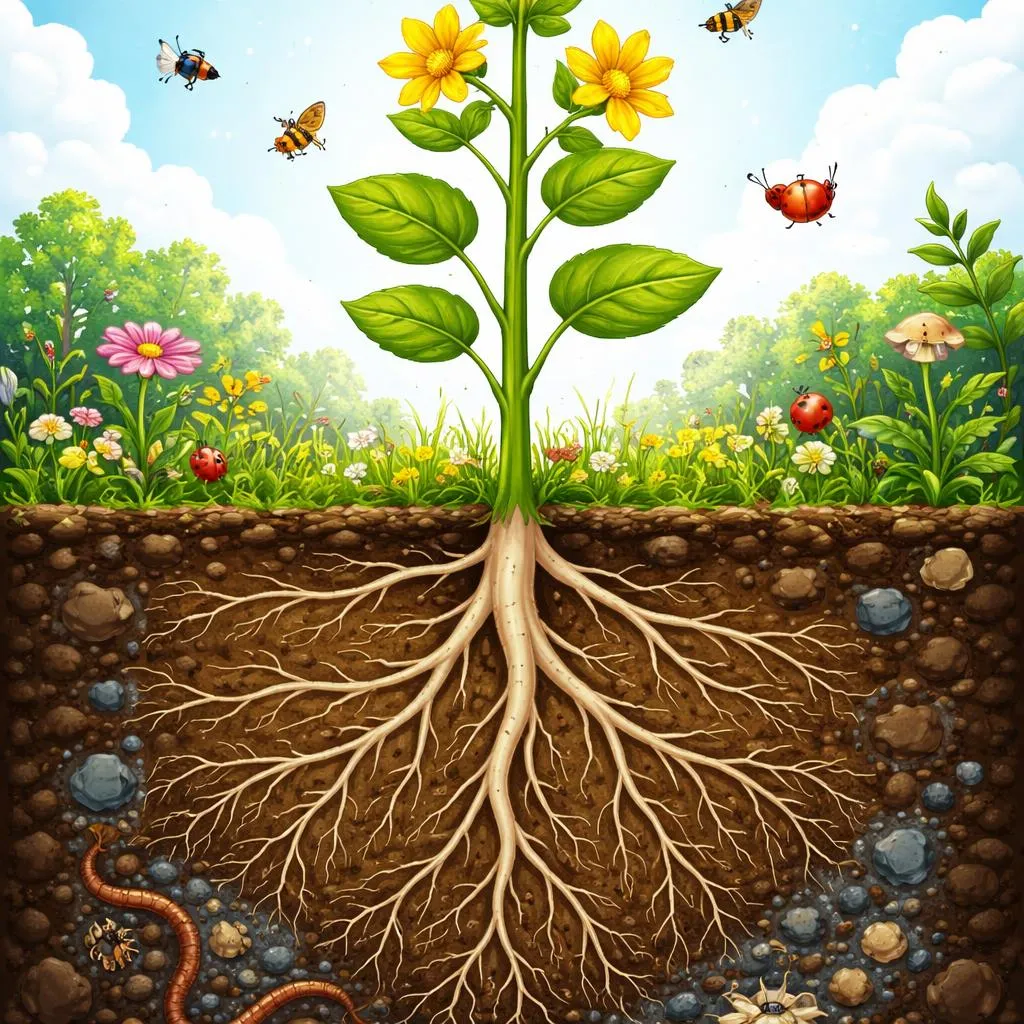

Hello, plant explorer! You look at a plant in the soil. The root is hidden under the dirt. The stem grows up into the air. Both are plant parts. But are they the same thing? They are two different plant heroes. One is the hidden, hungry hero. One is the tall, strong pillar. Let's discover their secret! Today, we explore the word pair "root" and "stem". Knowing the difference makes you a word expert. Let's begin.
First, let's be Language Listeners. Listen at home. Here are two sentences. "The plant's root drinks water from the soil." "The flower has a green, thin stem." Both talk about plant parts. One drinks water. One is green and thin. Do they sound the same? One is hidden and drinks. One is visible and holds. Can you sense the difference? Great listening! Now, let's dig deeper.
Adventure! Into the World of Plant Heroes
Welcome to understanding plant parts. A "root" and a "stem" are both plant parts. But their job is different. Think of a "root" as the hidden, hungry hero. It is usually under the ground. It holds the plant. It drinks water and food. Think of a "stem" as the tall, strong pillar. It grows above the ground. It holds up the plant. It carries water and food. Both are important. But one is the "hidden hero". One is the "strong pillar". Let's learn about each one.
A Hidden Hero vs. A Strong Pillar Think about the word "root". A "root" is the part under the soil. It is the plant's anchor. The root keeps the plant steady. Now, think about "stem". A "stem" is the part above the soil. It is the plant's main support. A flower grows on a stem. The carrot is a big root. The stem of the tree is its trunk. "Root" is the hidden hero. "Stem" is the strong pillar.
Anchor vs. Highway Let's compare their main jobs. A "root" anchors the plant. It also eats and drinks. The root holds the plant tight. A "stem" is the plant's highway. It carries water up. It carries food down. The stem holds the leaves high. One is the anchor and mouth. One is the support and highway.
Their Special Word Partners and Common Uses Words have best friends. "Root" often partners with words about being hidden and stable. Deep root. Root system. Root vegetable. Take root. "Stem" often partners with words about support and growth. Flower stem. Stem cell. Main stem. From the stem. Note: The "root" is for underground work. The "stem" is for above-ground support. You can see a stem. You usually cannot see a root.
Let's visit a school scene. In science, we saw a plant's root in a clear cup. This shows the hidden part that drinks. In art, we used a strong stem to hold our paper flower. The word "root" fits the hidden, drinking part in science. The word "stem" fits the visible, supporting part in art. One is for study. One is for building.
Now, let's go to the playground. The dandelion has a long taproot. This describes the deep, anchoring part under the weed. We used a hollow stem as a whistle. The word "root" fits the hidden part of the weed. The word "stem" fits the hollow, above-ground part we can use. One is hidden. One is useful.
Our Little Discovery So, what did we find? A "root" and a "stem" are both vital plant parts. But a "root" is usually under the ground. It anchors the plant. It takes in water. A "stem" is usually above the ground. It supports the plant. It carries water and food. The root is the anchor. The stem is the pillar. A plant needs both its root and its stem. "Root" is the hidden, hungry hero. "Stem" is the tall, strong pillar.
Challenge! Become a Word Champion
Ready for a nature test? Let's try your new skills!
"The Best Choice" Challenge Let's imagine a natural scene. The rabbit nibbled on a carrot, which is a root. This describes the part that is a vegetable growing underground. The grasshopper climbed up the tall, green stem of the grass. The word "root" is the champion for the edible, underground plant part. The word "stem" is the best choice for the above-ground, supporting part it climbed. One is an underground food store. One is an above-ground ladder.
"My Sentence Show" Your turn to create! Here is your scene: Looking at a young plant. Can you make two sentences? Use "root" in one. Use "stem" in one. Try it! Here is an example: "The plant's root grows deep into the pot." This describes the hidden, anchoring part. "The plant's stem is straight and green." This describes the visible, supporting part. Your sentences will show the hidden work versus the visible structure!
"Eagle Eyes" Search Look at this sentence. Can you find the word that could be better? Let's check a home context. "Be careful not to break the plant's root when you move it; the leaves are attached there." Hmm. Leaves are attached to the stem, not the root. The part that holds leaves is the stem. A better sentence is: "Be careful not to break the plant's stem when you move it; the leaves are attached there." Using "stem" correctly describes the above-ground part that holds leaves. "Root" is the underground part. Did you spot it? Super thinking!
Harvest and Action! Turn Knowledge Into Your Superpower
Great exploring! We started thinking "root" and "stem" were just plant parts. Now we know they are different heroes. A "root" is the hidden hero underground. It anchors and feeds the plant. A "stem" is the strong pillar above ground. It supports and transports. You can now talk about plant parts with perfect clarity.
What you can learn from this article: You can now see that a "root" is usually the underground part of a plant. Its main jobs are to anchor the plant and drink water from the soil. You can now understand that a "stem" is usually the above-ground part. Its main jobs are to hold the plant up and carry water and food. You know that a carrot is a root. A celery stick is a stem. You learned to match the word to the hero: "root" for the hidden, hungry anchor; "stem" for the tall, strong support pillar.
Life practice application: Try your new skill today! Be a plant doctor. Look at any plant. Can you see the part above the soil that holds up leaves or flowers? That is the stem. Can you think about the part hidden in the soil that holds it steady? That is the root. Remember, root is for underground anchoring, stem is for above-ground support. Use "root" when you talk about the hidden, anchoring part. Use "stem" when you talk about the visible, supporting part. You can even use these words for people! A friend can be your "root" of support. A problem can "stem" from a mistake. You will describe plants and ideas like a real scientist!