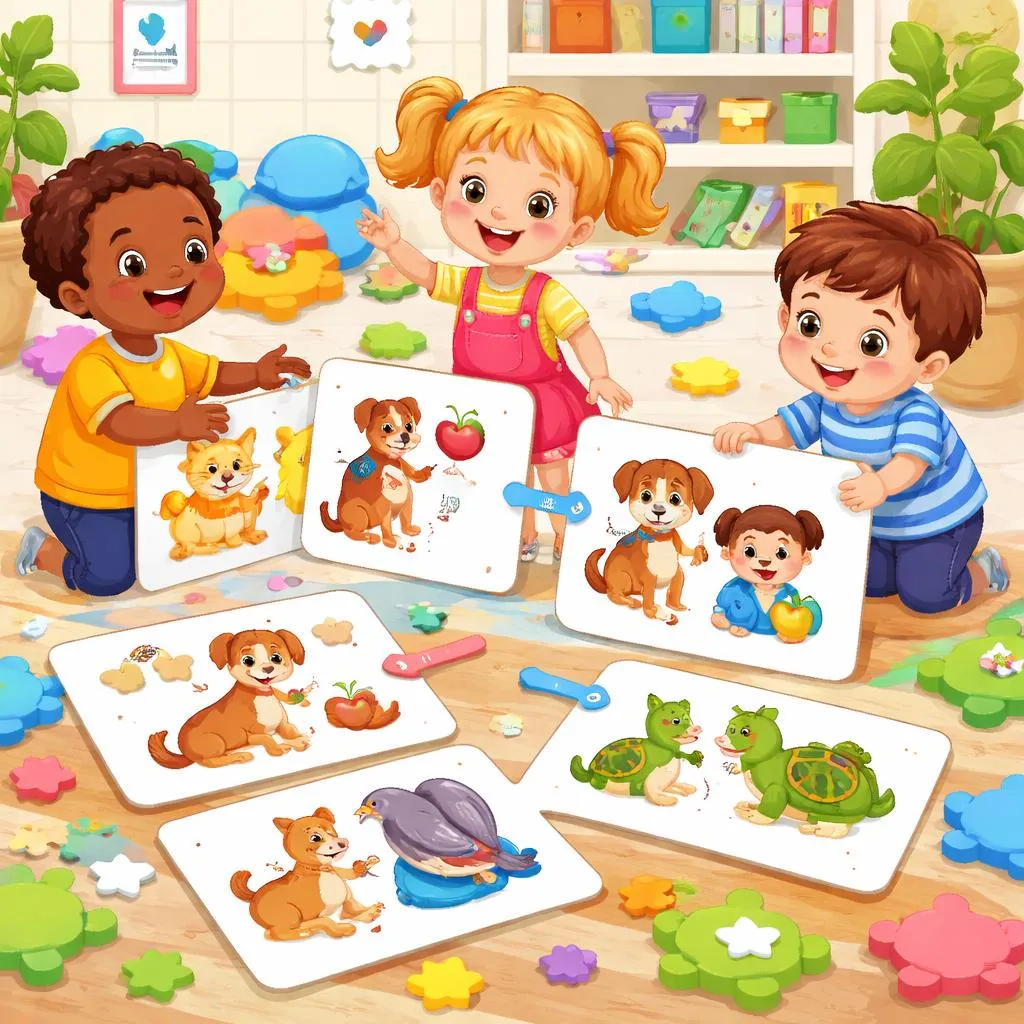

Four-year-olds are learning to make their sentences sound right. They know that "I runs" sounds wrong, even if they cannot explain why. This is subject-verb agreement. The subject and verb in a sentence must match. If the subject is one person or thing, the verb has one form. If the subject is more than one, the verb has another form. "The dog runs" is correct. "The dogs run" is correct. Teaching your child common subject-verb agreement patterns helps them speak correctly and naturally. This article shares the 50 most common subject-verb agreement examples for 4-year-olds. These will help your child match subjects and verbs the right way.
What Is Subject-Verb Agreement for a Four-Year-Old? Subject-verb agreement means the subject and verb work together. They must be friends. If the subject is one, the verb adds an -s. "The cat sleeps." If the subject is more than one, the verb does not add an -s. "The cats sleep." For the words I and you, it is special. "I sleep." "You sleep." Four-year-olds are learning these patterns. They might say "The dog run" at first. But with practice, they learn to say "The dog runs." Subject-verb agreement makes sentences sound right.
Meaning and Explanation of Subject-Verb Agreement Subject-verb agreement has one main rule. Singular subjects need singular verbs. Plural subjects need plural verbs. In present tense, we add -s to the verb for he, she, it. "He runs." "She eats." "It jumps." For I, you, we, they, we do not add -s. "I run." "You eat." "We jump." "They play." For past tense, most verbs are the same for all subjects. "I played." "He played." "They played." But the verb "to be" is special. "I am." "You are." "He is." "We are." "They are." Learning these patterns helps children speak correctly.
Categories of Subject-Verb Agreement for Preschoolers We group these subject-verb agreement examples into categories. This helps children understand different subjects and verbs. Here are the main groups:
I and You: Special forms.
He, She, It: Singular third person.
We and They: Plural subjects.
Singular Nouns: One person, animal, or thing.
Plural Nouns: More than one.
The Verb "To Be": Am, is, are.
The Verb "To Have": Has, have.
Past Tense Verbs: Same for most subjects.
Daily Life Examples of Subject-Verb Agreement Subject-verb agreement appears in everything children say. In the morning, a child says "I am awake." At breakfast, they say "The cereal is good." During play, they say "The cars go fast." At the park, they say "The slide is fun." At bedtime, they say "I am tired." Parents use correct agreement too. "Daddy is at work." "The dogs are barking." Children learn by hearing correct forms.
I and You Sentences I am happy.
I like pizza.
I have a ball.
I see the dog.
I want milk.
I can jump.
I need help.
I love you.
I am tired.
I do not know.
You are my friend.
You have a red shirt.
You like to play.
You see the bird.
You can run fast.
You need a hug.
You are funny.
You do not like peas.
You are four too.
You make me happy.
He, She, It Sentences He runs fast.
She sings nicely.
It rains outside.
He eats lunch.
She plays with dolls.
It sleeps on the bed.
He wants a turn.
She reads books.
It feels soft.
He jumps high.
She draws pictures.
It barks loudly.
He has a blue car.
She wears a pink dress.
It is very big.
He does not like spinach.
She goes to school.
It looks funny.
He helps his mom.
She loves her dog.
We and They Sentences We go to the park.
We eat dinner together.
We have fun playing.
We like ice cream.
We see the animals.
We are friends.
We do not want to leave.
We can sing songs.
We need to clean up.
We love our family.
They run outside.
They play with blocks.
They have new toys.
They eat snacks.
They are sleeping.
They do not like baths.
They go to school.
They make noise.
They are my friends.
They help each other.
Singular Noun Sentences The dog runs.
The cat sleeps.
The bird flies.
The baby cries.
The car goes fast.
The flower grows.
The sun shines.
The bell rings.
The cookie is yummy.
The book is heavy.
My friend plays here.
Mommy cooks dinner.
Daddy drives the car.
Grandma bakes cookies.
The teacher reads stories.
The tree is tall.
The ball bounces.
The milk is cold.
The door opens.
The light turns on.
Plural Noun Sentences The dogs run.
The cats sleep.
The birds fly.
The babies cry.
The cars go fast.
The flowers grow.
The stars shine.
The bells ring.
The cookies are yummy.
The books are heavy.
My friends play here.
The children eat lunch.
The parents drive cars.
The grandmas bake cookies.
The teachers read stories.
The trees are tall.
The balls bounce.
The cups are full.
The doors open.
The lights turn on.
The Verb "To Be" (Am, Is, Are) I am happy.
You are my friend.
He is tall.
She is little.
It is soft.
We are playing.
They are running.
The dog is brown.
The dogs are brown.
I am four years old.
You are funny.
The sky is blue.
The clouds are white.
We are tired.
They are hungry.
The baby is sleeping.
The babies are sleeping.
I am here.
You are there.
It is time to go.
The Verb "To Have" (Has, Have) I have a red ball.
You have blue eyes.
He has a toy car.
She has a doll.
It has four legs.
We have fun together.
They have new shoes.
The dog has a bone.
The dogs have bones.
I have a sister.
You have a brother.
He has a cold.
She has a hat.
The cat has soft fur.
The cats have soft fur.
We have snacks.
They have homework.
The baby has a blanket.
The babies have blankets.
I have an idea.
Past Tense Sentences (Same for Most) I played outside.
You played too.
He played outside.
She played outside.
It played outside.
We played outside.
They played outside.
The dog played outside.
The dogs played outside.
I ate my lunch.
You ate your lunch.
He ate his lunch.
She ate her lunch.
We ate our lunch.
They ate their lunch.
The cat ate the food.
The cats ate the food.
I saw a bird.
You saw a bird.
He saw a bird.
Printable Flashcards for Subject-Verb Agreement Flashcards help children see correct subject-verb pairs. Create cards with one sentence on each. Use different colors for singular and plural. For singular, use blue. For plural, use green. On the back, write the rule. "One dog - add s to run." Show the card and read the sentence. Have your child repeat. Point out the matching subject and verb.
Another idea is to make matching cards. Write subjects on blue cards. Write verbs on green cards. Your child matches them correctly. "The dog" + "runs." "The dogs" + "run."
Learning Activities with Subject-Verb Agreement Activities help children use correct agreement naturally. Try these at home:
Fix the Sentence: Say a sentence with wrong agreement. "The dogs runs." Ask your child to fix it. "The dogs run."
Singular and Plural Sort: Say a subject. Your child says if it is one or more than one. Then they say the correct verb. "The cat" - one - "sleeps." "The cats" - more - "sleep."
Action Game: Do actions and have your child describe. If you jump, they say "You jump." If one child jumps, they say "He jumps." If several jump, they say "They jump."
Picture Talk: Look at pictures. Make sentences about what you see. Point out the agreement. "The boy runs." "The girls run."
Story Time: Read a book. Pause and point out subject-verb agreement. "See, it says 'the bear sleeps' because there is one bear."
Learning Activities for Specific Agreement Types For I and you, practice sentences about yourself and your child. "I am Mommy. You are my child." For he, she, it, talk about family members and pets. "She is Grandma. He is Grandpa. It is the dog." For we and they, talk about groups. "We are a family. They are our friends." For singular and plural nouns, play the "one and more" game. "One cat says meow. Two cats say meow."
Educational Games Using Subject-Verb Agreement Games make learning agreement fun. Here are some favorites:
Agreement Bingo: Make bingo cards with subjects. Call out verbs. Your child covers the subject that matches. "runs" - cover "The dog." "run" - cover "The dogs."
Match the Subject and Verb: Write subjects on one set of cards. Write verbs on another. Your child matches them correctly.
Fix the Sentence Race: Say a sentence with wrong agreement. Race to see who can fix it first. "The birds sings." Fix: "The birds sing."
Subject-Verb Charades: Act out a subject and verb. Your child guesses and says the correct sentence. Act out one dog running. Your child says "The dog runs."
Story Building with Agreement: Start a story. Each person adds a sentence, but must use correct agreement. "Once there was a bear who lives in the forest." Next person: "The bear eats honey."
Game Ideas for Different Settings In the car, play "One or More." Point to things and say "One car" or "Many cars." Your child says the correct verb. "The car goes." "The cars go." At the park, play "What Are They Doing?" Watch people. "That boy swings." "Those girls slide." At mealtime, play "Food Talk." "The cookie is sweet." "The cookies are sweet."
How to Teach Subject-Verb Agreement Naturally You are the best model. Use correct agreement in your speech. Your child hears the right patterns every day. When your child makes an agreement mistake, do not correct harshly. Simply repeat the sentence correctly. If they say "The dogs runs," you say "Yes, the dogs run fast!" This gentle modeling works better than direct correction.
Why Subject-Verb Agreement Matters for Four-Year-Olds Subject-verb agreement makes speech correct and clear. People understand you better when your sentences follow the rules. Correct agreement also sounds more mature. Children who use it well are better understood by others.
Subject-verb agreement also prepares children for reading and writing. Written language must follow these rules. Learning them early makes school work easier.
Tips for Parents to Support Subject-Verb Agreement Learning Model correct agreement always. Children learn by hearing. Use a variety of subjects and verbs so they hear many patterns.
Read books with simple, correct sentences. Point out the agreement naturally. "This sentence says 'the bird flies.' Bird is one, so we say flies."
Play with puppets. Have puppets talk with correct and incorrect agreement. Let your child be the teacher and correct the puppet.
The Power of Repetition with Subject-Verb Agreement Children learn patterns through repetition. They will hear and use the same agreement patterns again and again. Each time, the correct form becomes more natural.
Sing songs with clear subject-verb agreement. "Old MacDonald had a farm" uses "had" for he. "The wheels on the bus go round" uses "go" for they.
Create routines around agreement. At snack time, talk about what each person has. "I have an apple. You have a banana. He has a cookie." This practices have/has.
Connecting Subject-Verb Agreement to Books and Media Choose books with simple, clear sentences. Point out the subject and verb. "Look, here is the subject 'the bear.' Here is the verb 'sleeps.' They match because there is one bear."
Educational videos can also help. Watch together and pause. Talk about whether the subject and verb match.
Making a Subject-Verb Agreement-Rich Environment Create a "matching wall." Post pictures with sentences. One picture of a dog with "The dog runs." One picture of dogs with "The dogs run." Refer to them often.
Make agreement cards for daily routines. "I brush my teeth." "We brush our teeth." Read them together.
Encouraging Your Child to Use Correct Agreement Play the "teacher" game. Let your child correct you. Sometimes make intentional mistakes and see if they notice. "The sun shine bright." Your child might say "No, the sun shines!"
When your child uses correct agreement, notice it. "You said 'the birds sing'! That was exactly right because there are many birds." This positive feedback reinforces the correct pattern.
Celebrating Progress with Subject-Verb Agreement Notice when your child starts using new agreement patterns correctly. "You used 'has' for your friend today! That is great grammar!" Celebrate these milestones.
Remember that every child develops at their own pace. Some master agreement early. Others need more time. Both are normal. Your support and encouragement make the difference.
By teaching your child these 50 most common subject-verb agreement examples, you give them the tools for correct speech. They will sound more like native speakers. They will be better understood. They will be ready for reading and writing. Enjoy each new correctly matched subject and verb together. Every "he runs" and "they run" shows growing language mastery.