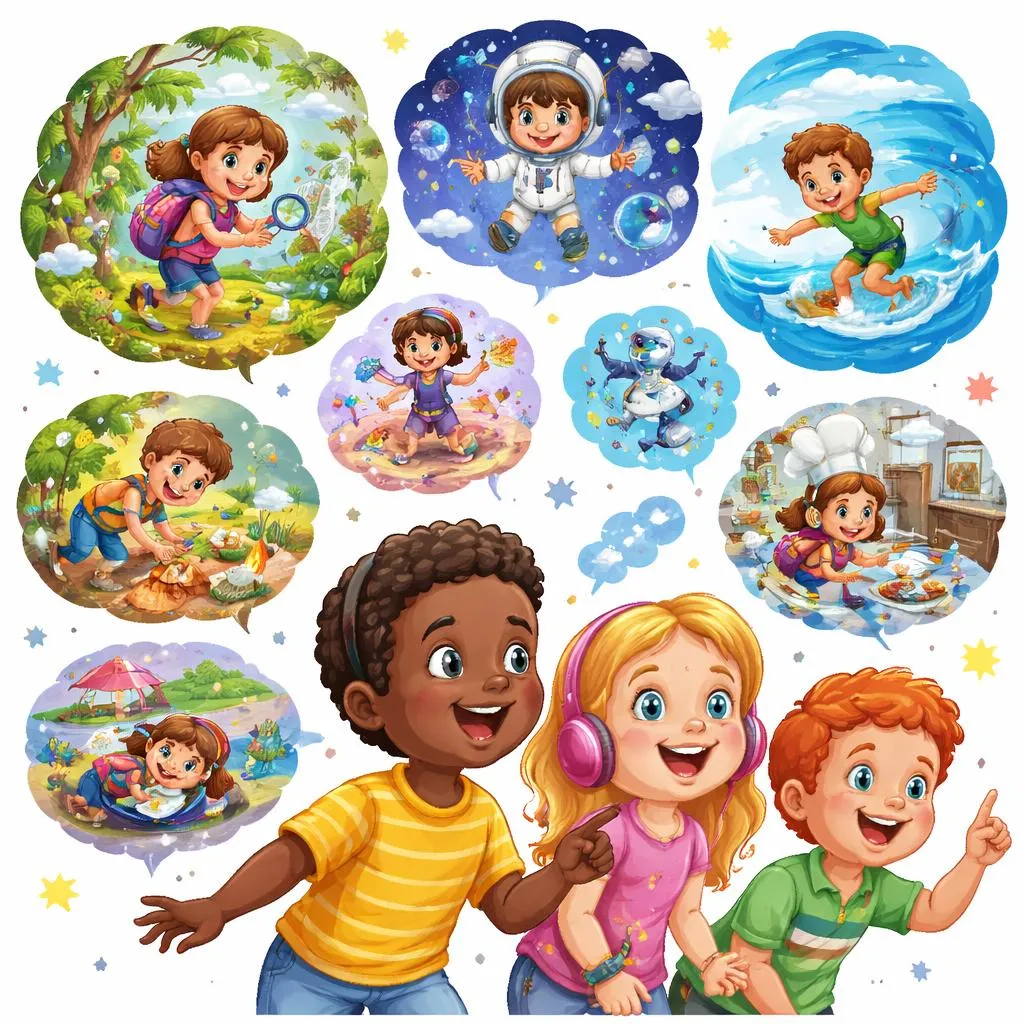

The future is full of wonderful moments waiting to happen. For a six-year-old, imagining what they will be doing at a specific time tomorrow or next week feels like magic. The future continuous tense helps them paint these pictures with words. It lets them describe actions that will be in progress at a certain time in the future. This guide will help you introduce the 70 most common future continuous for 6-year-old learners in ways that spark imagination and bring joy to your daily conversations.
Meaning: What Does the Future Continuous Tell Us? The future continuous tense describes actions that will be happening at a specific moment in the future. It is like looking ahead and watching a little movie of what is to come. We form it using "will be" plus the ing form of the action word. For a six-year-old, we can explain it simply as the words we use when we want to say what we will be doing at a certain time later. "This time tomorrow, I will be playing at the park." The playing will be happening right then.
Conjugation: One Simple Pattern for Everyone This tense follows a wonderfully consistent pattern. The words "will be" stay the same for every person. Whether we talk about "I," "you," "he," "she," "we," or "they," we always use "will be" followed by the ing form. "I will be sleeping," "you will be eating," "they will be coming." This predictability gives young learners confidence to experiment with the tense and use it in their own creative ways.
Present Tense Connection: From Now to Later Children already know how to talk about what is happening right now using the present continuous. They say "I am playing" or "Mom is cooking." The future continuous feels very familiar because it uses the same ing form. The only difference is that we add "will be" instead of "am" or "is." We can show them this connection by comparing sentences. "Right now, I am reading" becomes "Tomorrow at this time, I will be reading." The action stays the same, but the time moves forward.
Past Tense Connection: Comparing What Was and What Will Be We can also connect this future tense to the past continuous they have learned. The past continuous talks about what was happening at a specific moment in the past. The future continuous talks about what will be happening at a specific moment in the future. This comparison helps children understand that language gives us tools to talk about all times. "Yesterday at this time, I was eating breakfast. Tomorrow at this time, I will be eating lunch." The pattern is the same, just the time word changes.
Future Tense: Painting Pictures of Tomorrow The future continuous is the tense of imagination and anticipation. Children use it to picture special moments that are coming. "On my birthday, I will be blowing out candles." "When Grandma visits, we will be baking cookies together." "At the beach, I will be building sandcastles." Each of these sentences creates a vivid picture in the mind. They help children look forward to events and share their excitement with others.
Questions: Asking About What Will Be Happening Forming questions in the future continuous follows the familiar pattern of moving "will" to the front. "You will be sleeping" becomes "Will you be sleeping?" These questions invite children to think ahead and imagine specific moments. You can ask your child "What will you be doing when I pick you up from school?" or "Will you be wearing your favorite shirt tomorrow?" These gentle questions encourage them to visualize future moments and share their thoughts.
Other Uses: Guessing and Wondering Together The future continuous is perfect for guessing and wondering about what other people might be doing. When you call Grandma, you can wonder together "What will Grandma be doing right now?" When you pass the school, you can guess "What will the children be learning in class today?" These wonderings turn everyday moments into opportunities for imagination and connection. They also give your child repeated exposure to the future continuous in a natural, playful context.
Learning Tips: Gentle Ways to Practice at Home The best way to introduce this tense is through anticipation and imagination. Before special events, use the future continuous to talk about what will be happening. "At the party, we will be playing games and eating cake." "During the movie, we will be snuggling under blankets." These conversations build excitement while modeling the language pattern naturally.
Bedtime is another perfect moment for future continuous practice. As you tuck your child in, talk about tomorrow morning. "When you wake up, the sun will be shining." "While you are sleeping, the moon will be watching over you." These gentle words create comfort and connection while introducing the tense in a loving context.
Educational Games: Playful Practice with the 70 Most Common Examples Games make learning the future continuous feel like play. One favorite is the "Time Machine Game." Pretend you have a time machine that can take you to any time tomorrow. Ask your child "Where will we go? What will we be doing?" Take turns imagining different moments. "At 10 o'clock, we will be flying to the moon." "At lunchtime, we will be eating with dinosaurs." This imaginative play builds language skills while creating wonderful shared stories.
Another engaging game is "Future Photographs." Pretend you are looking at photographs from tomorrow. Describe what you see using the future continuous. "In this picture, we will be swimming in the ocean." "In this one, you will be riding a big horse." Your child can add their own descriptions, building the language pattern through creative storytelling.
Using the 70 most common future continuous for 6-year-old learners, you can create a "Future Clock." Draw a large clock with different times written on it. For each time, ask your child what they will be doing. "At 8 o'clock in the morning, what will you be doing?" "At 3 o'clock in the afternoon, where will you be playing?" This visual support helps children connect the concept of specific times with ongoing actions.
The "Guessing Game" works wonderfully with this tense. Think of a family member or friend and describe what they will be doing at a certain time tomorrow. "At 5 o'clock tomorrow, this person will be cooking dinner." Your child guesses who it is. Then switch roles and let your child give clues. This game builds descriptive language skills while practicing the future continuous in a fun, interactive way.
Movement games also work well. Call out different times and actions, and your child acts out what they will be doing. "At 7 o'clock tomorrow morning, you will be stretching and waking up." Your child stretches and yawns. "At 10 o'clock, you will be swinging at the park." Your child pretends to swing. This kinesthetic learning connects the language pattern with physical movement, which helps young children remember more easily.
Reading books together provides wonderful opportunities to notice the future continuous. When a character in a story is anticipating something, pause and wonder together. "What will the bear be doing when spring comes?" "What will the children be playing when school ends?" These questions turn reading into an interactive experience that builds both comprehension and grammar skills.
Remember that children learn best through connection and play. There is no need for drills or formal lessons. Simply using the future continuous in your daily conversations, playing imaginative games together, and wondering about tomorrow will give your child everything they need. The 70 most common future continuous for 6-year-old learners will become a natural part of their language through these joyful interactions. Your warmth, patience, and creativity are the greatest gifts you can give your child on this language learning journey.