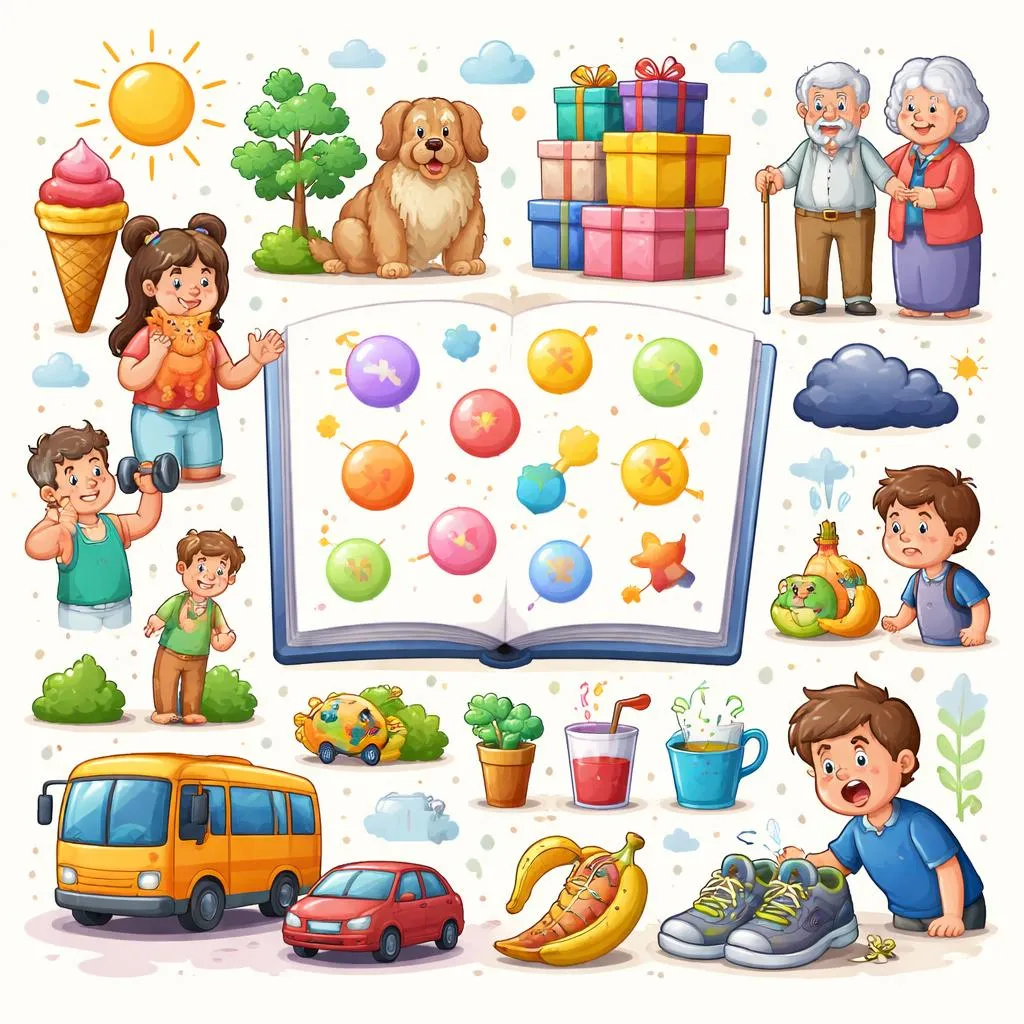

Common adjectives are words that describe nouns, and they play an essential role in making sentences more vivid, specific, and meaningful. Without common adjectives, language would sound flat and unclear. When learners understand how to use common adjectives correctly, they can express ideas with greater detail and confidence.
Adjectives answer questions such as: What kind? Which one? How many? How big? How old? What color? Because of this function, common adjectives appear in almost every English sentence.
What Are Common Adjectives?
Common adjectives are frequently used descriptive words that modify nouns. They usually appear before a noun, but they can also follow linking verbs such as “be,” “seem,” or “become.”
For example:
She has a beautiful dress. The dress is beautiful.
In both sentences, the adjective “beautiful” describes the noun “dress,” but the structure of the sentence is slightly different.
Common Adjectives for Size and Shape
Size adjectives are among the most frequently used descriptive words in English because people often compare objects in daily conversation.
Common examples include:
big small large tiny huge long short tall
For instance, when describing a building, someone might say, “It is a tall and modern building that stands in the center of the city.” In this sentence, “tall” and “modern” both function as adjectives that provide more information about the building.
Shape adjectives are also important:
round square flat wide narrow
These words help create clear mental images.
Common Adjectives for Color
Color adjectives are simple but powerful because they allow speakers to describe objects precisely. Instead of saying “I bought a car,” a speaker can say, “I bought a red car,” which provides a clearer picture.
Common color adjectives include:
red blue green yellow black white brown gray
In longer sentences, color adjectives can combine with other adjectives, such as: “She wore a long blue dress to the party.”
Common Adjectives for Feelings and Emotions
Emotion adjectives are essential for expressing thoughts and reactions. They help describe how people feel in different situations.
Common examples:
happy sad angry excited nervous tired afraid surprised
For example, instead of saying “He reacted,” you can say, “He felt surprised when he heard the news.” The adjective “surprised” explains his emotional state clearly.
Common Adjectives for Personality
Personality adjectives describe character and behavior, and they are often used when talking about friends, teachers, or colleagues.
Common personality adjectives include:
kind friendly brave honest polite clever patient generous
A longer example sentence might be: “She is a kind and patient teacher who always helps her students understand difficult lessons.” In this sentence, two adjectives describe the same noun, creating a fuller description.
Common Adjectives for Quality and Opinion
Opinion adjectives express judgment or evaluation. These adjectives are common in everyday speech and writing.
Examples:
good bad great excellent terrible wonderful interesting boring
For example: “The movie was interesting and exciting, but the ending was disappointing.” Here, multiple adjectives express opinion and evaluation.
Order of Adjectives
When using more than one adjective before a noun, English usually follows a specific order. Although native speakers often use this order naturally, learners benefit from understanding the pattern.
The general order is:
Opinion → Size → Age → Shape → Color → Origin → Material → Purpose → Noun
Example:
She bought a beautiful small old round wooden table.
While such long combinations are less common in daily speech, understanding adjective order improves accuracy and fluency.
Comparative and Superlative Forms
Many common adjectives change form when making comparisons.
Short adjectives usually add -er or -est:
big → bigger → biggest small → smaller → smallest tall → taller → tallest
Longer adjectives often use “more” or “most”:
beautiful → more beautiful → most beautiful interesting → more interesting → most interesting
Example sentences:
This book is more interesting than the last one. That is the tallest building in the city.
Comparative forms help describe differences clearly.
Using Adjectives After Linking Verbs
Adjectives often appear after linking verbs such as:
be seem look feel become
For example:
The sky looks dark. She seems happy today. The soup tastes delicious.
In these sentences, the adjectives describe the subject through a linking verb.
Common Mistakes with Adjectives
Learners sometimes confuse adjectives with adverbs. Adjectives describe nouns, while adverbs describe verbs.
Incorrect: She sings beautiful. Correct: She sings beautifully.
However:
She has a beautiful voice.
Here, “beautiful” correctly describes the noun “voice.”
Another common mistake is placing adjectives after nouns in basic English sentences. In most cases, adjectives come before nouns unless they follow linking verbs.
Expanding Vocabulary with Common Adjectives
To build stronger descriptive skills, learners can combine common adjectives:
a bright sunny day a cold rainy night a quiet peaceful village
Combining adjectives makes language more expressive and natural.
Practice Activity
Describe your room using at least five common adjectives. Try writing one longer sentence that combines multiple adjectives correctly.
Example:
My room is a small, clean, and comfortable space with bright white walls and a large wooden desk near the window.
This type of practice improves both vocabulary and sentence structure.
Common adjectives are essential building blocks of English communication. They make speech more descriptive, writing more engaging, and ideas more precise. By practicing common adjectives regularly and learning how to combine them naturally in longer sentences, learners can significantly improve their fluency and confidence in English.
More Categories of Common Adjectives
In addition to size, color, feeling, and personality, there are many other categories of common adjectives that learners use every day in speaking and writing.
Common Adjectives for Time
Time adjectives help describe when something happens or how long something lasts.
early late daily weekly annual previous future current
For example, instead of saying “We had a meeting,” you can say, “We had an important meeting last week,” where “last” works as a time-related adjective that modifies “week.”
Another example is: “She made significant progress during the previous year.” The adjective “previous” gives clear time reference.
Common Adjectives for Condition
Condition adjectives describe the state of something.
open closed broken ready available full empty safe
For instance, you might say, “The store is closed today because of the holiday,” or “The glass is completely full, so please do not add more water.” These adjectives provide practical information.
Common Adjectives for Difficulty
When discussing study or work, difficulty adjectives are very common.
easy difficult hard simple complex clear confusing
Instead of saying “The lesson is,” you can say, “The lesson is simple and clear, so students can understand it quickly.” Combining two adjectives creates a richer description.
Using Multiple Common Adjectives Naturally
English allows more than one adjective before a noun, but they must sound natural together. For example:
a beautiful old house a small black bag a modern glass building
When combining adjectives, try not to overload the sentence. Although long combinations are grammatically possible, clear communication is more important than complexity.
For example:
She bought a small, elegant silver necklace for the ceremony.
Here, “small,” “elegant,” and “silver” describe the noun “necklace” in a natural and balanced way.
Adjectives with -ed and -ing Endings
Many common adjectives end in -ed or -ing, and they describe feelings or situations differently.
interested / interesting bored / boring excited / exciting tired / tiring
The -ed form usually describes how a person feels. The -ing form usually describes the thing that causes the feeling.
For example:
She is interested in the lesson. The lesson is interesting.
He feels bored during the lecture. The lecture is boring.
Understanding this difference improves accuracy.
Adjectives and Prepositions
Some common adjectives are often followed by specific prepositions.
afraid of interested in good at famous for ready for
For example:
She is good at math. He is afraid of dogs. The city is famous for its food.
Memorizing adjective + preposition combinations helps fluency.
Expanding Sentences with Common Adjectives
Adjectives allow simple sentences to become more detailed and expressive.
Basic sentence:
The house is big.
Expanded sentence:
The house is big, bright, and comfortable, with large windows and a beautiful garden.
The second sentence provides more information and paints a clearer picture.
Another example:
Basic: The student is smart. Expanded: The student is smart, hardworking, and highly motivated to achieve his goals.
Using multiple common adjectives strengthens writing quality.
Adjectives in Comparisons
Adjectives are often used in comparisons to show differences.
This problem is easier than the last one. Today is colder than yesterday. This is the most important decision of the year.
Comparisons appear frequently in academic and daily communication.
Understanding comparative and superlative forms makes speech more precise.
Avoiding Overuse of Basic Adjectives
Some adjectives like “good,” “bad,” and “nice” are very common, but overusing them makes language less expressive.
Instead of:
The movie was good.
You can say:
The movie was exciting and well-made.
Instead of:
The weather is bad.
You can say:
The weather is cold and windy.
Replacing simple adjectives with more specific ones improves vocabulary range.
Classroom Practice Idea
Ask students to replace basic adjectives with stronger alternatives.
Example:
good → excellent, wonderful, impressive bad → terrible, disappointing, unpleasant big → huge, enormous, massive
Then encourage them to write a short paragraph using at least five improved adjectives.
Building Long-Term Adjective Skills
To master common adjectives, learners should:
Read regularly and notice descriptive words. Keep a personal adjective notebook. Group adjectives by category. Practice writing descriptive paragraphs. Use new adjectives in speaking practice.
Consistent exposure increases natural usage.
Final Teaching Reminder
Common adjectives are the foundation of descriptive language. They help learners describe people, objects, ideas, and experiences clearly and effectively.
By learning categories, practicing comparisons, understanding adjective order, and combining multiple adjectives in longer sentences, students can move from simple expression to more detailed and confident communication.
Strong control of common adjectives supports better writing, clearer speaking, and richer vocabulary development in everyday English.