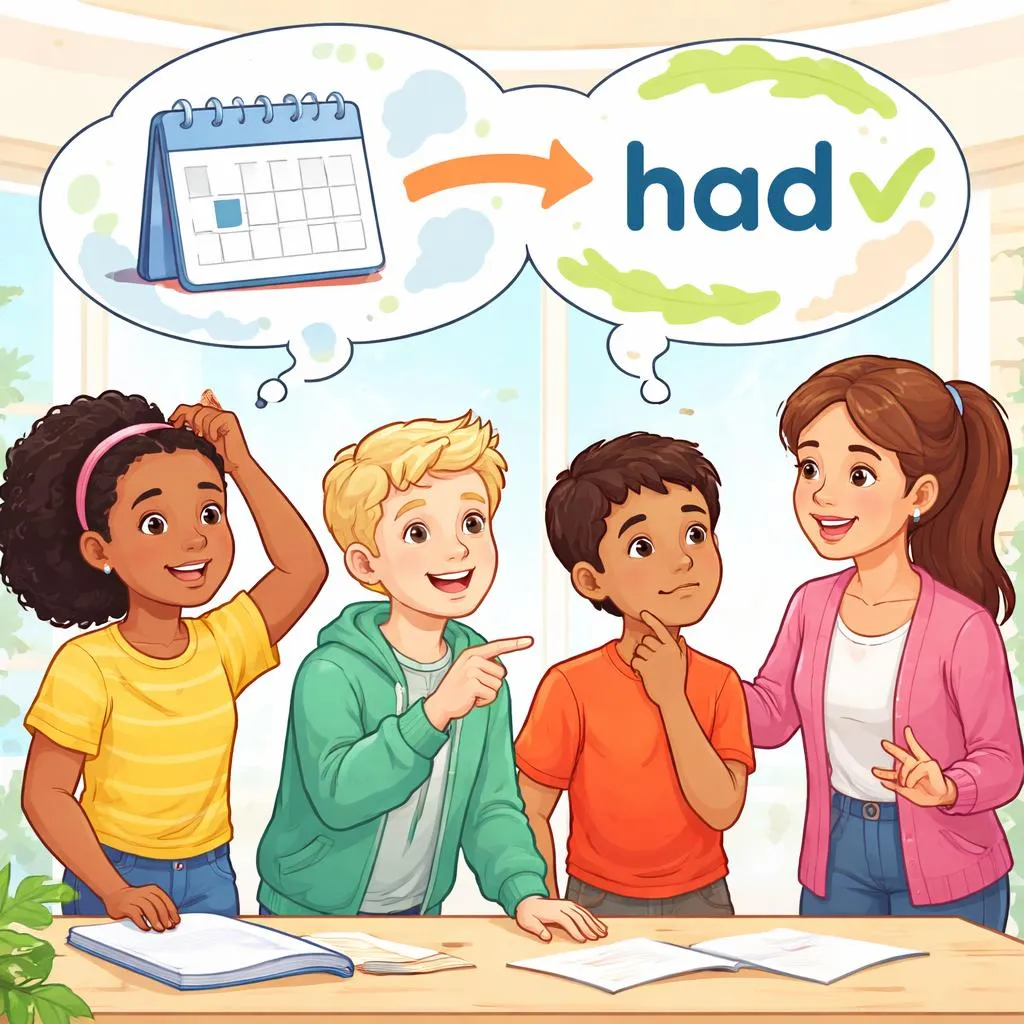

The verb "have" appears constantly in English. Children use it to talk about what they own. They use it to describe experiences. They use it as a helping verb for other tenses. But when the moment passes and we discuss yesterday or last week, "have" must change. The past of have helps children share memories and describe what they possessed before. It allows them to tell stories about their lives. Teaching this grammar point gives children the tools to talk about their past experiences with confidence. Let us explore how to guide young learners through this important language step.
Meaning of the Past of Have The word "have" shows possession, relationships, characteristics, and experiences in the present. The past of have is "had." This one word works for all subjects. The meaning stays the same. Only the time changes.
Past possession: This describes something someone owned before. "I had a blue bike when I was little." The bike belonged to the child in the past. Maybe the child still has it. Maybe not. The focus is on the past time.
Past relationships: This describes connections that existed before. "She had a pet rabbit last year." The rabbit was part of the family in the past.
Past characteristics: This describes features that were true before. "He had long hair in kindergarten." The hair is different now.
Past experiences: This describes things that happened. "We had fun at the park yesterday." The fun happened in the past.
Past as helping verb: "Had" helps form past perfect tense. "She had finished her work before lunch." This shows one past action happening before another.
The same word "had" covers all these meanings. Children need to understand the connection between "have" for now and "had" for then. Time markers like yesterday, last week, and when I was little help make this clear.
Conjugation of the Past of Have The verb "have" is irregular. It does not follow standard patterns. The past form is "had" for every person. This simplicity helps young learners.
Past form for all subjects: I had You had He had She had It had We had They had
No exceptions exist. One word works for everyone. This is much easier than regular verbs that add -ed for some subjects and change for others. Children gain confidence quickly with this pattern.
Negative past form: I did not have You did not have He did not have She did not have It did not have We did not have They did not have
Notice the negative uses "did not have." The main verb returns to "have" in negatives. This is different from positive statements. Children need practice with this pattern.
Contractions in negative: I didn't have You didn't have He didn't have She didn't have It didn't have We didn't have They didn't have
These contractions are very common in speech. Children hear them often and can learn to use them naturally.
Questions in past: Did I have? Did you have? Did he have? Did she have? Did it have? Did we have? Did they have?
In questions, "did" appears before the subject. The main verb stays as "have." This pattern matches other verbs in past tense questions.
Present Tense of Have Before teaching the past, children need a solid understanding of the present. The present tense of "have" shows current possession, relationships, and experiences.
Present positive examples: I have a red crayon. You have a new backpack. He has a cold today. She has two sisters. It has a long tail. We have music class now. They have a big house.
Present negative examples: I do not have a pencil. You do not have to go. He does not have a brother. She does not have her lunch. It does not have a handle. We do not have enough time. They do not have a car.
Present questions: Do I have a turn? Do you have a minute? Does he have a pet? Does she have a bike? Do we have homework? Do they have tickets?
Practice present tense sentences daily. Use real situations in the classroom. "You have blue eyes." "I have a question." "She has a new dress." This builds a strong foundation for introducing the past.
Past Tense of Have with Examples Now we introduce "had" for the past. Clear time markers help children understand when to use it.
Past possession examples: When I was little, I had a red tricycle. Last year, she had a different teacher. Before we moved, we had a big garden. My grandfather had an old car. They had a cat when they lived in that house. The school had a playground before the new building.
Past relationship examples: She had a best friend named Lily in kindergarten. He had a pen pal from Mexico last year. We had a wonderful babysitter when we were small. They had neighbors who gave them cookies.
Past characteristic examples: The baby had blue eyes when she was born. He had curly hair before his first haircut. The house had a red door originally. She had a high voice when she was little.
Past experience examples: We had pizza for lunch yesterday. I had a dream about flying last night. They had a party for their dog's birthday. She had a stomach ache this morning. He had fun at the playground after school.
Past as helping verb examples: I had finished my work when Mom arrived. She had eaten lunch before the field trip. They had already seen that movie. We had packed our bags the night before.
Notice how each sentence includes a clear past time marker. This helps children understand when the action happened. The word "had" signals that the possession, relationship, or experience existed before now.
Future Tense with Have Talking about the future with "have" uses "will have" or "going to have."
Will have examples: Tomorrow, I will have a spelling test. Next week, she will have a dance recital. Someday, we will have our own house. They will have a party for their anniversary. He will have a baby sister in the spring.
Going to have examples: I am going to have ice cream after dinner. She is going to have a birthday party. We are going to have a field trip next month. They are going to have visitors this weekend. It is going to have a new battery soon.
Future negative: I will not have time to play. She won't have homework tonight. We are not going to have school on Monday. They will not have enough chairs.
Time markers like tomorrow, next week, and soon signal future. These words help children understand when the action happens.
Questions with the Past of Have Forming questions with "had" uses "did" as a helping verb. This pattern matches other verbs in past tense.
Yes or no questions: Did you have a good weekend? Did she have breakfast this morning? Did they have fun at the party? Did he have a cold last week? Did we have homework yesterday? Did it have a scratch on it?
Information questions: What did you have for lunch? Where did she have her birthday party? When did they have their test? Why did he have to leave early? How many pets did you have when you were little? Who did you have for a teacher in kindergarten?
Answer practice: Yes, I did. No, I did not. Yes, she had pizza. No, they did not have time. Yes, we had fun. No, it did not have a price tag.
Practice these question patterns in conversations. Ask children about their past experiences. What did they have for breakfast? Did they have a good weekend? This personal connection makes grammar meaningful.
Interview activity: Children interview each other about past possessions and experiences. Provide question cards. "Did you have a pet when you were little?" "What did you have for your last birthday?" Partners ask and answer. Share interesting answers with the class.
Other Uses of Had "Had" has other important uses beyond the past of have. Children will encounter these as they progress in English.
Had to for past obligation: I had to go to bed early last night. She had to finish her homework before playing. We had to wear uniforms at our old school. They had to wait for the bus in the rain.
This expresses necessity in the past. It is the past form of "have to."
Had better for strong advice: You had better bring an umbrella. It looks like rain. She had better study for the test. We had better leave now or we will be late.
This is more advanced. It expresses strong advice or warning. The meaning is present or future, even though the form is past.
Had in conditional sentences: If I had more time, I would help you. If she had a car, she could drive us. If we had known, we would have come earlier.
These sentences talk about imaginary situations. They are more complex. Introduce them after children master the basic past meaning.
Had in past perfect tense: When I arrived, she had already left. They had finished eating before the movie started. He had never seen the ocean until last summer.
This shows one past action happening before another past action. Use time words like already, never, and before to make the meaning clear.
Learning Tips for Teaching Past of Have Teaching grammar to young learners works best with specific strategies. Here are tips for introducing the past of have effectively.
Use time lines: Draw a simple line on the board. Mark "now" in the middle. Mark "yesterday" on the left. Mark "tomorrow" on the right. Place "have" at now. Place "had" at yesterday. This visual helps children understand the time difference.
Connect to personal experience: Ask about things children had when they were younger. Bring in baby photos if possible. Talk about first toys, first pets, first bedrooms. This makes the grammar personal and memorable.
Use gestures: For present "have," point to now. For past "had," point backward over the shoulder. Use these gestures consistently. Children will associate the movement with the time meaning.
Contrast with have now: Show the difference between "I have a blue backpack now" and "I had a red backpack last year." This highlights change over time. Children love seeing how things have changed.
Use stories: Read simple picture books that talk about past possessions. "When I Was Little" by Jamie Lee Curtis works well. Pause and point out the "had" examples.
Repeat often: Use "had" naturally throughout the day. "Yesterday we had music class." "Last week you had a different seat." Frequent exposure helps the form sink in.
Correct gently: When children say "have" for past, simply repeat correctly. "Yes, yesterday I had a turn." Do not make a big fuss. Gentle modeling works better than explicit correction.
Educational Games for Practice Games turn grammar practice into play. Here are games for practicing the past of have.
Memory Chain: Start a memory chain about past possessions. The first child says "When I was little, I had a teddy bear." The next says "When I was little, I had a teddy bear and I had a red bike." Continue adding items. This builds memory and past tense practice together.
Then and Now Sorting: Prepare picture cards showing possessions. Some show baby items. Some show current items. Children sort cards into "had as baby" and "have now." Discuss the differences.
Show and Tell Past Version: Children bring something from home that they had when they were younger. A baby blanket. An old toy. A photograph. They show it and say "I had this when I was little." This connects grammar to real objects.
Mystery Possessions: One child thinks of something they had in the past. Others ask yes or no questions to guess. "Did you have it outside?" "Did you have it for play?" "Did you have it last year?" This practices question formation and past tense together.
Story Building: Start a story about the past. "Last weekend, we had..." Children take turns completing the sentence. Each child adds a new idea. "We had a picnic." "We had ice cream." "We had fun." This builds creativity and grammar together.
Had Bingo: Create bingo cards with past experiences. "Had pizza." "Had a birthday party." "Had a pet." Children ask classmates "Did you have pizza last week?" They mark squares when someone says yes. This builds question practice and social interaction.
Before and After: Give children two cards. One says "before." One says "now." Call out sentences. "I had long hair." Children hold up the correct card. "I have short hair." They hold up now card. This practices choosing between past and present.
Pack the Suitcase Past Version: Describe a past trip. "We went to the beach last summer. What did we have in our suitcase?" Children name items. "We had swimsuits." "We had sunglasses." "We had towels." This builds vocabulary and past tense together.
The past of have opens new worlds for young learners. They can share memories of favorite toys. They can describe past experiences. They can talk about how things have changed. This grammar point connects directly to their own lives and stories. With patient teaching and plenty of practice, "had" becomes a natural part of their English. They use it to tell about yesterday, last year, and when they were little. And that is real communication about things that matter to them.