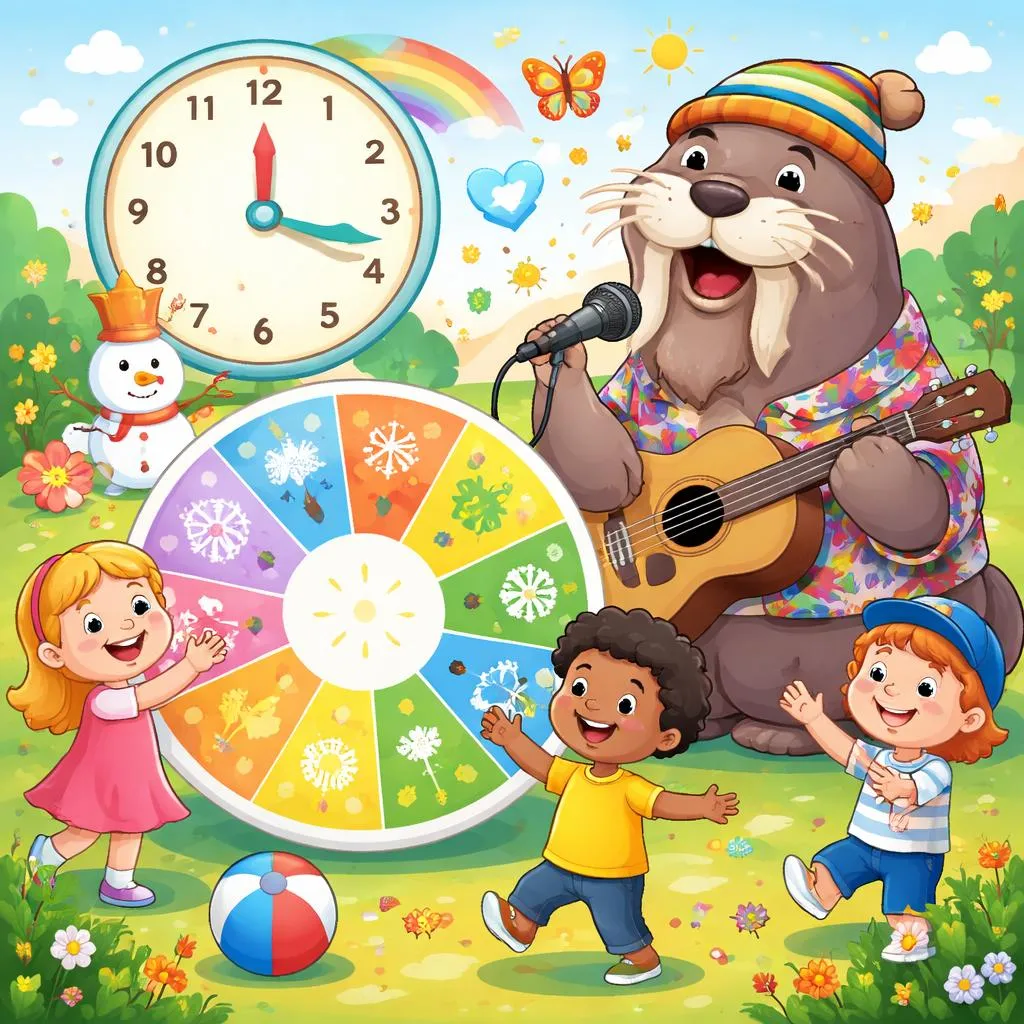

What Is The Rhyme? "The Singing Walrus Months of the Year" song is a popular educational video. It is a lively, engaging rhyme set to music. The song lists all twelve months in order. It uses a catchy call-and-response style. A clear voice sings the month, and a chorus of children repeats it. This structure is highly effective for learning. The tune is upbeat and easy to remember. The friendly animation of The Singing Walrus character adds visual appeal. This rhyme transforms a long list of vocabulary into a fun, musical journey through the calendar year.
The Lyrics of Nursery Rhymes The lyrics in The Singing Walrus Months of the Year song lyrics are deliberately simple and repetitive. They follow a clear pattern: "January, February, March, and April. May, June, July, and August. September, October, November, December." The song often groups the months into short phrases. This makes them easier to chant and remember. Sometimes, the lyrics include a cheerful intro or outro. They might say, "These are the months of the year!" The repetition of each month name is the core teaching tool. The rhythm and grouping provide a mental scaffold for memorization.
Vocabulary Learning The primary vocabulary is, of course, the twelve months. The Singing Walrus Months of the Year song lyrics provide the perfect auditory practice for these words. We can expand this learning. We connect each month to its season. January, February, March are winter months. April, May, June are spring months. We also introduce ordinal numbers. We say "the first month is January" and "the twelfth month is December." Associated vocabulary includes year, calendar, season, birthday, and holiday. We ask, "In what month is your birthday?" This links the new words to personal, meaningful experiences.
Phonics Points These song lyrics are excellent for phonics work. Each month name offers specific sound practice. We hear the soft /j/ sound in January and June. We practice the /br/ blend in February. The /ch/ sound is clear in March. We can focus on syllables. Clapping helps: Jan-u-ar-y (4), Sep-tem-ber (3), De-cem-ber (3). The song naturally emphasizes the beginning sounds of each word. This aids in pronunciation and spelling. We can also notice rhyming endings. September, November, December all end with "-ber." This helps children see and hear spelling patterns within the longer words.
Grammar Patterns The song and its extension activities teach useful grammar. The most common pattern is using the preposition "in" with months. We say, "My birthday is in July." "It snows in January." This is a key grammatical rule. We also practice the structure for asking about dates. "When is your birthday?" "It is in August." We can introduce the future tense. "Next month will be October." The sequential nature of the lyrics reinforces concepts of order, first, last, before, and after. "August comes before September."
Learning Activities Great activities extend the learning from the song lyrics. Try "Month Chain." Start with "January." The next child says "January, February," and so on. This builds memory and sequencing. Another idea is "Month Charades." A child acts out a typical activity for a month, like swimming for July. Others guess the month. "You are thinking of July!" Also, create a "Class Birthday Calendar." Children find and write their name in the correct month. This makes the vocabulary personally relevant and practices the "in + month" structure.
Printable Materials Printables help visualize the song lyrics. Create a "Months of the Year" poster with lyrics from The Singing Walrus. Add small pictures for each month (snowflake for January, flower for May). A "Months Wheel" is interactive. A large circle splits into twelve parts. Children can draw and label each month. "Cut and Paste Ordering" worksheets reinforce sequence. Provide scrambled month names to arrange correctly. Also, design "Month Flashcards." One side has the name, the other has a related image or a key word like "Halloween" for October.
Educational Games Turn the song lyrics into play with games. Play "Months March." Place month cards on the floor in a circle. Play the song. Children march around and stop when the music pauses. They must say the month they are standing on and the month before and after it. "Months Bingo" is always popular. Use cards with month names. The caller gives a clue like, "The month after June" or "The month with Christmas." For a digital twist, use a drawing app. Let children illustrate a scene for their favorite month and label it.
Using The Singing Walrus Months of the Year song lyrics is a joyful and effective strategy. The song provides the engaging, repetitive audio core. Our role is to build upon that foundation with varied activities. We connect the months to seasons, holidays, and personal events. We break down the words for phonics and spelling. We practice the essential grammar that lets children use these words in real conversation. From singing along to creating their own calendar, each activity deepens understanding. This approach ensures that learning about the months is not just memorization. It becomes a meaningful part of a child's growing English language world, perfectly timed to the rhythm of the year itself.