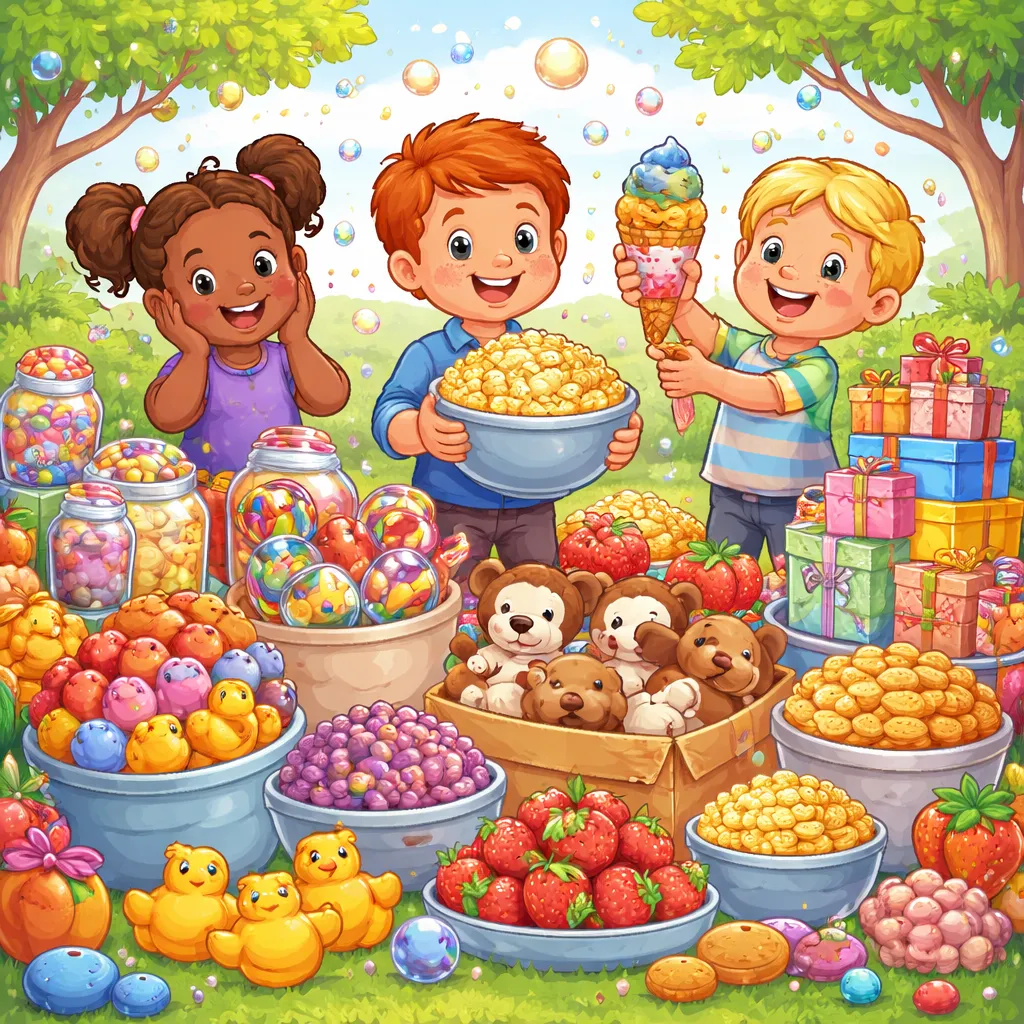

Look at a bowl of candies. Are there many candies? Look at a glass of water. Is there much water? Probably, there are a lot of candies and a lot of water! The words 'many', 'much', and 'a lot of' are your big quantity helpers. They are the "Quantity Family." They talk about large amounts. But they don't all work the same way. Let's meet this helpful family and learn their secret rules.
What Is This 'Quantity Family'?
'Many', 'much', and 'a lot of' are like siblings. They all mean a large number or amount. But they choose different friends. 'Many' likes to play with countable nouns. You can count its friends. 'Much' likes to play with uncountable nouns. You cannot count its friends. 'A lot of' is the friendly one. It plays with everyone! At home, you might say, "I have many toys." You can count toys. At the playground, you could say, "There is much sand in the sandbox." You cannot count sand. In school, you state, "I have a lot of homework." Homework is uncountable. In nature, we say, "Many trees lose leaves." Trees are countable. This family helps you describe the world in a big way.
Why Is This Family So Helpful?
Knowing this quantity family makes you a super describer. It helps your ears, your voice, your reading eyes, and your writing hand.
First, it helps your listening. You watch a cartoon. A character says, "I don't have much time!" Now you understand. Time is uncountable. The character is stressed. Your friend might say, "Many people are at the park." You know they counted people. You catch the key idea of a large, countable group. You understand the scene better.
Next, it makes your speaking precise and impressive. You can describe your collection. You say, "I have many stickers." This is specific and clear. You can talk about feelings. "I have so much happiness!" This sounds strong. You can make general statements. "We have a lot of fun." Your words become vivid and full of detail. People get a clear picture.
Then, it gives you a reading superpower. You read a science fact. It says, "Many insects have six legs." You see 'many' and know it's about countable insects. You read a recipe: "Don't use much salt." You know salt is uncountable. This helps you follow instructions exactly. You are not confused.
Finally, it makes your writing rich and colorful. Your diary becomes exciting. Instead of writing "I have work," you write "I have a lot of work." This shows the amount. You can write a story: "The pirate had much gold but many enemies." Using both words makes your story dynamic. Your writing moves from plain to powerful.
Meet the Family: MANY, MUCH, and A LOT OF
Let's meet each family member. They have their own favorite games and rules.
First, meet the Countable Expert: MANY. MANY is used with countable, plural nouns. These are things you can count: one book, two books, many books. MANY loves questions and negative sentences. It is less common in positive statements. But it's still correct! Look at these examples. At home: "How many sisters do you have?" This is a classic question. At the playground: "There aren't many kids here today." This is a negative observation. In school: "Many students like science." This is a positive statement about a countable group. In nature: "Many birds fly south for winter." Again, birds are countable. MANY is your expert for counted things.
Now, meet the Uncountable Expert: MUCH. MUCH is used with uncountable nouns. These are things you cannot count: water, time, happiness, sand. Like 'many', 'much' loves questions and negative sentences. It sounds formal in positive statements. Look at these examples. At home: "We don't have much milk left." This is a common negative. At the playground: "How much time do we have?" This is a common question. In school: "I don't have much patience for noise." Patience is uncountable. In nature: "There isn't much water in the desert." Water is uncountable. MUCH is your expert for stuff you can't count.
Finally, meet the Friendly All-Rounder: A LOT OF. A LOT OF is the easy-going sibling. It works with both countable and uncountable nouns. It is perfect for positive statements. It is very common in speaking. Look at these examples. At home: "We have a lot of chairs." Chairs are countable. At the playground: "We had a lot of fun!" Fun is uncountable. In school: "She reads a lot of books." Books are countable. In nature: "The flower needs a lot of sun." Sun is uncountable. A LOT OF is your go-to word for positives. It's friendly and useful.
Let's compare them. Use 'many' and 'much' mostly in questions and negatives. "How many? Not many. How much? Not much." Use 'a lot of' freely in positive sentences. "A lot of friends. A lot of sugar." In positive statements, 'many' and 'much' can sound a bit formal. "There is much noise" sounds odd. "There is a lot of noise" sounds natural. Remember the teams: Many + Countable. Much + Uncountable. A lot of + Both.
Your Detective Tool: How to Choose the Right One
Choosing the right word is a game. Here is the simple secret. Look at the noun. Ask yourself: "Can I count this thing?" Can you say one, two, three? If YES, it's countable. Think about 'many' or 'a lot of'. If NO, it's uncountable. Think about 'much' or 'a lot of'. Next, look at the sentence. Is it a question or a negative? Then 'many' or 'much' is great. Is it a positive statement? Then 'a lot of' is your best friend. The pattern is always: Quantifier + Noun.
How to Use the Quantity Family Correctly
Using these words follows easy maps. For questions, use these maps: How many + [Countable Noun Plural]? "How many apples?" How much + [Uncountable Noun]? "How much juice?"
For negative sentences: There aren't many + [Countable Noun Plural]. "There aren't many cookies." There isn't much + [Uncountable Noun]. "There isn't much time."
For positive sentences: There are a lot of + [Countable Noun Plural]. "There are a lot of cookies." There is a lot of + [Uncountable Noun]. "There is a lot of time." You can also use 'many' and 'much' in positives, but 'a lot of' is more natural in everyday talk.
Oops! Let's Fix Common Mistakes
Everyone mixes these up sometimes. Let's fix common errors. One big mistake is using 'many' with uncountable nouns. A child might say, "I have many homework." This is wrong. Homework is uncountable. The correct way is, "I have a lot of homework." Or, "I don't have much homework."
Another mistake is using 'much' in positive statements. Do not say, "I have much money." It sounds strange. Say, "I have a lot of money." Save 'much' for questions and negatives.
A third mistake is forgetting the 'of' in 'a lot of'. Do not say, "I have a lot toys." Say, "I have a lot of toys." 'A lot of' is a fixed phrase. The 'of' is very important. Think of it as a three-word team.
Are You Ready for a Challenge?
Let's test your new skills. Look at your classroom. Make two sentences. One with 'many' about countable things. One with 'a lot of' about uncountable things. Now, imagine you are at a birthday party. Ask two questions. One with "How many..." for countable items. One with "How much..." for uncountable items. Think about a problem, like a messy room. Make a negative statement using 'much'. Finally, describe your dream superpower. Use 'a lot of' in a positive sentence. Be creative!
You Are Now a Quantity Master
You have learned all about the quantity family. You know 'many' loves countable things. 'Much' loves uncountable things. 'A lot of' is friendly to all. You understand when to use each one. You have the simple rules. You can choose the right word. You can even fix common mistakes. Your English is now more descriptive and accurate.
You can learn many things from this article. You now know that 'many', 'much', and 'a lot of' are quantifiers for large amounts. You understand the key difference: 'many' is for countable nouns, 'much' is for uncountable nouns, and 'a lot of' works for both. You learned that 'many' and 'much' are common in questions and negatives, while 'a lot of' is perfect for positive statements. You saw the important rule to always use 'of' with 'a lot'. You also know how to form correct questions with 'How many' and 'How much'.
Now, try using your new knowledge in real life. Here are two fun ideas. First, play the "Many or Much?" game. For one day, describe things you see. For countable things, whisper "many" to yourself. For uncountable things, whisper "much". Second, be a kitchen detective. At home, open the cupboard and fridge. Make three sentences. One positive with 'a lot of' (e.g., "We have a lot of plates"). One question with 'How many...?'. One negative with 'not much...'. Share your findings. Have fun with the quantity family!