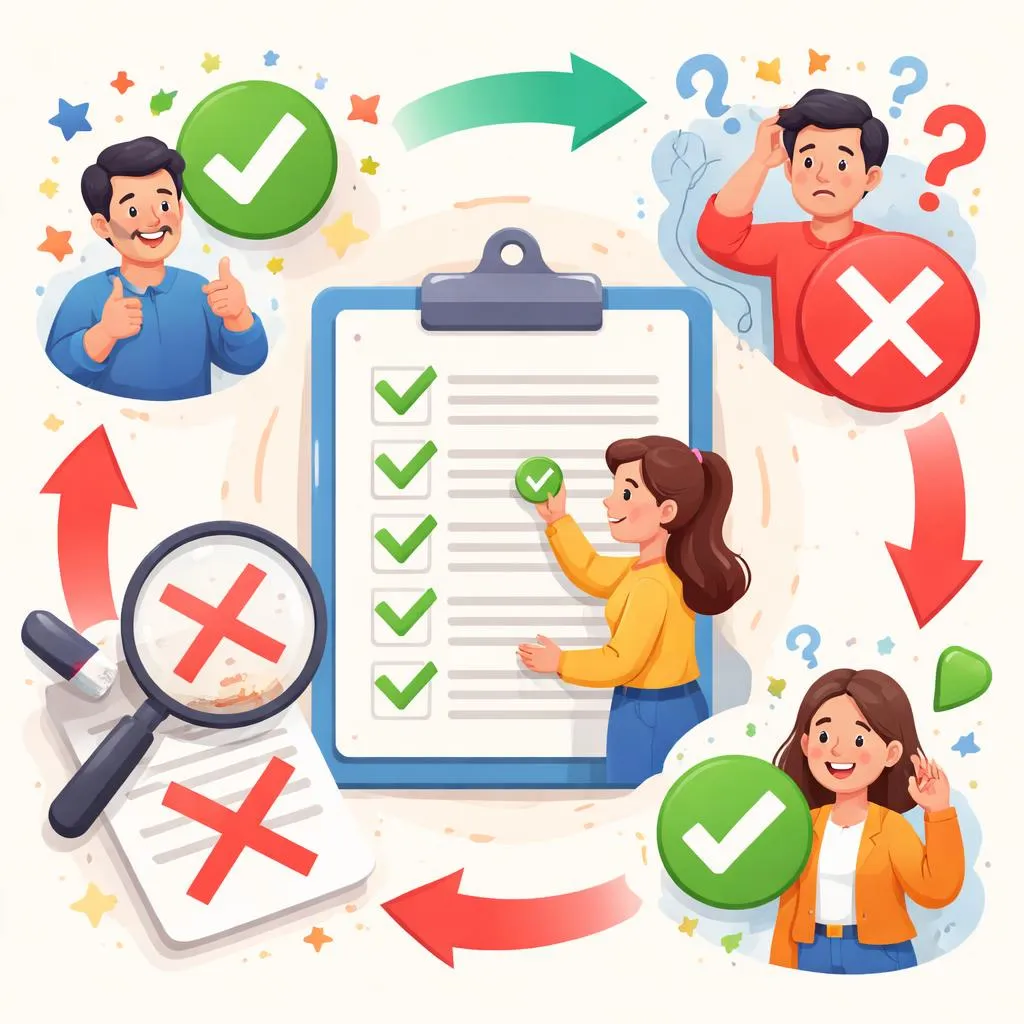

What Does “Same Word, Different Forms” Mean? One root word can grow into four accuracy forms. “Correct, correction, correctly, incorrect” share one meaning. That meaning is “right or without mistakes.” Each form has a different job in a sentence. One word is an adjective or a verb. One word names the act of fixing. One word tells how something is done rightly. One word describes something wrong. Learning these four forms builds accuracy and growth mindset.
Personal Pronouns Change Their Form This rule applies to pronouns like “it and its.” But word families work the same way for other words. “Correct” is an adjective or a verb. “Correction” is a noun. “Correctly” is an adverb. “Incorrect” is an adjective. Each form answers a different question. What quality or action? Correct. What thing or act? Correction. How is something done? Correctly. What kind of wrong thing? Incorrect.
From Verb to Noun to Adjective to Adverb – One Family, Many Words This family starts with the adjective “correct.” Correct means right or true. Example: “That is the correct answer.” “Correct” can also be a verb. Example: “Please correct the spelling mistake.” From “correct,” we make the noun “correction.” “Correction” names the act of fixing a mistake. Example: “The teacher wrote a correction in red pen.” From “correct,” we make the adverb “correctly.” “Correctly” tells how something is done without mistakes. Example: “She correctly answered every question.” From “correct,” we make the opposite adjective “incorrect.” “Incorrect” means wrong or not right. Example: “That is an incorrect address.”
One Root, Many Roles – How Words Grow from Actions to Qualities Think of a child doing a math worksheet. The child gives a “correct” answer. That is the adjective. The teacher makes a “correction” on a wrong answer. That is the noun. The child who adds correctly gets a star. That is the adverb. A wrong answer is “incorrect.” That is the opposite adjective. The root meaning stays “right or to make right.” The role changes with each sentence.
Same Meaning, Different Jobs – Is It a Verb or a Noun? “Correct” can be an adjective or a verb. As an adjective: “The correct time is 3 o’clock.” As a verb: “Please correct your posture.” “Correction” is always a noun. It names the act of fixing or the fix itself. Example: “Make one small correction to the last sentence.” “Correctly” is always an adverb. It describes how an action is done right. Example: “He correctly guessed the answer.” “Incorrect” is always an adjective. It describes something wrong. Example: “The incorrect password would not work.” Same family. Different jobs.
Adjectives and Adverbs – When Do We Add -ly? “Correct” becomes “correctly” by adding -ly. This is a simple and common pattern. Polite becomes politely. Direct becomes directly. Exact becomes exactly. “Correctly” follows the same rule. The adverb describes actions done without mistakes. Example: “The clock correctly shows the time.”
Watch Out for Tricky Spelling Changes (Double Letters, y to i, and More) “Correct” has no double letters. It starts with “cor” and ends with “rect.” When we add “-ion,” we keep the word. Correct + ion = correction. When we add “-ly,” we keep the word. Correct + ly = correctly. When we add “in-” (prefix), we keep the word. In + correct = incorrect. A common mistake is writing “correction” with one “r” (corection). The correct spelling has double “r” – correction. Wait – “correct” has one “r” after “co”? Correct – C o r r e c t. Yes, it has double “r.” So correction also has double “r.” Another mistake is writing “incorrect” with double “n” (inncorrect). The correct spelling has one “n” – incorrect. Write slowly at first. Remember: correct, correction, correctly, incorrect.
Let’s Practice – Can You Choose the Right Form? Try these sentences with your child. Fill in the blank with correct, correction, correctly, or incorrect.
Is this the _______ answer or is it wrong?
The teacher made a small _______ on my paper.
She _______ spelled every word on the list.
That is an _______ fact. The truth is different.
Please _______ your name if you spelled it wrong.
One _______ can fix the whole sentence.
He _______ completed the puzzle without help.
The _______ map led us to the wrong town.
Answers:
correct
correction
correctly
incorrect
correct
correction
correctly
incorrect
Go through each answer slowly. Ask your child why the word fits. Praise effort and learning from mistakes. Keep practice short and encouraging.
Tips for Parents – Help Your Child Learn Word Families in a Fun Way You can teach “correct, correction, correctly, incorrect” through daily life. Use homework, games, and gentle feedback.
At homework time, say “Is this answer correct?” Ask “What does correct mean?”
When you fix a mistake, say “I made a correction.” Ask “What is a correction?”
When your child spells a word right, say “You spelled it correctly.” Ask “What does correctly mean?”
When something is wrong, say “That is incorrect.” Ask “What is the opposite of correct?”
Play a “right or wrong” game. Write the four words on sticky notes. Say a sentence. Let your child hold up the correct word. Example: “That is correct.” Child holds “correct.” “Make a correction.” Child holds “correction.” “You did it correctly.” Child holds “correctly.” “That is incorrect.” Child holds “incorrect.”
Draw a four-part poster. Write “correct” with a picture of a checkmark. Write “correction” with a picture of an eraser. Write “correctly” with a picture of a star. Write “incorrect” with a picture of an X. Hang it on the wall.
Use a “fix it” game. Write a simple sentence with a mistake. Say “This is incorrect.” Let your child make a correction. Say “Now it is correct.”
Keep each session under five minutes. Repeat games on different days. Children learn through playful fixing and getting things right.
When your child makes a mistake, smile. Say “Good try. Let me show you again.” Use the correct word in a simple sentence. Then continue.
No need for grammar drills. No need for tests. Just warm examples and gentle corrections every day. Soon your child will master “correct, correction, correctly, incorrect.” That skill will help them learn from mistakes, follow directions, and take pride in getting things right.