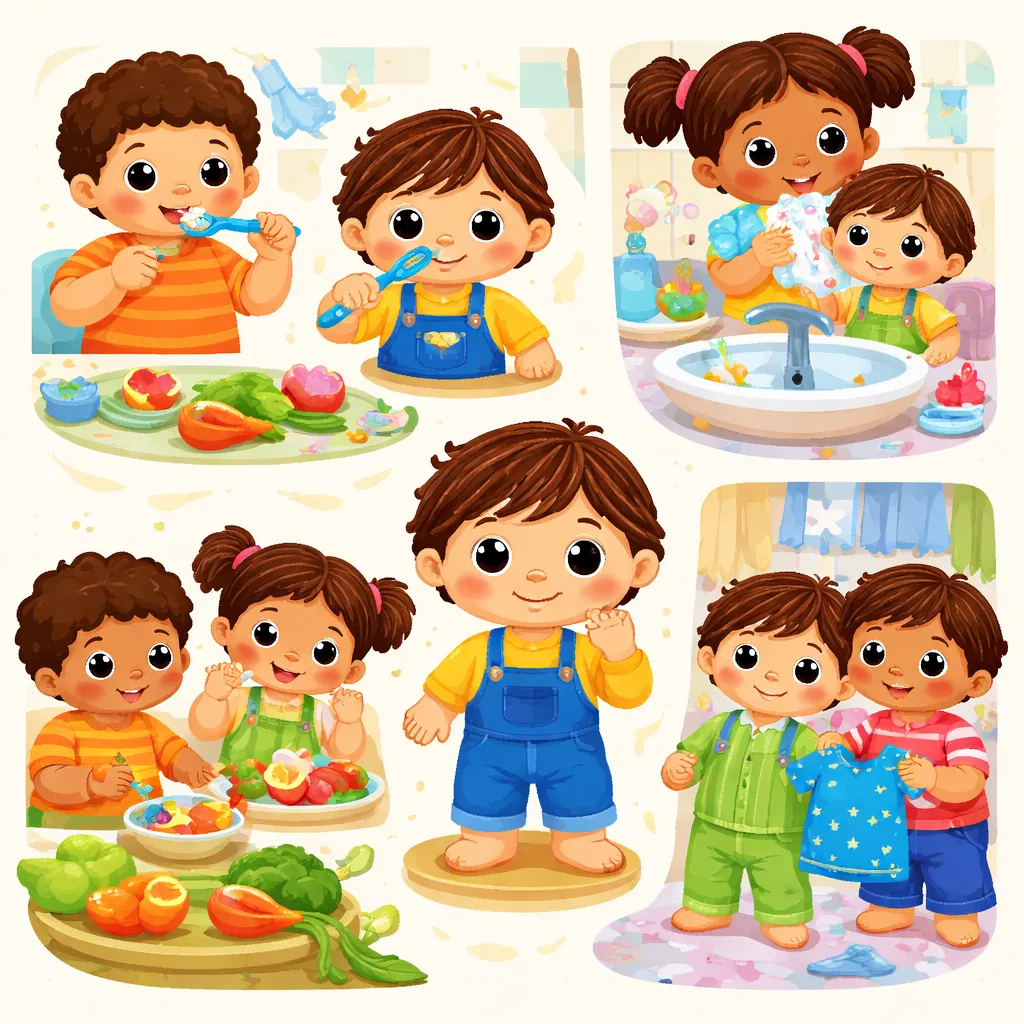

Some songs teach children how to take care of themselves through the example of a favorite toy. The Spanish Song: Pin Pon is a Doll (Pin Pon) does exactly that. This beloved children's song from the Spanish-speaking world tells the story of a cardboard doll named Pin Pon who models good habits like washing his face, combing his hair, and eating politely. For families learning Spanish together, this song offers a wonderful way to explore daily routines, manners, and self-care vocabulary. Let us discover what makes this traditional song so valuable for young learners.
What Is the Story Behind This Famous Song?
The Spanish Song: Pin Pon is a Doll (Pin Pon) is one of the most famous children's songs in the Spanish language. It was created in the 1970s for a Chilean children's television program and quickly spread throughout the Spanish-speaking world. Generations of children have grown up singing about Pin Pon.
The song describes a doll made of cardboard who is clean, neat, and well-mannered. Pin Pon washes his face with soap and water, combs his hair, and eats his food without spilling. When he goes to bed, he covers himself warmly. Children look up to Pin Pon as a model of good behavior.
The name "Pin Pon" is playful and easy for children to say. It sounds like the name of a toy, friendly and approachable. The doll becomes a friend who teaches through example rather than scolding.
The gentle melody makes it easy to remember. Children often sing it while doing the actions, washing their own faces or pretending to comb their hair.
Understanding this背景 helps families appreciate the song's gentle teaching style. It opens conversations about habits, manners, and taking care of ourselves.
The Complete Lyrics of the Song
Reading the words helps us understand this well-mannered doll. Here are the lyrics to the Spanish Song: Pin Pon is a Doll (Pin Pon) in Spanish and English.
Pin Pon es un mu?eco De trapo y de cartón Se lava la carita Con agua y con jabón Pin Pon is a doll Made of cloth and cardboard He washes his little face With water and with soap
Pin Pon siempre se peina Con peine de marfil Y aunque se hace tirones No llora ni hace así Pin Pon always combs his hair With an ivory comb And even though it pulls He doesn't cry or make a fuss
Pin Pon dame la mano Con un fuerte apretón Que quiero ser tu amigo Pin Pon, Pin Pon, Pin Pon Pin Pon give me your hand With a strong squeeze Because I want to be your friend Pin Pon, Pin Pon, Pin Pon
Learning New Words from the Song
The Spanish Song: Pin Pon is a Doll (Pin Pon) introduces many useful words. Let us explore them in both Spanish and English.
First, "Pin Pon" is the doll's name. It's a playful, rhythmic name that children love to say.
"Un mu?eco" means a doll. For a girl doll, it would be "mu?eca". This word teaches gendered nouns in Spanish.
"De trapo y de cartón" means made of cloth and cardboard. "Trapo" is cloth or rag. "Cartón" is cardboard. These materials show Pin Pon is simple and humble.
"Se lava la carita" means he washes his little face. "Lava" comes from "lavar" (to wash). "Carita" is "cara" (face) with the diminutive "-ita" making it smaller and cuter.
"Con agua y con jabón" means with water and with soap. These are essential hygiene words.
"Siempre" means always. This teaches about habits that happen every time.
"Se peina" means he combs his hair. "Peinar" is to comb. The "se" shows he does it to himself.
"Con peine de marfil" means with an ivory comb. "Peine" is comb. "Marfil" is ivory, a fancy material.
"Aunque se hace tirones" means even though it pulls. "Tirones" are tugs or pulls. Combing can hurt, but Pin Pon is brave.
"No llora ni hace así" means he doesn't cry or make a fuss. "Llora" comes from "llorar" (to cry). "Hace así" means "does like this", showing tantrums.
"Dame la mano" means give me your hand. "Da" is the command form of "dar" (to give). "Mano" is hand.
"Con un fuerte apretón" means with a strong squeeze. "Fuerte" means strong. "Apretón" is a squeeze or handshake.
"Que quiero ser tu amigo" means because I want to be your friend. "Quiero" comes from "querer" (to want). "Amigo" is friend.
Exploring Pronunciation and Rhythm
The Spanish Song: Pin Pon is a Doll (Pin Pon) offers wonderful practice with Spanish pronunciation and rhythm. The gentle, steady melody makes it easy to follow.
Listen to "Pin Pon es un mu?eco de trapo y de cartón". The rhythm goes Pin PON es un mu-NE-co de TRA-po y de car-TóN. The stress falls on the capitalized syllables, teaching natural Spanish stress patterns.
"Se lava la carita con agua y con jabón" flows smoothly. se LA-va la ca-RI-ta con A-gua y con ja-BóN. The diminutive "carita" adds a gentle rhythm.
The repeated "Pin Pon" at the end is fun to say. Pin PON, Pin PON, Pin PON. Children love shouting the name.
Finding Grammar Patterns in the Lyrics
The Spanish Song: Pin Pon is a Doll (Pin Pon) offers useful grammar examples for Spanish learners. One pattern appears with reflexive verbs. "Se lava" and "se peina" use "se" to show the action is done to oneself. This is essential for talking about daily routines like washing and combing.
The song uses the present tense throughout. "Es" (is), "lava" (washes), "peina" (combs), "hace" (does), "quiere" (wants). This describes Pin Pon's regular habits.
Another pattern appears with the diminutive "-ita" in "carita". This shows affection and smallness. Spanish uses diminutives constantly.
The word "aunque" means "even though". This introduces a contrast. Even though combing pulls, Pin Pon doesn't cry.
The command form "dame" combines "da" (give) with "me" (to me). This teaches how to make requests.
"Que quiero ser tu amigo" uses "que" to mean "because" in this context. This is common in spoken Spanish.
Fun Learning Activities for the Whole Family
Listening to the Spanish Song: Pin Pon is a Doll (Pin Pon) can inspire many family activities. Here are some ideas to try together.
First, practice morning routines with Pin Pon. Sing the song while washing faces, combing hair, and getting dressed. Use Spanish words for each action. "Me lavo la cara" (I wash my face), "Me peino" (I comb my hair). This connects language to daily habits.
Second, make a Pin Pon doll. Use cardboard and cloth to create your own Pin Pon. Draw a face and dress him. Practice Spanish while crafting. "Los ojos" (eyes), "la boca" (mouth), "el pelo" (hair). This builds body part vocabulary.
Third, practice good manners. Talk about times when Pin Pon would be proud. "Pin Pon no llora cuando le duele" (Pin Pon doesn't cry when it hurts), "Pin Pon come sin ensuciar" (Pin Pon eats without getting dirty). Use Spanish to praise good behavior.
Creating Printable Materials at Home
Families can make simple learning tools based on the Spanish Song: Pin Pon is a Doll (Pin Pon). These activities help reinforce new ideas.
Create bilingual routine flashcards. On one side, write the Spanish phrase and draw a simple picture. "Lavarse la cara" (wash face), "Peinarse" (comb hair), "Dormir" (sleep). On the other side, write the English word. Practice by doing each action while saying the phrase.
Make a Pin Pon paper doll. Draw and cut out a simple doll shape. Create separate clothes and accessories. Practice Spanish while dressing him. "Poner la camisa" (put on shirt), "Poner los pantalones" (put on pants). This builds clothing vocabulary.
Create a fill-in-the-blank page using song lyrics. Remove key words like "mu?eco", "trapo", "cartón", "lava", "jabón", "peina", "peine", and "amigo". Leave blanks where those words belong. Listen to the song together and fill in the missing words. This builds listening and spelling skills.
Connecting the Song to Daily Life
The Spanish Song: Pin Pon is a Doll (Pin Pon) connects to daily life through routines and manners. Every child washes their face, combs their hair, and goes to bed.
Talk with your children about their own routines. How do they compare to Pin Pon? Use Spanish to share. "Yo también me lavo la cara" (I also wash my face), "A veces no quiero peinarme" (Sometimes I don't want to comb my hair). This builds personal connection to vocabulary.
The song also teaches about handling discomfort. Pin Pon doesn't cry when combing pulls. In daily life, children face small discomforts. Use Spanish to encourage bravery. "Puedes ser como Pin Pon" (You can be like Pin Pon), "No llores, eres fuerte" (Don't cry, you're strong).
Parents can model the habits from the song. Let children see you washing your face and combing your hair while describing it in Spanish. "Me lavo la cara" (I wash my face), "Me peino el pelo" (I comb my hair).
Educational Games to Play Together
Games make learning with the Spanish Song: Pin Pon is a Doll (Pin Pon) exciting. Here are some simple games to try.
Play the Pin Pon says game like Simon Says. One person is Pin Pon and gives commands. "Pin Pon dice 'lávate la cara'" (Pin Pon says wash your face), "Pin Pon dice 'peínate'" (Pin Pon says comb your hair). Others follow only when "Pin Pon dice" comes first. This builds listening skills.
Try the routine sequence game. Put pictures of daily routines in order. Wake up, wash face, comb hair, eat breakfast, brush teeth. Describe each in Spanish. "Primero me levanto" (First I get up), "Luego me lavo la cara" (Then I wash my face). This builds sequencing skills.
Play the friend request game. Practice the last verse by asking others to be friends. "Dame la mano, quiero ser tu amigo" (Give me your hand, I want to be your friend). Shake hands and respond "Sí, somos amigos" (Yes, we are friends). This builds social vocabulary.
Why This Song Helps Language Learning
The Spanish Song: Pin Pon is a Doll (Pin Pon) helps learners in special ways. The gentle, repetitive melody makes words easy to remember. Children can sing along quickly, building confidence.
The routine vocabulary matches what children do every day. Words for washing, combing, eating, and sleeping are immediately useful. Children can use them in real situations.
The reflexive verb pattern teaches an essential grammar point naturally. Children learn to say "me lavo" (I wash myself) without studying rules.
The positive example of Pin Pon encourages good behavior while teaching language.
Making Music Part of Your Routine
Families can make songs a regular part of Spanish learning. Choose one song each week to explore together. Listen during morning routines or before bed.
The Spanish Song: Pin Pon is a Doll (Pin Pon) works perfectly for starting the day. Play it while getting ready. Let the music encourage good habits.
Remember that language learning thrives in routine moments. When children associate Spanish with washing their face and combing their hair, they learn naturally. They understand that Spanish is the language of their daily life.
Keep singing, keep washing, and keep being friends with Pin Pon together. In the wonderful world of bilingual learning, every new word is like a little doll showing your child how to take care of themselves.