
Are Similar Words Really Interchangeable?
Many English words share close meanings. This often creates confusion for children. Words like angry and furious both describe strong feelings. At first, they seem easy to use in the same way.
However, these words are not always interchangeable. Small differences change how people understand them. These differences affect tone, strength, and emotional meaning.
When children learn these distinctions, they gain better control of language. They also learn to express feelings in a healthy and clear way.
Set 1: angry and furious — Which One Is More Common?
The word angry is very common in daily English. Children hear it early and use it often. For example, “I feel angry” or “He is angry about the game.”
Furious appears less often. It is stronger and more dramatic. For example, “She was furious when she heard the news.”
Because of this, angry becomes part of basic vocabulary. Children feel comfortable using it in everyday situations.
Parents can introduce angry first. Then they can add furious as a more advanced word.
Set 2: angry and furious — Same Meaning, Different Contexts
Both words describe anger. Yet they appear in different situations.
Angry works in many everyday contexts:
I am angry because my toy broke. He felt angry after the argument.
It can describe mild or moderate feelings.
Furious describes very strong anger:
She was furious after being treated unfairly. He became furious during the conflict.
Furious often connects with intense or serious situations.
Children should learn that angry fits daily life. Furious fits moments of extreme emotion.
Set 3: angry and furious — Which Word Is “Bigger” or More Emphatic?
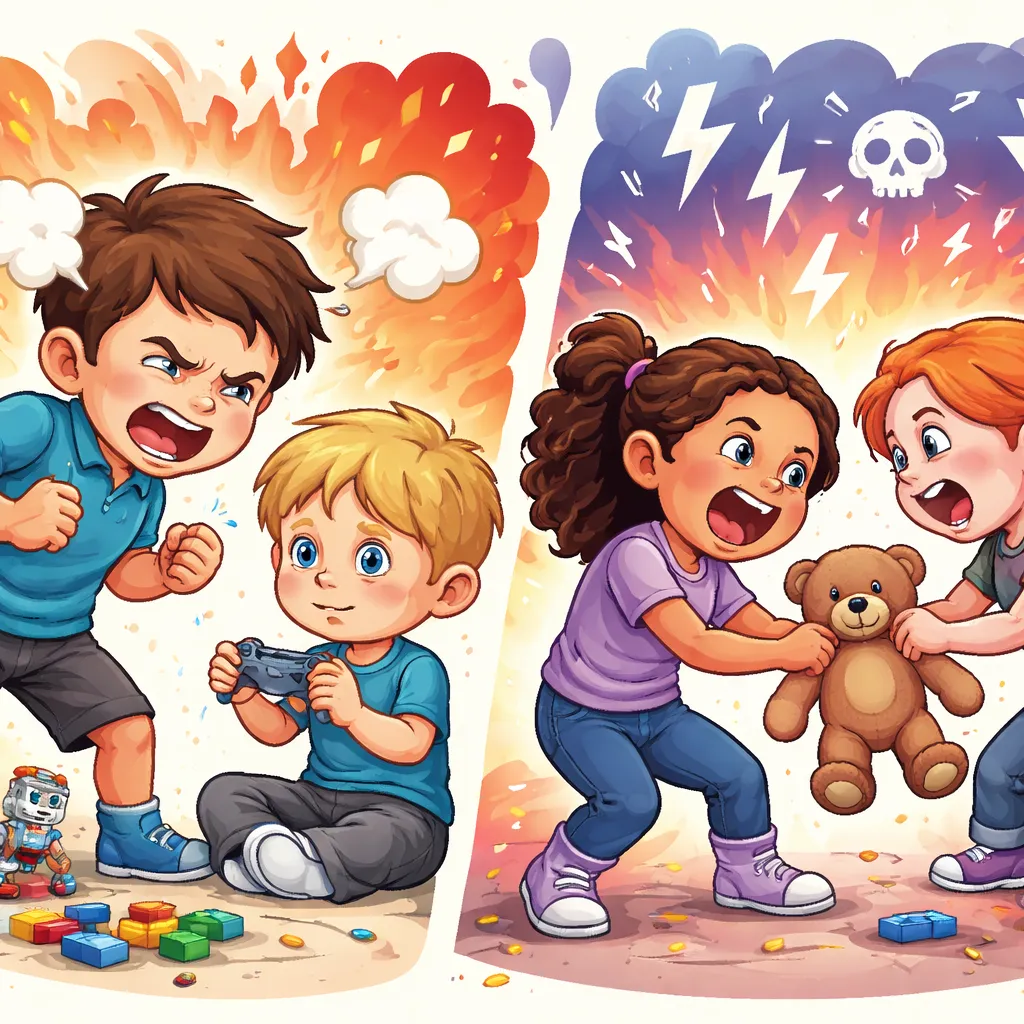
When comparing intensity, furious is much stronger than angry.
Angry can describe a wide range of feelings. It may be calm or controlled.
Furious suggests powerful and sometimes uncontrollable emotion. It can feel explosive.
For example:
A child may feel angry when losing a game. A person may feel furious after a serious problem.
This difference helps children describe how strong their feelings are.
It also teaches emotional awareness and control.
Set 4: angry and furious — Concrete vs Abstract
Both angry and furious describe abstract feelings. They are not physical objects.
Angry can connect to visible signs:
an angry face an angry voice
Children can easily recognize these expressions.
Furious often describes internal intensity:
a furious reaction a furious response
It feels more dramatic and less visible in simple ways.
This makes angry easier for young learners. Furious adds depth as they grow.
Set 5: angry and furious — Verb or Noun? First Understand the Role
Understanding parts of speech helps children use words correctly.
Angry is mainly an adjective:
an angry child an angry reply
It connects to the noun anger:
He felt anger.
Furious is also an adjective:
a furious reaction a furious argument
It connects less directly to a noun, but relates to strong anger.
Learning these forms helps children expand vocabulary step by step.
Set 6: angry and furious — American English vs British English
Both angry and furious appear in American and British English. Their meanings stay the same.
Angry is common in both regions. It fits daily speech and simple writing.
Furious also appears in both, but often in stronger or more expressive contexts.
Children can safely use angry in most situations. Learning furious adds expressive power.
Set 7: angry and furious — Which Fits Formal Situations?
Word choice matters in formal settings.
Angry works in both informal and formal contexts. It is simple and clear.
Furious sounds more dramatic. It can appear in:
stories reports strong descriptions
For example:
“He was angry” sounds neutral. “He was furious” sounds intense and vivid.
Teaching this difference helps children choose the right tone.
Set 8: angry and furious — Which One Is Easier for Kids to Remember?
Children learn best with simple and familiar words.
Angry is easier because:
it is short it appears often it connects to daily feelings
Furious is longer and less common. It may feel harder at first.
However, once children understand strong emotions, they can use furious more naturally.
Parents can use stories and examples to explain it.
Mini Exercise: Can You Spot the Differences Between These Similar Words?
Try these exercises together.
Choose the correct word: angry or furious.
He felt ______ when he lost his toy. She was ______ after the unfair decision. The child looked ______ during the argument. He became ______ when the problem got worse.
Answers:
angry furious angry furious
Encourage children to explain their choices. This builds deeper understanding.
Parent Tips: How to Help Kids Learn and Remember Similar Words
Parents can guide children step by step.
Start with angry. Use it in daily conversations. Talk about feelings openly and calmly.
Then introduce furious as a stronger word. Explain that it describes bigger emotions.
Ask simple questions:
Is this feeling small or strong? Can we control this feeling easily?
Use real-life examples. A small problem may cause anger. A big problem may cause fury.
Encourage children to express emotions with words. This helps them manage feelings better.
Keep the learning supportive and positive. When children understand words like angry and furious, they also learn how to understand and express their emotions in a healthy way.