
A Friendly Hello and First Impressions
Salam! (sah-LAHM). This is a peaceful "Hello" in Farsi. Mamnoon! (mam-NOON). This is a warm "Thank you". People say it with kindness. Learning reading about Iran starts with these gentle, ancient words.
Iran is a large country in Western Asia. Its shape looks like a sitting cat. The cat faces the Middle East. The country is in Asia. The Caspian Sea is to the north. The Persian Gulf is to the south. Turkey, Afghanistan, and Pakistan are its neighbors. The land is mostly a high plateau with huge mountains. It is a country of deserts and ancient history.
People call it "Persia". This was its name for thousands of years. The name changed to Iran in 1935. Another nickname is the "Land of the Aryans". This is the meaning of the word "Iran". Are you ready to walk in the footsteps of ancient kings?
Deep Dive into Culture and Stories
Echoes of History
A great and just king ruled long ago. His name was Cyrus the Great. He founded the Persian Empire around 550 BCE. His empire was huge. He created the Cyrus Cylinder. This is a clay document. It talks about human rights and freedom. Many call it the first charter of human rights. His story is a key part of learning reading about Iran. It is a story of justice and empire.
Another important time was the Islamic Golden Age. Persian scientists and poets thrived. They made great advances in medicine, astronomy, and literature. This period shows Iran's long history of learning.
A Gift of Knowledge and Beauty
Iran gave the world many gifts. One is algebra. The word "algebra" comes from Arabic. But the Persian mathematician Al-Khwarizmi wrote an important book about it. Another gift is poetry. Poets like Rumi and Hafez are loved worldwide. Their poems are about love, spirit, and life. This love for wisdom and art is a key part of learning reading about Iran.
A Land of Mountains and Deserts
Iran's geography is dramatic. The land is a high plateau. Large mountain rings surround it. The center has two great deserts. The Dasht-e Kavir is a salt desert. The coast near the Caspian Sea is green and lush. The landscape changes from snowy peaks to sand dunes.
The climate is mostly arid. It is hot and dry. The mountains are cooler. The environment shapes life. People grow wheat, barley, and pistachios. They also grow saffron and pomegranates. Traditional houses in the desert have wind towers. These towers catch the breeze for cooling. The main exports are oil, carpets, and pistachios.
A special animal is the Asiatic cheetah. It is very rare and lives in the central plateau. The national animal is the Persian lion. The national bird is the nightingale. It is famous in Persian poetry. The national flower is the red rose. The cypress tree is a national symbol of life and eternity.
Landmarks of Kings and Beauty
Visit Persepolis. It was the ceremonial capital of the Persian Empire. Darius the Great started building it around 518 BCE. The ruins have giant columns and carved stairways. The carvings show people from all over the empire. A fun legend says Alexander the Great burned it down. He needed many camels to carry away its treasure. The site is a UNESCO wonder. It is a symbol of ancient power.
See Naqsh-e Jahan Square. It is in the city of Isfahan. It is one of the largest city squares in the world. The square has a magnificent mosque, a palace, and a bazaar. A fun story says the king played polo here. The square is a masterpiece of Islamic architecture.
Another wonder is the Tabiat Bridge in Tehran. It is a modern landmark. The bridge is for walkers, not cars. It has many levels and curves. It looks like a flowing ribbon. The bridge connects two parks. It is a symbol of modern Iranian design.
Festivals of Fire and New Life
The most important festival is Nowruz. It is the Persian New Year. It happens on the spring equinox, around March 21st. The celebration lasts for 13 days. Families clean their homes thoroughly. They set a special table called the "Haft-Seen".
The table has seven items starting with the letter 'S'. These items symbolize hope, health, and prosperity. One item is sprouted wheat or lentils. This symbolizes rebirth. Another is garlic for health. Families visit each other. Children receive gifts. The festival is about renewal, family, and hope.
Another important day is Revolution Day. It is on February 11th. It marks the Islamic Revolution in 1979. There are large rallies and marches. The day is a major political event.
Food and Flavors
The national dish is Chelow Kebab. It is steamed saffron rice. It is served with grilled meat, usually lamb or chicken. The meal comes with grilled tomatoes and raw onion. Families eat it in restaurants or at home. It is savory, aromatic, and delicious. It is the classic Iranian meal.
You must try Fesenjan. It is a rich stew. It is made with chicken or duck. The sauce is from pomegranate paste and ground walnuts. The stew is sweet, sour, and nutty. People eat it for special occasions. It tastes complex and celebratory.
A Culture of Poetry and Innovation
Poetry is in the soul of Iran. Almost every home has a book of Hafez or Rumi. People read poetry for fun and guidance. This love for words is a beautiful part of learning reading about Iran.
Iran has a strong tradition in science and medicine. Avicenna was a famous Persian doctor. He wrote a medical encyclopedia used for centuries. Today, Iran is a leader in stem cell research and biotechnology. This shows a commitment to knowledge.
Tips for Young Explorers
Cultural Manners Matter
Iranians are very polite and formal. Greetings are important. A handshake is common. Sometimes, people place a hand over their heart and nod. Say "Salam" with a smile. Ask about the person's health. This is good manners.
Always use your right hand. Give gifts, eat food, and shake hands with your right hand. The left hand is considered unclean. This rule is very important.
Dress modestly. This is required by law. Women must cover their hair with a headscarf. They must wear long sleeves and a long coat or tunic. Men should avoid very short shorts. This shows respect for local customs.
A Note on Staying Safe
Iran is generally safe from crime. But political tensions are high. It is important to follow local laws carefully. Do not take photos of military buildings. Avoid all political gatherings. Always be respectful. Travel with a guide if possible.
The sun is very strong, especially in the desert. Use sunscreen. Wear a hat. Drink lots of bottled water. Dehydration is a risk.
A Tasty Stop
Look for "Faloodeh" in a shop. It is a Persian dessert. It is thin vermicelli noodles made from starch. The noodles are in a semi-frozen syrup of sugar and rose water. It is often served with lime juice. Eat it cold. The faloodeh is sweet, floral, and refreshing. It is a perfect treat on a hot day.
Healthy and Happy Travels
Drink only bottled water. This is the most important rule. Do not drink tap water. Avoid ice in drinks. Brush your teeth with bottled water. This keeps your stomach healthy.
Wash your hands often. Carry hand sanitizer. This helps prevent getting sick. Be careful with street food. Eat at busy, clean-looking places.
Be patient and polite. Things may move slowly. Do not show anger or frustration in public. This is considered very rude. A calm and friendly manner is best.
Your Invitation to Explore
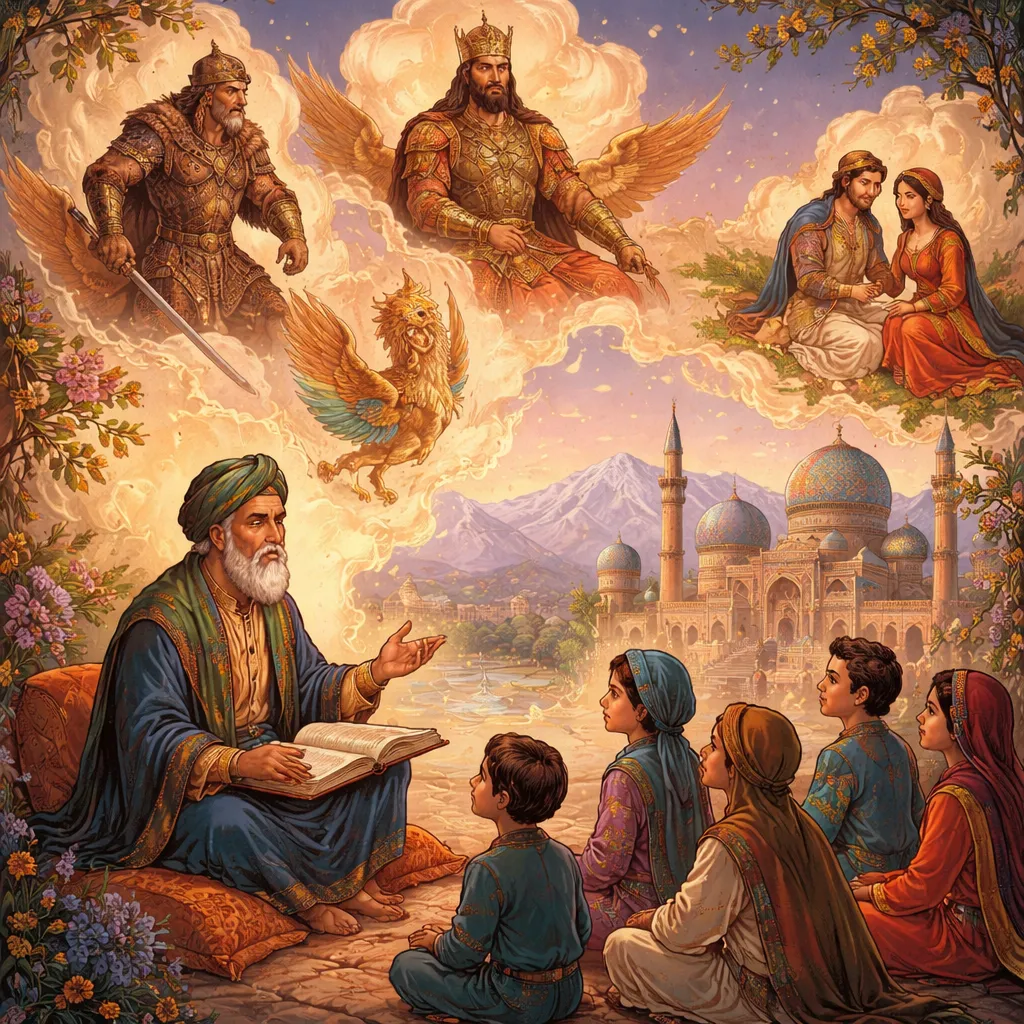
Start your journey with a poem. Read a short poem by Rumi. Think about its meaning. Or, look at pictures of Persian miniature paintings. See the tiny, detailed stories. This is a wonderful way of learning reading about Iran.
Visit a museum with ancient artifacts. Look for something from the Persian Empire. See the craftsmanship. Imagine the world 2,500 years ago. You can also try making a simple Haft-Seen table for spring. Use symbols of growth and health. Think about new beginnings.
The world is a big, ancient book. Each country is a different chapter. Iran's chapter is about empires, poetry, and the celebration of spring. Open it with respect. Read about its history, hospitality, and pursuit of knowledge. Your curiosity is your guide.
Iranian families gather around the Haft-Seen table for Nowruz. Friends discuss poetry for hours. Children fly kites on the last day of the New Year holiday. We all know these feelings. We love celebrating new seasons. We enjoy deep conversations. We play and enjoy the outdoors. Learning about Iran shows us this. Our global family shares the same hopes for renewal and connection. Keep exploring, one page, one country, at a time. Your adventure has just begun.