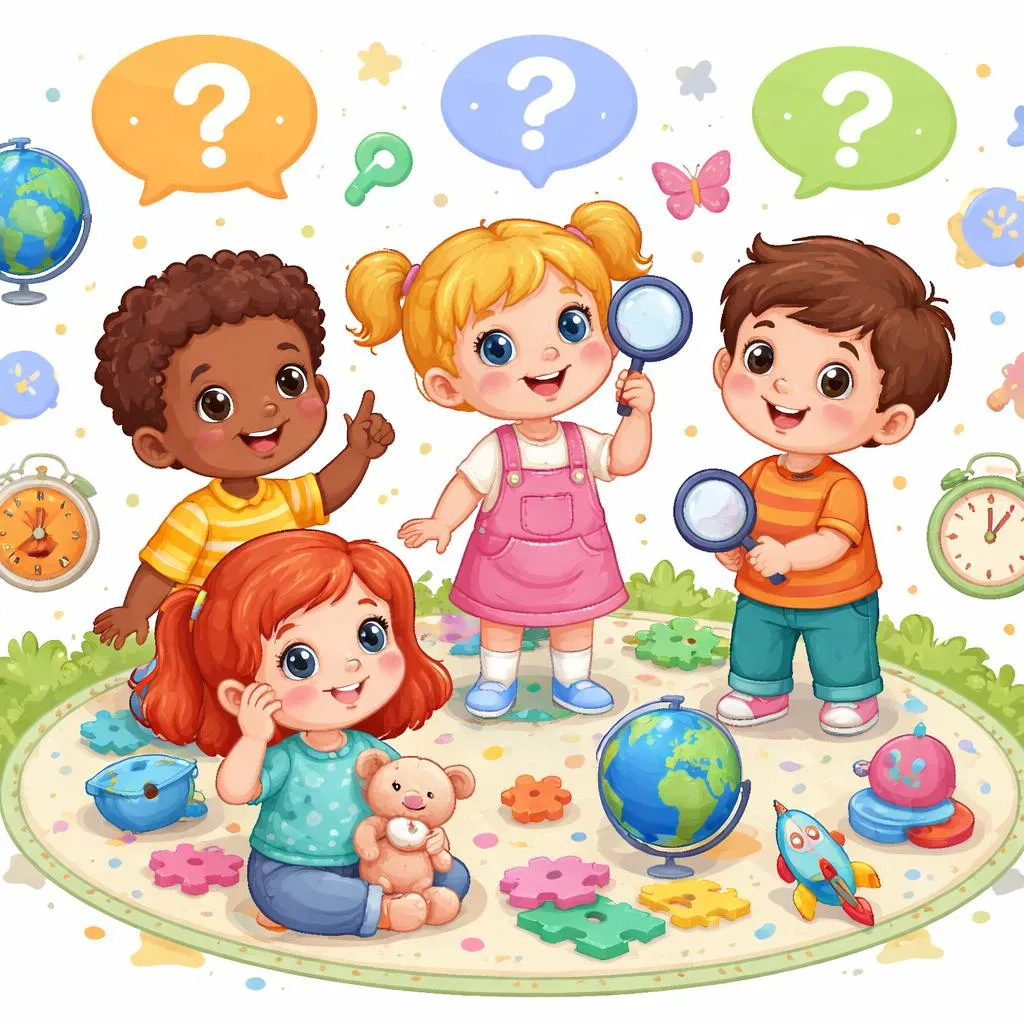

Four-year-olds are full of questions. They want to know everything. Why is the sky blue? Where do birds sleep? What is for snack? These questions are called interrogative sentences. An interrogative sentence asks a question. It ends with a question mark. Questions help children learn about their world. Teaching your child common interrogative sentences helps them ask for what they need to know. This article shares the 50 most common interrogative sentences for 4-year-olds. These will help your child ask questions with confidence.
What Is an Interrogative Sentence for a Four-Year-Old? An interrogative sentence asks a question. It seeks information. It ends with a question mark. "Where is my ball?" That is an interrogative sentence. "Do you want to play?" That is another. Four-year-olds use interrogative sentences all the time. They ask about people, places, things, and reasons. Questions are how they learn. Each question opens a door to new knowledge.
Meaning and Explanation of Interrogative Sentences Interrogative sentences have a special job. They get answers. They help us find out what we do not know. For young children, questions are powerful tools. They help children understand their world. They help them get their needs met. "Can I have a cookie?" might get a yes. "Where is Mommy?" gets information. Questions also help children connect with others. They start conversations. They show interest in other people.
Categories of Interrogative Sentences for Preschoolers We group these interrogative sentences into categories. This helps children understand different kinds of questions. Here are the main groups:
Who Questions: Questions about people.
What Questions: Questions about things and actions.
Where Questions: Questions about places.
When Questions: Questions about time.
Why Questions: Questions about reasons.
How Questions: Questions about manner or condition.
Yes/No Questions: Questions that can be answered with yes or no.
Choice Questions: Questions that offer options.
Daily Life Examples of Interrogative Sentences Questions fill every child's day. In the morning, they ask "Where is my shirt?" At breakfast, they ask "What is this?" During play, they ask "Can you help me?" At the park, they ask "Why is that dog barking?" At bedtime, they ask "Will you read a story?" Parents answer these questions all day long. Each question is a chance to learn and connect.
Who Questions About People Who is that?
Who is coming?
Who made this?
Who is your friend?
Who lives here?
Who is Mommy's mommy?
Who took my toy?
Who is sleeping?
Who will play with me?
Who loves me?
What Questions About Things What is this?
What is that sound?
What are you doing?
What is for snack?
What color is this?
What do you have?
What is that animal?
What happened?
What should I draw?
What does the cow say?
Where Questions About Places Where is my ball?
Where is Mommy?
Where do we go?
Where does the sun go at night?
Where are my shoes?
Where is the bathroom?
Where do birds sleep?
Where is the park?
Where did Daddy go?
Where is my blanket?
When Questions About Time When do we eat?
When is my birthday?
When will Daddy come home?
When can I play?
When is it time for bed?
When will it be morning?
When do we go to the store?
When is Grandma coming?
When can I have a snack?
When will it stop raining?
Why Questions About Reasons Why is the sky blue?
Why do dogs bark?
Why do I have to sleep?
Why is that funny?
Why are you sad?
Why does it rain?
Why can't I have more candy?
Why do birds fly?
Why is the grass green?
Why do we have to go?
How Questions About Manner How do you do that?
How does this work?
How are you?
How old are you?
How do birds fly?
How do I open this?
How does the fish breathe?
How can I help?
How do you make cookies?
How do we get there?
Yes/No Questions for Simple Answers Are you happy?
Do you like this?
Can I have some?
Is it time to go?
Will you play with me?
Did you see that?
Is this for me?
Do we have milk?
Can we go outside?
Is it raining?
Choice Questions for Decisions Do you want milk or juice?
Is this red or blue?
Should we go to the park or the store?
Do you like apples or bananas?
Is it big or little?
Do you want to swing or slide?
Is this hot or cold?
Do you want to read or draw?
Should we walk or run?
Is it morning or night?
Printable Flashcards for Interrogative Sentences Flashcards help children learn question patterns. Create cards with one question on each. Use a question mark on each card. On the back, draw a simple picture that suggests the answer. For "Where is my ball?" draw a ball under a chair. For "What is this?" draw a common object. Show the card and read the question. Have your child repeat. You can also practice answering the questions.
Another idea is to make a question wheel. Write question words on a circle: Who, What, Where, When, Why, How. Attach a spinner. Spin and ask a question with that word. Your child answers. This builds quick thinking with questions.
Learning Activities with Interrogative Sentences Activities help children ask questions naturally. Try these at home:
Question Time: Set aside time each day for questions. Take turns asking and answering. This shows that questions are welcome.
Mystery Box: Put an object in a box with a hole. Your child asks questions to guess what it is. "Is it soft?" "Is it a toy?"
Interview Game: Pretend to be a reporter. Ask your child questions about their day. "What did you do today?" "Who did you play with?"
Story Questions: Read a story and pause to ask questions. "Why did the bear run away?" "Where will they go next?"
Question Hunt: Hide pictures around the room. Your child finds them and asks a question about each one. "What is this animal?"
Learning Activities for Specific Question Types For Who questions, look at family photos. Ask "Who is this?" Your child answers and then asks you. For What questions, play "I Spy" with questions. "What is blue and round?" For Where questions, play hide and seek with a toy. Ask "Where is the bear?" Your child finds it and hides it for you to find. For Why questions, read books and ask "Why do you think that happened?" This builds thinking skills.
Educational Games Using Interrogative Sentences Games make asking questions fun. Here are some favorites:
20 Questions: Think of an object. Your child asks up to 20 yes/no questions to guess it. "Is it an animal?" "Is it big?"
Question Bingo: Make bingo cards with question words. Call out a question. Your child covers the question word it starts with.
Question Cube: Make a cube with question words on each side. Roll it. Your child asks a question starting with that word.
Hot and Cold: Hide an object. Your child asks questions to find it. "Is it in the kitchen?" You answer "hot" for close, "cold" for far.
Question Relay: Take turns asking and answering questions as fast as you can. This builds fluency.
Game Ideas for Different Settings In the car, play "Question Game." Look at things outside and ask questions. "Why is that truck so big?" "Where is that car going?" Your child asks too. At the park, ask questions about what you see. "How does the swing work?" "Why is the slide slippery?" At mealtime, ask questions about food. "Where does milk come from?" "Why are carrots orange?"
How to Teach Interrogative Sentences Naturally Be a good model. Ask lots of questions yourself. Show curiosity about the world. "I wonder why the leaves change color." "Where do you think that bird is going?" Your child learns that questions are a normal part of thinking.
Answer your child's questions patiently. Every question is a learning opportunity. If you do not know the answer, say so. "That is a great question. Let's find out together." This models lifelong learning.
Why Interrogative Sentences Matter for Four-Year-Olds Questions are how children learn. They ask about everything because they want to understand. When children ask questions, they are actively learning. They are not just receiving information. They are seeking it. This builds critical thinking skills.
Questions also build relationships. When children ask about others, they show interest. "How are you?" "What are you doing?" These questions connect people. They build empathy and social skills.
Tips for Parents to Support Interrogative Sentence Learning Encourage all questions. Never dismiss a question as silly. Every question is valid to a curious child. If you cannot answer right away, write it down and come back to it.
Ask open-ended questions. Instead of "Did you have fun?" ask "What was the best part of your day?" This invites longer answers and more thinking.
Use question words on signs around the house. "Who lives here?" on the family photo wall. "What is in the fridge?" on the refrigerator. This makes questions part of the environment.
The Power of Repetition with Interrogative Sentences Children ask the same questions again and again. This is how they learn. Each time they ask, they check their understanding. They confirm the answer. Be patient. Answer each time with the same warmth.
Sing songs that are full of questions. "Where is Thumbkin?" "Do you know the muffin man?" These songs make question patterns memorable.
Create routines around questions. At breakfast, ask "What should we do today?" At bedtime, ask "What was your favorite part of today?" These routines build a questioning habit.
Connecting Interrogative Sentences to Books and Media Choose books with lots of questions. Many picture books have characters asking questions. Point them out. "Look, the bear is asking a question." Ask your child to find the question marks.
Educational videos can also help. Watch together and pause when a character asks a question. Ask your child what the answer might be. This builds prediction skills.
Making an Interrogative Sentence-Rich Environment Create a "question of the day" board. Each day, write a new question. "Why is the sky blue?" "What is your favorite color?" Talk about it throughout the day.
Make a question jar. Write questions on slips of paper. Take turns pulling one out and answering it. This makes questioning a game.
Encouraging Your Child to Ask Questions Show interest in your child's questions. Stop what you are doing and give attention. Say "That is a wonderful question!" This encourages more questions.
When your child does not ask, prompt them. "What are you wondering about?" "Is there something you want to know?" This invites questioning.
Celebrating Progress with Interrogative Sentences Notice when your child asks a new kind of question. "You asked a 'why' question today! That is great thinking!" This positive feedback encourages more complex questions.
Remember that every child develops at their own pace. Some ask many questions early. Others observe more and ask less. Both are normal. Your support and encouragement make the difference.
By teaching your child these 50 most common interrogative sentences, you give them the keys to knowledge. They can ask about anything they wonder. They can learn about their world. They can connect with others through curiosity. Enjoy each new question together. Every "why" and "how" opens a door to discovery.