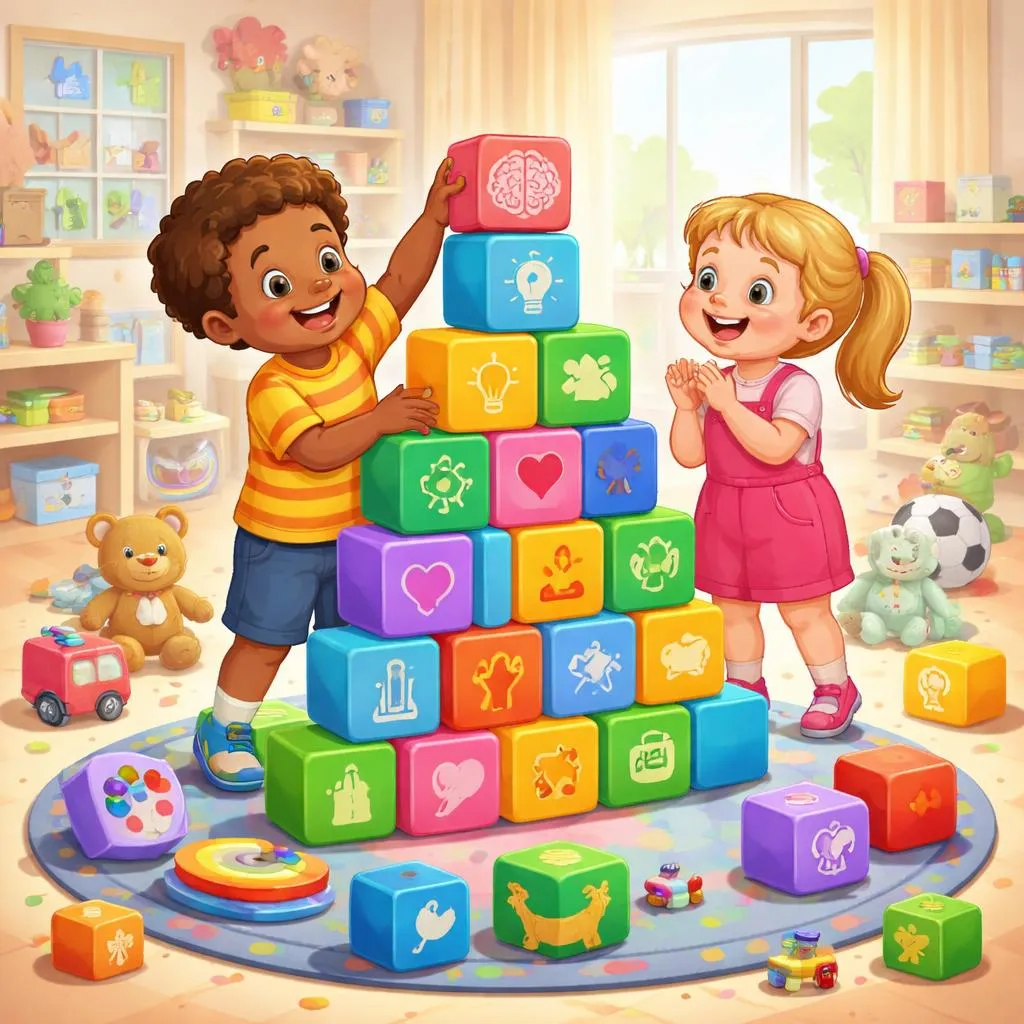

Hello, little sentence builder! Do you know about building blocks? Some blocks are big and strong. They can stand up all by themselves. Other blocks are small. They need a big block to lean on. Words can be built into blocks too. These word blocks are called clauses. A clause is a group of words that has a subject and a verb. Some clauses are strong and complete. They are independent clauses. Some clauses need help. They are dependent clauses. Today, we will build with sixty wonderful word blocks. Our guide is Billy the Beaver. Billy is a master builder who loves to make dams with blocks! He will show us clauses at home, the playground, school, and by the river. Let's start building!
What Is a Clause? A clause is a word building block. It is a group of words that has a subject (who or what) and a verb (the action or state). A clause can be a complete thought. Or it can be an incomplete thought. Think of it like a building block. A big, strong block can stand alone. That is an independent clause. A smaller block needs to lean on a big block. That is a dependent clause. At home, you say "I see a toy." This is a big, strong block. It is an independent clause. It is a complete thought. Now, look at this block: "because I am happy". It has a subject (I) and a verb (am), but it is not complete. It needs to lean. "I smile because I am happy." At the playground, you say "I can swing high." That is a big block. At school, you say "When the bell rings, we line up." "When the bell rings" is a small block. It leans on "we line up". In nature, Billy says "Billy builds dams because he is a beaver." Learning these must-know clauses helps you build longer, more interesting sentences.
Why Do We Need Word Building Blocks? Clauses are your thought tools! They help your ears listen. You can hear how ideas are connected. They help your mouth speak. You can give reasons and tell better stories. "I am crying because I fell." They help your eyes read. You will see how authors join ideas in books. They help your hand write. You can write sentences that explain and describe. Using both big and small blocks makes you a master builder of language.
What Are the Two Main Types of Blocks? We have two main types of word blocks. Each one is very important.
First, the independent clause. This is a big, strong block. It is a complete thought. It can stand alone as a sentence. It has a subject and a verb. "The sun is shining." "I like apples." "Birds fly."
Next, the dependent clause. This is a small block. It has a subject and a verb, but it is not a complete thought. It cannot stand alone. It needs an independent clause. It often starts with special words like because, when, if, after, before, since, although. "When I wake up, I stretch." "Because it is raining, we stay inside."
How Can You Spot a Word Block? Spotting a clause is a fun game. Look for a group of words. Ask: "Does this group have a subject and a verb?" If yes, it is a clause! Then ask: "Can it stand alone as a complete thought?" If yes, it is an independent clause. If no, it is a dependent clause. Look at Billy's dam. "Billy builds a dam." This is an independent clause. It is complete. "Because he needs a home" is a dependent clause. It is not complete. It needs the other block. Another trick: Dependent clauses often start with special "joining words".
How Do We Build with Our Blocks? Building with clauses is about connecting them. You can put an independent clause first. "I eat lunch when the clock strikes twelve." You can put a dependent clause first. "When the clock strikes twelve, I eat lunch." If the dependent clause comes first, use a comma after it. You connect them with the special joining word. Billy shows us. "After Billy works, he takes a nap." Dependent clause: After Billy works. Independent clause: he takes a nap. Start with a simple independent clause. Then, try adding a reason with "because".
Let's Fix Some Wobbly Blocks. Sometimes our building gets a little wobbly. Let's fix that. A common wobble is leaving a dependent clause alone. A child might say "Because I am tired." This is a small block. It is leaning on nothing! It needs a big block. "I am going to bed because I am tired." Another wobble is making a run-on sentence. "I played I ate I slept." This is three big blocks stuck together. Use joining words or periods. "I played, and then I ate. After that, I slept." Also, remember the comma when the dependent clause starts the sentence.
Can You Be a Clause Builder? You are a great builder! Let's play a game. The "Big Block or Small Block?" game. I will say a clause. You tell me if it is an independent (big) or dependent (small) clause. "I see a cat." You say: "Big block! It can stand alone." "If I see a cat " You say: "Small block! It needs more." Great! Here is a harder challenge. Take a big block and add a small block to it. Big block: "The dog barks." Small block: "because he is excited." You say: "The dog barks because he is excited." You are building with must-know clauses.
Your Block Box of 60 Must-Know Clauses. Ready to open the block box? Here are sixty wonderful word blocks. Billy the Beaver has collected them. They are sorted by the scene. Each group has independent clauses (big blocks) and dependent clauses (small blocks). The small blocks start with joining words.
Home Block Box (15). Independent Clauses (Big Blocks that stand alone):
- I love my mom.
- Dad makes breakfast.
- My bed is soft.
- We watch TV.
- The baby sleeps. Dependent Clauses (Small Blocks that need help):
- because I am hungry.
- when I wake up.
- if I am good.
- after I clean my room.
- since it is morning.
- although I am small.
- before I go to bed.
- while I eat my snack.
- unless I am sick.
- as I get dressed.
Playground Block Box (15). Independent Clauses (Big Blocks):
- The sun is hot.
- We play games.
- I can swing high.
- My friend laughs.
- The ball bounces. Dependent Clauses (Small Blocks):
- because it is fun.
- when the bell rings.
- if the slide is dry.
- after we run.
- since we are friends.
- although I fell down.
- before we go home.
- while the sun shines.
- unless it rains.
- as I climb the ladder.
School Block Box (15). Independent Clauses (Big Blocks):
- The teacher helps us.
- I learn new things.
- School is fun.
- We sing songs.
- Books have stories. Dependent Clauses (Small Blocks):
- because she is kind.
- when I listen.
- if I try hard.
- after we finish work.
- since it is Monday.
- although it is hard.
- before lunch time.
- while the teacher talks.
- unless I need help.
- as I write my name.
Nature and Animal Block Box (15). Independent Clauses (Big Blocks):
- The bird sings.
- Flowers grow.
- Water is wet.
- The bear sleeps.
- Trees are tall. Dependent Clauses (Small Blocks):
- because it is happy.
- when the sun shines.
- if it rains.
- after winter ends.
- since it is spring.
- although it is cold.
- before night comes.
- while the river flows.
- unless it is dark.
- as the wind blows.
Putting the Blocks Together. Now, let's build some sentences by joining a big block and a small block. Here are ten examples from our box:
- I love my mom because she is kind.
- When I wake up, Dad makes breakfast.
- We play games because it is fun.
- If the slide is dry, I can swing high.
- The teacher helps us when I listen.
- I learn new things if I try hard.
- The bird sings because it is happy.
- When the sun shines, flowers grow.
- After winter ends, the bear sleeps.
- Although I am small, I can do big things.
These sixty clauses are your must-know word blocks. Use them to build strong, detailed sentences.
Building Strong Sentences with Your New Blocks. You did it! You are now a clause expert. You know a clause is a word building block with a subject and a verb. You know independent clauses are big, strong blocks. You know dependent clauses are small blocks that need support. You can spot them and connect them to build better sentences. Billy the Beaver is proud of your building skills. Now you can give reasons, tell when things happen, and make your sentences more powerful. Your stories will be full of connected ideas.
Here is what you can learn from our building adventure. You will know what a clause is. You will understand the difference between independent and dependent clauses. You can identify clauses in a sentence. You can use joining words like because and when to connect clauses. You have a block box of sixty essential clauses to use.
Now, let's do some life practice! Your mission is today. Be a clause builder. Listen for the word "because" or "when" when people talk. Then, try to say a sentence that connects two ideas. Tell your grown-up: "I am happy because we are playing. I will eat a snack when I am hungry." You just used dependent clauses! Keep building with your word blocks every day. Have fun, little builder!