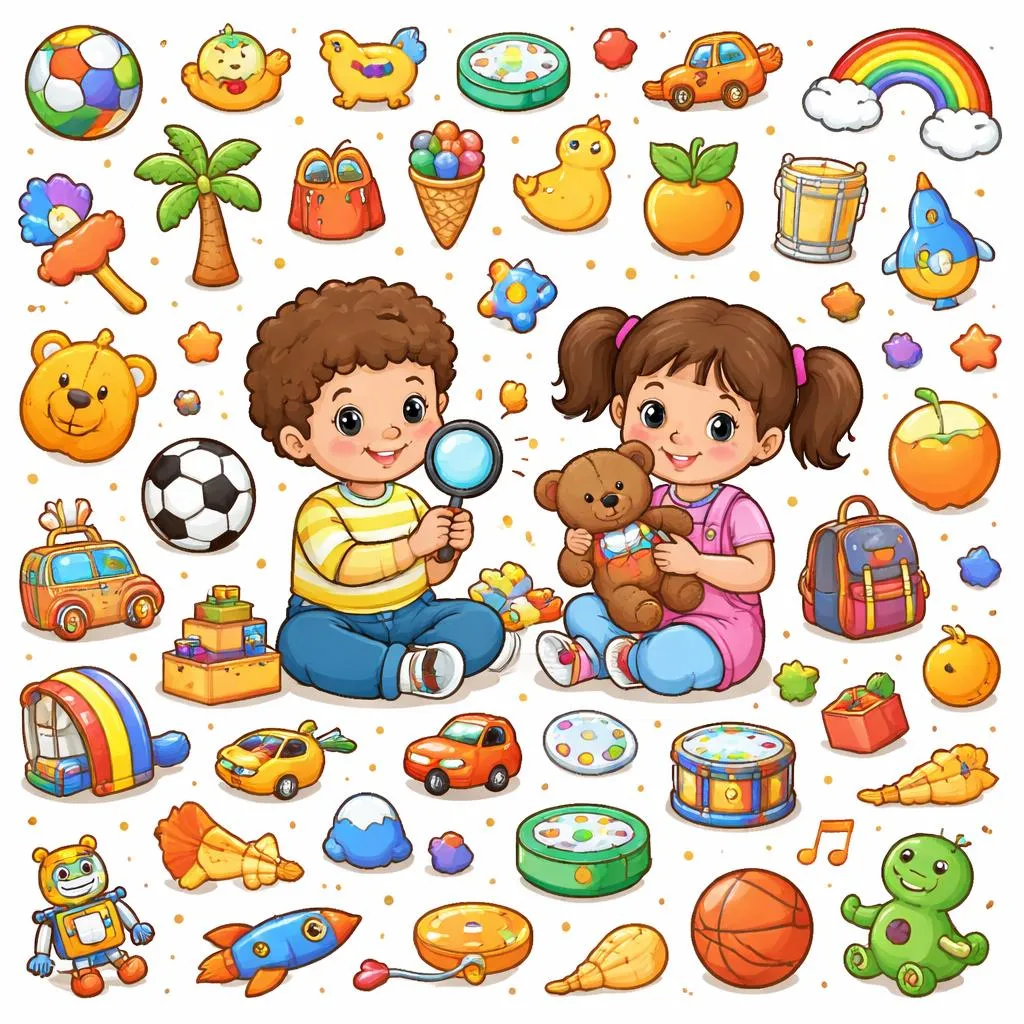

Every action needs something to receive it. When someone throws, they throw something. When someone sees, they see something. That something is the object of the sentence. For a six-year-old, understanding objects helps them build complete sentences and express their ideas more clearly. This guide will help you explore the 70 most common object for 6-year-old learners in ways that feel natural and encouraging for both you and your child.
What Is an Object? An object is the person or thing that receives the action of the verb. In the sentence "The boy kicked the ball," the ball is the object. It is what the boy kicked. In "Mommy read a story," a story is the object. It is what Mommy read. In "I love my dog," my dog is the object. It is who I love. Objects answer the question "what?" or "whom?" after the verb.
Meaning and Explanation Objects complete the meaning of many verbs. Some verbs need an object to make sense. If someone says "I bought," we naturally wonder "You bought what?" The object answers that question. "I bought a toy." Now the sentence feels complete. For a six-year-old, we can explain objects as the things that get acted upon. If you are throwing, something gets thrown. If you are eating, something gets eaten. That something is the object.
Direct Objects Direct objects receive the action directly from the verb. They answer the question "what?" or "whom?" after the verb. "The girl painted a picture." Picture is the direct object. "He hugged his mother." Mother is the direct object. "We ate pizza." Pizza is the direct object. Children use direct objects constantly in their speech. "I want juice." "She found a shell." "He built a tower." These objects are essential for expressing complete thoughts.
Indirect Objects Some sentences have both a direct object and an indirect object. The indirect object tells us to whom or for whom the action is done. It usually comes before the direct object. "Mommy read me a story." Me is the indirect object. Story is the direct object. "I gave my friend a gift." My friend is the indirect object. Gift is the direct object. "Daddy made us pancakes." Us is the indirect object. Pancakes is the direct object. These sentences show children how actions can involve multiple people and things.
Daily Life Examples Objects fill children's sentences every day. At breakfast, they might say "I want cereal" or "Pour the milk." During play, they say "Throw the ball" or "Find my truck." At school, they say "Read this book" or "Color the picture." At home, they say "Hug Mommy" or "Feed the dog." These everyday objects come naturally because they are the things children interact with most.
People as Objects Sometimes the object of a sentence is a person. When this happens, we often use object pronouns like me, you, him, her, us, and them. "Grandma loves me." "I see you." "She helped him." "We called her." "The teacher praised us." "I like them." These object pronouns help children talk about the people in their lives without repeating names. Learning to use them correctly takes practice, but children absorb the patterns through hearing them in conversation.
Things as Objects Most objects in children's sentences are things they can see and touch. Toys are common objects. "I want the ball." "She found a shell." "He lost his truck." Food is another common category. "Eat your lunch." "Drink the milk." "Cut the apple." Clothing appears often. "Put on your shoes." "Wash your hands." "Fold the blanket." These concrete objects are easy for children to understand because they are part of their physical world.
Learning Tips for Parents The best way to help your child understand objects is to notice them together in everyday language. When you read together, you can occasionally ask "What did she find?" or "Who did he hug?" This gentle questioning helps children identify objects without formal grammar lessons.
Modeling complete sentences with clear objects in your own speech is also helpful. Instead of just saying "I bought," say "I bought some strawberries at the store." Instead of "She drew," say "She drew a beautiful rainbow." Your child hears these complete thoughts and learns to include objects in their own sentences.
Educational Games Games make learning about objects playful and engaging. One simple game is "Object Hunt." Look around the room and take turns making sentences about things you see, making sure to include the object. "I see the clock." "You see the window." "She sees the lamp." After each sentence, ask "What is the object?" This game connects objects to the immediate environment.
Another favorite is "Finish My Sentence." Start a sentence without the object and have your child complete it. "I want..." "...a cookie." "She found..." "...a pretty shell." "He threw..." "...the ball." This game gives children practice supplying objects naturally.
Using the 70 most common object for 6-year-old learners, you can create simple "Object Cards." Write each object on an index card with a simple picture. Spread the cards out along with subject and verb cards. Take turns choosing a subject, a verb, and an object to make complete sentences. "The dog + ate + the bone = The dog ate the bone." This game builds sentence skills while reinforcing all the parts.
The "Object Swap" game helps children understand how changing the object changes the meaning. Start with a simple sentence like "I ate an apple." Then ask your child to swap the object with something else. "I ate a sandwich." "I ate some grapes." "I ate my lunch." This game shows how the same verb can work with many different objects.
Movement games also work well with objects. Call out an action and have your child act it out with an imaginary object. "Show me throwing a ball." Your child pretends to throw. "Show me reading a book." Your child pretends to read. "Show me hugging a teddy bear." Your child pretends to hug. Then ask "What did you throw? What did you read? What did you hug?" This connects actions with their objects in a physical way.
The "Mystery Object" game builds vocabulary and object recognition. Describe an object without naming it and have your child guess what it is. "This is something you drink from. It has a handle. Mommy drinks coffee from it." Your child guesses "a cup!" Then switch roles and let your child describe an object for you to guess.
Remember that understanding objects helps children build complete, clear sentences. Your child does not need to master this concept overnight. The goal is simply to become aware that many verbs need something to complete their meaning. Through your gentle guidance, through playful games, and through the natural flow of conversation, the 70 most common object for 6-year-old learners will become familiar and comfortable.
Your patience and encouragement make all the difference. When your child uses objects correctly in their sentences, celebrate their success. When they leave out an object, you can gently model the complete form. "You said 'I want.' What do you want? I want a snack?" Language grows best in an atmosphere of love and acceptance, where exploring new ideas feels safe and rewarding. With your support, your child will continue to build their understanding of how sentences work, gaining confidence and skill with each passing day.