
Every long journey begins with a single step. Every complex sentence begins with a simple one. Simple sentences are the foundation of all communication. They express one complete thought with one subject and one predicate. For a six-year-old, mastering simple sentences builds confidence and provides the tools they need to express their ideas clearly. This guide will help you explore the 70 most common simple sentence for 6-year-old learners in ways that feel natural and encouraging for both you and your child.
What Is a Simple Sentence? A simple sentence has one subject and one predicate. It expresses one complete thought. It can be very short or quite long, but it always has just one independent clause. "The dog runs." is a simple sentence. "The big brown dog runs quickly through the park." is also a simple sentence. Both have one subject and one predicate. The longer version just has more describing words. Simple sentences are the building blocks for all other sentence types.
Meaning and Explanation Think of simple sentences as the basic units of meaning. They are like single bricks in a wall. By themselves, they make a complete statement. When we put them together, we build more complex ideas. For a six-year-old, we can explain that simple sentences say one thing about one person or thing. "I like ice cream." That is one thought. "The sun is shining." That is one thought. Simple sentences are easy to understand and easy to say.
Subject-Verb Sentences The simplest simple sentences have just a subject and a verb. They tell us who did what. Children use these constantly. "Birds sing." "Dogs bark." "I run." "Mommy cooks." "Daddy works." These two-word sentences are among the first that children learn. They express complete thoughts with minimal words. As children grow, they add more details, but the basic subject-verb pattern remains.
Subject-Verb-Object Sentences Many simple sentences add an object to the subject and verb. The object receives the action. "I eat apples." "She reads books." "He kicks the ball." "We build towers." "They play games." These sentences tell us not just what someone did, but what they did it to. They give a more complete picture of the action. Children use these sentences constantly to describe their interactions with the world.
Subject-Verb-Complement Sentences Some simple sentences use a linking verb and a complement to describe the subject. The complement can be an adjective or a noun. "I am happy." "The sky is blue." "She is a teacher." "We are friends." "The soup tastes good." These sentences tell us what the subject is or is like. They help children describe themselves, others, and the world around them.
Daily Life Examples Simple sentences fill every moment of a child's day. In the morning, they say "I am hungry." "The sun is up." "I want cereal." During play, they say "I built a tower." "The ball rolled away." "My friend is here." At mealtime, they say "This tastes good." "I don't like carrots." "I want more milk." At bedtime, they say "I am tired." "Read a story." "The moon is bright." Each simple sentence shares one complete thought.
Simple Sentences About Feelings Children use simple sentences constantly to express their emotions. "I am happy." "I feel sad." "That scares me." "I love you." "This makes me mad." These simple statements help children process their feelings and let others know how they are doing. The simplicity of these sentences makes them powerful. They communicate clearly and directly what a child needs others to know.
Simple Sentences About Actions Children also use simple sentences to describe what they and others are doing. "I am running." "Daddy is working." "The dog is sleeping." "We are playing." "She is jumping." These sentences capture the action of the moment. They help children share their experiences and stay connected with what is happening around them.
Learning Tips for Parents The best way to help your child master simple sentences is to use them clearly in your own speech. When you talk with your child, use simple sentences often. "I see a bird." "The sky is blue." "We are going to the park." Your child hears these patterns and learns to use them.
When your child speaks, you can gently expand their simple sentences without correcting them. If they say "Dog run," you can say "Yes, the dog is running fast." This models a more complete simple sentence while affirming their communication.
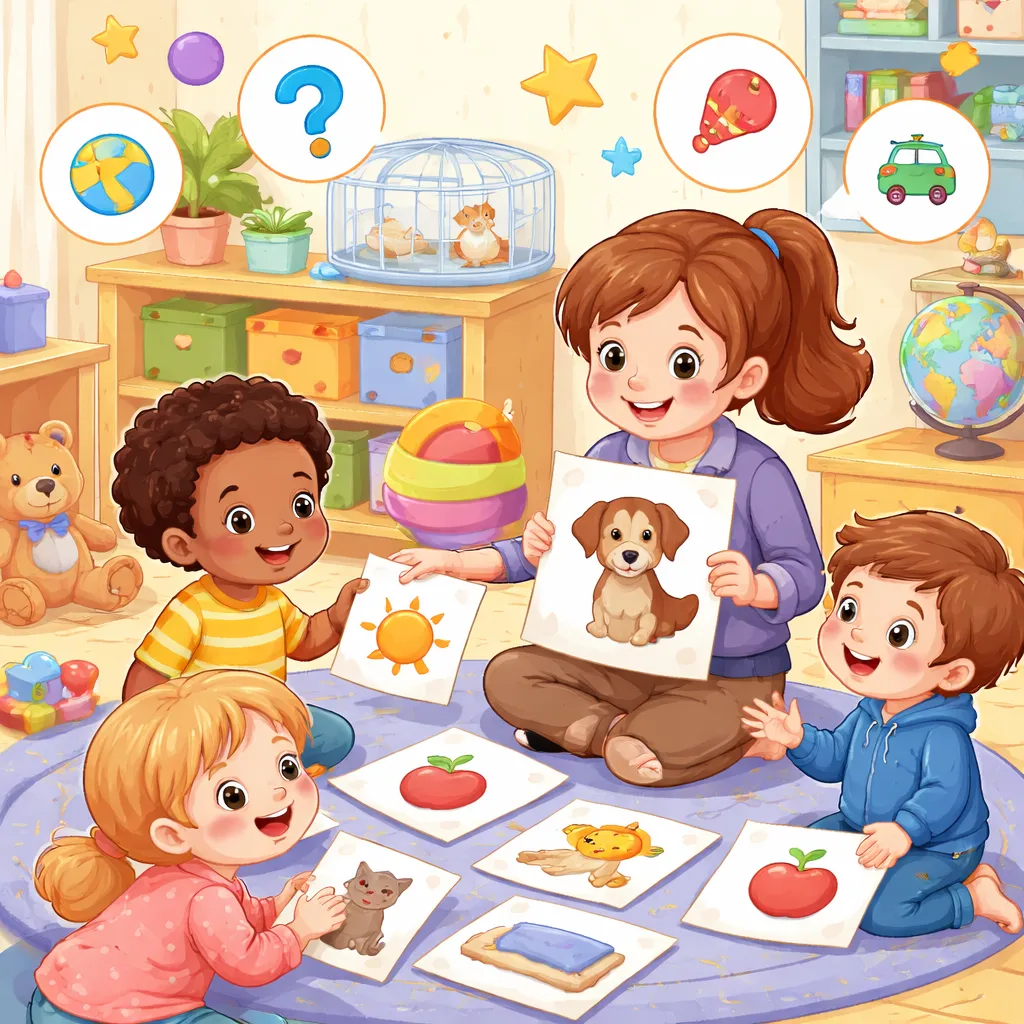
Educational Games Games make learning about simple sentences playful and engaging. One simple game is "Sentence Building with Pictures." Show your child a picture and ask them to describe it using a simple sentence. For a picture of a cat sleeping, they might say "The cat sleeps." For a picture of children playing, they might say "The kids play." This game connects sentences with visual images.
Another favorite is "Finish the Sentence." Start a simple sentence and have your child complete it with their own words. "I like to..." "The dog is..." "Today we..." This game gives children practice forming complete thoughts while being creative.
Using the 70 most common simple sentence for 6-year-old learners, you can create simple "Sentence Cards." Write each sentence on an index card with a simple picture. Practice reading the sentences together. Then mix up the cards and have your child match sentences to pictures. This builds reading skills while reinforcing sentence patterns.
The "Sentence Scramble" game helps children understand word order in simple sentences. Write simple sentences on strips of paper, then cut them into individual words. Mix up the words and have your child put them back in the correct order. Start with very short sentences of three words, then gradually increase the length.
The "I Spy" game works wonderfully with simple sentences. "I spy with my little eye something blue." Your child guesses "The chair?" "Yes, the chair is blue." This game practices simple sentences in a playful guessing context.
Movement games also work well with simple sentences. Call out simple sentences and have your child act them out. "The bird flies." Your child flaps their arms. "The fish swims." Your child makes swimming motions. "The baby sleeps." Your child pretends to sleep. This kinesthetic learning connects sentences with physical movement.
Storytelling games provide wonderful opportunities for simple sentence practice. Start telling a story using only simple sentences. "Once there was a bear. The bear lived in a forest. He loved honey." Have your child continue the story, adding more simple sentences. This builds narrative skills while practicing the sentence type.
The "Question and Answer" game helps children practice simple sentences in conversation. Ask simple questions that encourage simple sentence answers. "What is your favorite food?" "Pizza is my favorite." "Where do you like to play?" "I like to play at the park." This game shows how simple sentences work in real communication.
Remember that simple sentences are the foundation of all language. Your child will use them for their whole life. The goal is not just to learn specific sentences but to understand the pattern so they can create their own. Through your gentle guidance, through playful games, and through the natural flow of conversation, the 70 most common simple sentence for 6-year-old learners will become comfortable and familiar tools.
Your patience and encouragement make all the difference. When your child forms a clear simple sentence, celebrate their success. When their sentences are unclear, you can gently ask for clarification. Language grows best in an atmosphere of love and acceptance, where trying to communicate feels safe and rewarding. With your support, your child will continue to build their ability to express one complete thought at a time, gaining confidence and skill with each passing day.