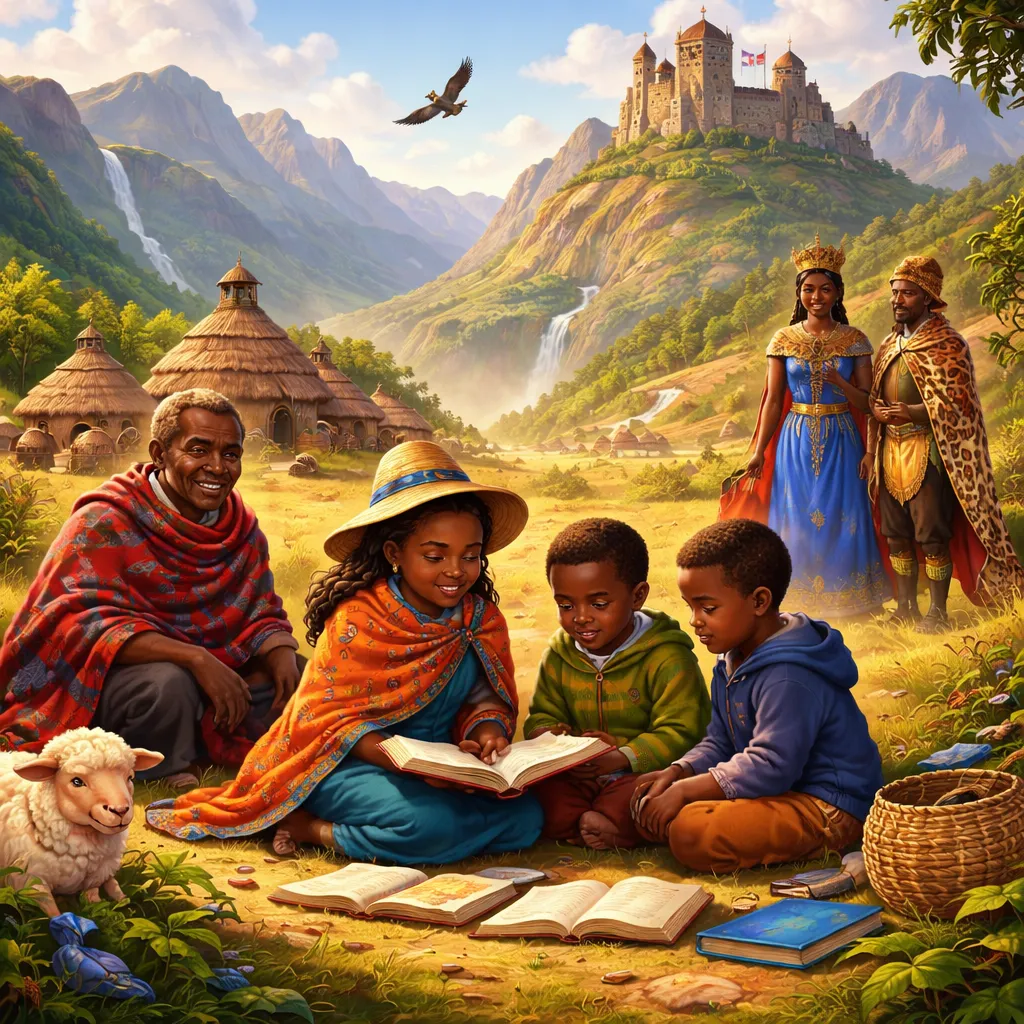

A Friendly Hello and First Impressions
Lumela! (loo-MEH-lah). This is a friendly "Hello" in Sesotho. Kea leboha! (keh-ah leh-BOH-hah). This is a warm "Thank you". People say it with a smile. Learning reading about Lesotho starts with these gentle, musical words.
Lesotho is a small country in Southern Africa. It is completely surrounded by another country. Its shape looks like a rough circle. The circle is in the middle of South Africa. The country is in Africa. South Africa is its only neighbor. The land is very high and mountainous. It is the only country in the world entirely above 1,000 meters. It is a kingdom of stunning mountains and clear skies.
People call it the "Kingdom in the Sky". It is the highest country on Earth. Another nickname is the "Mountain Kingdom". The Maloti and Drakensberg mountains cover it. Are you ready to visit a land where kings rule and ponies climb mountains?
Deep Dive into Culture and Stories
Echoes of History
A wise and peaceful king united the people. His name was Moshoeshoe I. He lived in the early 1800s. He brought different clans together. He built his fortress on a flat-topped mountain. The mountain was called Thaba Bosiu. It means "Mountain of the Night". It was easy to defend. He protected his people from war. His story is a key part of learning reading about Lesotho. It is a story of unity and clever leadership.
Another important modern figure is King Letsie III. He is the current king. He is a symbol of unity. He works for the people. The king is very respected. This history is a key part of learning reading about Lesotho today.
A World of Water and Wool
Lesotho gives its neighbor a vital resource. It is water. Lesotho's mountains catch rain. The water is clean and fresh. Lesotho sells water to South Africa. The country also gives the world beautiful mohair. Mohair comes from Angora goats. The wool is soft and warm. This gift of water and wool is a key part of learning reading about Lesotho.
A Land of Peaks and Valleys
Lesotho's geography is all mountains. The lowlands are in the west. The rest is high mountains and deep valleys. The highest peak is Thabana Ntlenyana. The landscape is rugged, green, and beautiful.
The climate is temperate. Summers are warm with thunderstorms. Winters are cold and snowy. The environment shapes life. People herd sheep, goats, and cattle. They grow maize, wheat, and peas. Traditional houses are round. They are made of stone or mud with thatched roofs. They are called "rondavels". The main exports are clothing, wool, and water.
A special animal is the Basotho pony. It is small and strong. It is used for travel in the mountains. The national animal is the black rhinoceros. The national bird is the bearded vulture. The national flower is the spiral aloe. It is rare and beautiful.
Landmarks of Water and Stone
Visit the Maletsunyane Falls. It is one of the highest single-drop waterfalls. The water falls 192 meters. It is near the town of Semonkong. You can even abseil down next to it! A local legend says a giant snake lives in the pool below. The falls are powerful and misty.
See the Katse Dam. It is a huge dam in the mountains. It is part of the Lesotho Highlands Water Project. The dam creates a big, blue lake. A fun story says the dam wall is so big. You can fit two soccer fields on it. The dam is an engineering marvel.
Another wonder is Thaba Bosiu. It is the flat-topped mountain fortress of King Moshoeshoe I. It is a national monument. You can see the ruins of the royal village. A legend says the mountain grew at night to protect the king. The site is sacred and important.
Festivals of Culture and Monarchy
The biggest national holiday is Independence Day. It is on October 4th. It marks freedom from Britain in 1966. There is a big celebration in the capital, Maseru. The king gives a speech. The military parades. Cultural groups perform traditional songs and dances.
People wear the national dress. The dress includes the famous Basotho blanket. The national flag is everywhere. The colors are blue, white, and green. A black mokorotlo hat is in the center. The day is about national pride and culture.
Another important day is the King's Birthday. It is on July 17th. People celebrate the life of the king. There are parties and community events. The king visits different areas. The day is about the monarchy and unity.
Food and Flavors
The national dish is Papa. It is a stiff porridge. It is made from maize meal. People eat it with their hands. They use it to scoop up stews. Families eat it every day. It is filling and plain. It is the staple food.
You must try Moroho. It is a side dish of leafy green vegetables. The greens are like spinach or cabbage. They are cooked with onion and tomato. People eat it with papa. A good moroho is savory and healthy. It is a common everyday meal.
A Culture of Blankets and Horses
The Basotho blanket is famous. People wear it every day. It keeps them warm. Each pattern has a meaning. The blanket is a symbol of identity. This love for tradition is a key part of learning reading about Lesotho.
Horses are very important. The Basotho pony is the best way to travel. People ride to school, to shop, and to herd animals. Pony trekking is a popular activity for visitors. This connection to horses is special.
Tips for Young Explorers
Cultural Manners Matter
Basotho people are polite and respectful. Greetings are important. A handshake is common. Say "Lumela" with a smile. Use titles like "Ntate" (Mr.) or "M'e" (Mrs.). This is polite. Always greet the oldest person first. This shows great respect.
Elders are highly respected. Listen when they speak. Do not interrupt. Stand up when an elder enters. Offer them your seat. This is good manners.
When visiting a home, remove your hat. This is a sign of respect. It is polite to accept a drink. Try a little of the food offered. Compliment the host. The host will be happy.
A Note on Staying Safe
Lesotho is a very safe and peaceful country. But be careful in cities at night. Do not walk alone. Use common sense. The mountains can be dangerous. Weather changes fast. Only hike with a guide. Tell someone your plan.
The sun at high altitude is very strong. Use a high SPF sunscreen. Wear a hat. The sun can burn you quickly. Drink lots of water. Stay hydrated.
Be careful on the roads. Mountain roads are steep and winding. Use reliable transport. Do not drive at night. This keeps you safe.
A Tasty Stop
Look for "fat cakes" from a street vendor. They are small, fried dough balls. They are golden and fluffy. They are cheap and filling. Eat them hot. The fat cakes are soft, sweet, and delicious. They are a popular snack.
Healthy and Happy Travels
Drink only bottled or boiled water. This is the most important rule. Do not drink tap water. Avoid ice in drinks. Brush your teeth with bottled water. This keeps your stomach healthy.
Wash your hands often. Carry hand sanitizer. This helps prevent getting sick. Be careful with street food. Eat at busy places where the food is cooked fresh.
Wear comfortable, sturdy shoes. The mountain trails are rocky. The streets in towns can be uneven. Good shoes protect your feet and help you explore.
Your Invitation to Explore
Start your journey with a map. Find Lesotho inside South Africa. See its mountainous shape. Imagine the high peaks. Or, listen to traditional Sesotho music. Hear the harmonies. This is a wonderful way of learning reading about Lesotho.
Visit a market. Look for a Basotho blanket pattern. See the bright colors. Feel the warm wool. Imagine wearing it in the mountains. You can also try drawing a mountain landscape. Draw a flat-topped mountain like Thaba Bosiu. Let it touch the sky.
The world is a big, open book. Each country is a different chapter. Lesotho's chapter is about mountain fortresses, royal blankets, and proud independence. Open it with curiosity. Read about its history, its culture, and its high-altitude life. Your curiosity is your guide.
Basotho families share a meal of papa and moroho. Children ride ponies to school. Herders wear blankets against the cold mountain wind. We all know these scenes. We love sharing meals. We learn to be brave. We dress for the weather. Learning about Lesotho shows us this. Our global family shares the same needs and joys. Keep exploring, one page, one country, at a time. Your adventure has just begun.