
What Is This Animal?
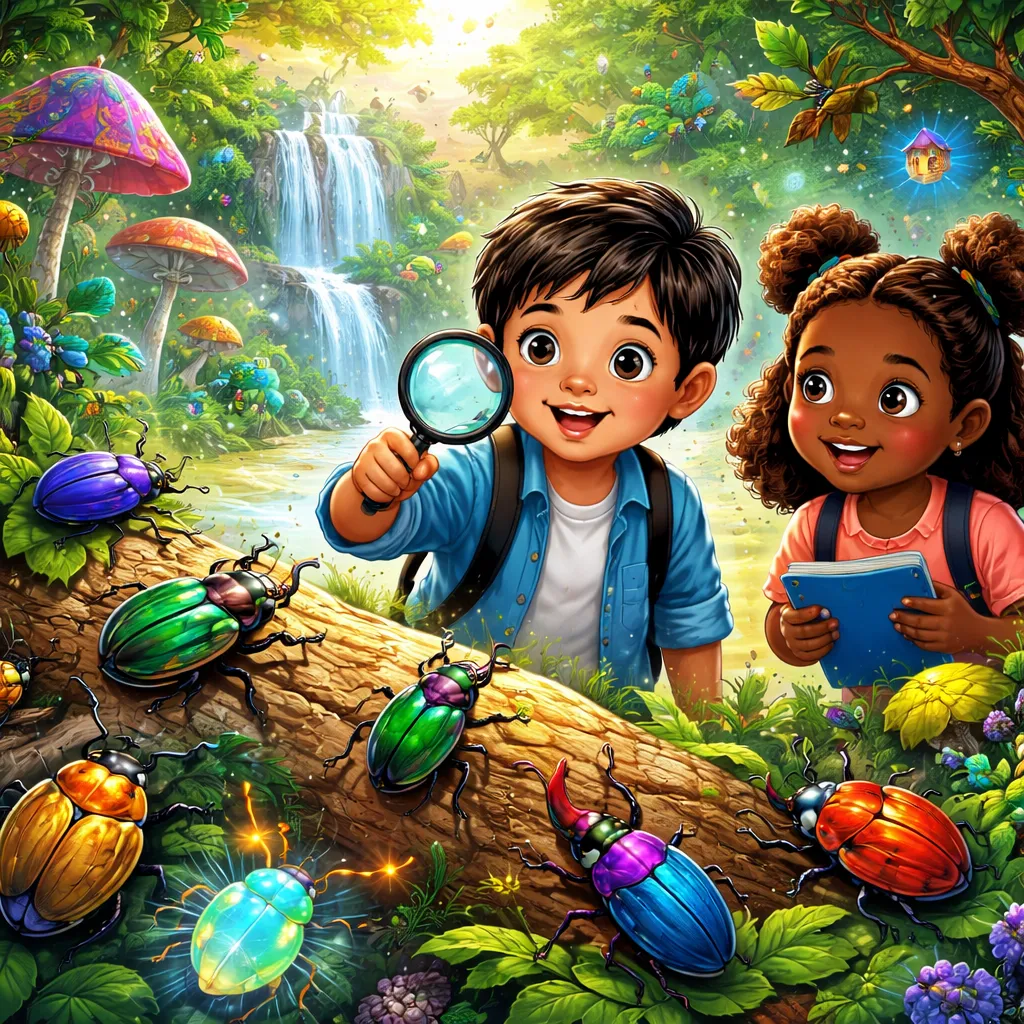
A beetle is an insect with hard wing covers called elytra. These covers protect the delicate flying wings underneath. Beetles come in many shapes and sizes. Some are tiny. Some are as big as a child’s hand. They are the largest group of animals on Earth.
Beetles have a hard outer shell called an exoskeleton. This protects their body. Their front wings are hard. Their back wings are soft and used for flying. When not flying, the soft wings fold under the hard covers. This design protects them from harm.
These insects live everywhere. You find them in gardens, forests, deserts, and ponds. Some live on plants. Some live in soil. Some live in water. Beetles have adapted to almost every environment.
For children, beetles are endlessly interesting. Their shiny colors, varied shapes, and interesting habits make them wonderful to discover. Learning about beetles teaches children about the amazing diversity of life.
English Learning About This Animal
Let us learn the English word beetle. We say it like this: /ˈbiːtəl/. The word has two parts. Bee sounds like “bee.” Tle sounds like “tul.” Put them together: beetle. Say it three times. Beetle. Beetle. Beetle.
Now let us learn words about a beetle’s body. The head holds the eyes and antennae. The thorax is the middle part. The elytra are the hard wing covers. The wings underneath are soft and clear. The abdomen is the back part under the elytra. The legs are six jointed limbs.
There is a famous quote about beetles. The biologist J.B.S. Haldane said, “If one could conclude anything about the Creator from the study of creation, it would be that He has an inordinate fondness for beetles.” This means beetles are incredibly diverse. Another saying is, “The beetle carries its armor and still flies.”
These English words help children understand beetle anatomy. When they say elytra, they learn the hard covers. When they say exoskeleton, they know the outer shell. Parents can practice these words while looking at beetles outside. Point to the parts. Say the words together.
Animal Facts and Science Knowledge
Beetles belong to the insect order Coleoptera. This name means “sheath wings.” It refers to the hard wing covers. There are over 400,000 beetle species. That is about one-fourth of all known animal species. New beetle species are discovered every year.
Beetles live in nearly every habitat. They live in deserts, rainforests, mountains, and oceans. Some beetles live in extreme cold. Others live in hot springs. Beetles have adapted to more environments than any other animal group.
Beetles eat many things. Some eat plants. Some eat other insects. Some eat fungi. Some eat dung. Some eat dead animals. Some beetles are pests. Others are helpful. Ladybugs eat aphids. Dung beetles clean up animal waste.
Beetles have special abilities. Some beetles can lift many times their own weight. Some can swim. Some can glow in the dark. Fireflies are beetles. Some beetles shoot hot chemicals to defend themselves. Some beetles can play dead. Some can camouflage perfectly on leaves.
Beetles go through complete metamorphosis. They start as eggs. They hatch into larvae. Beetle larvae look very different from adults. They eat and grow. They form a pupa. Inside the pupa, they transform into adult beetles.
How to Interact With This Animal Safely
Beetles are generally safe to observe. Most beetles do not bite or sting. Some beetles can pinch with their mandibles. Teach children to watch first. If a beetle has large jaws, observe without touching. Small beetles are usually safe to hold.
If your child wants to hold a beetle, show them how. Let the beetle crawl onto a hand. Do not squeeze. Beetles have hard shells. They are not easily hurt. But they can be frightened. Gentle handling keeps them calm.
Teach children to return beetles to where they found them. Beetles need their habitat. They need the right food and shelter. If you find a beetle on a leaf, put it back on the same plant. If you find it on the ground, release it near soil or leaves.
Some beetles are pests. They may eat garden plants. Others are helpful. Ladybugs and ground beetles eat pest insects. Teach children to know the difference. Not all beetles need removing. Helpful beetles should stay.
If a beetle comes inside, gently guide it onto paper. Carry it outside. Release it near plants or soil. Beetles are part of nature. They have important jobs in gardens and forests.
What Can We Learn From This Animal
Beetles teach us about diversity. There are more beetle species than any other animal. Children learn that the world is full of variety. Different shapes, colors, and habits all exist together. Our differences make the world rich.
Beetles teach us about adaptation. They live in almost every place on Earth. Children learn that adapting helps us thrive. When we face new situations, we can find ways to succeed.
Beetles teach us about protection. Their hard shells protect them. Children learn that protection comes in many forms. Asking for help, setting boundaries, and taking care of our bodies are all ways to protect ourselves.
Beetles teach us that small things matter. They make up much of the life on Earth. They do important jobs. Children learn that even small contributions matter. Every person has a role, no matter how small.
Fun Learning Activities
Let us make learning about beetle fun. One activity is the beetle search. Go outside with a magnifying glass. Look under rocks and leaves. Look on plants and tree bark. Count how many beetles you find. Notice their colors and shapes. Draw what you see.
Another activity is sorting beetle pictures. Print pictures of different beetles. Sort them by color, size, or habitat. Talk about how beetles are different from other insects. Use words like “elytra,” “larvae,” and “diversity.”
Draw a beetle and label its parts. Draw the head, thorax, elytra, wings, and legs. Write the words next to each part. Say them aloud. For younger children, draw the beetle first. Let them point to the parts as you say the words.
Create a story about a beetle’s day. Ask your child where the beetle goes. Does it climb a leaf? Does it eat an aphid? Does it fly away from a bird? Write a few sentences together. Let your child draw pictures. Read the story aloud.
Make a beetle craft. Use a small box or paper roll for the body. Add hard wing covers from cardboard. Decorate them with spots or stripes. Add six legs from pipe cleaners. Add antennae. Move the craft beetle. Practice saying “beetle crawls” and “beetle flies.”
Learn about famous beetles. Learn about the dung beetle that rolls balls of dung. Learn about the bombardier beetle that shoots hot chemicals. Learn about the ladybug that eats aphids. Use words like “defense,” “adaptation,” and “specialization.”
These simple activities bring learning to life. Children build English vocabulary while playing. They learn science through exploring diversity. They develop observation skills through beetle searches. Learning about beetle becomes a journey into the largest family of animals on Earth. Each moment spent together strengthens language, curiosity, and a lasting appreciation for the tiny armored creatures that come in every color, live in every place, and remind us that life thrives in endless forms.