
Opening Introduction
Leo and Mia were walking in the park. They saw a plastic bottle near the pond. A duck was poking at it. "That doesn't belong there," said Mia. She picked it up. "It's litter. Litter is bad for animals and our planet." Leo nodded. "Our teacher says we need to protect the environment. But what is the environment? And what are the problems?" Their dad, who was with them, smiled. "Those are very important questions. The environment is everything around us: the air, water, land, plants, and animals. Sometimes, people harm it without knowing. But first, we need the right words to talk about it. Let's learn some environmental issues words for kids. When you know the words, you can be a planet helper!" Leo and Mia wanted to be planet helpers. They were ready to learn. Let's start.
Core Knowledge Explanation
Our planet Earth is our home. It gives us air to breathe, water to drink, and food to eat. We need to take care of it. Sometimes, there are problems. These are called environmental issues. Learning the environmental issues words for kids helps us understand these problems. Then, we can be part of the solution. Let's learn some key words.
The first word is pollution. Pollution means making something dirty and unsafe. There are different types. Air pollution is when the air gets dirty from smoke, cars, and factories. It can be hard to breathe. Water pollution is when garbage or chemicals go into rivers, lakes, and oceans. It hurts fish and other animals. Land pollution is when we leave trash on the ground. This is also called litter.
The second word is waste. Waste is what we throw away. Too much waste is a problem. A landfill is a big hole in the ground where our trash goes. Landfills can be smelly and take up space. The third word is deforestation. This is a big word! It means cutting down too many trees in a forest. Trees give us clean air. Animals live in forests. Without trees, the land can become dry and empty.
The fourth word is climate change. This means the whole world's weather is slowly changing. It is getting warmer. This is also called global warming. It can cause big storms, make ice melt, and change where animals can live. The fifth word is endangered. An endangered animal or plant is one that might disappear forever. Tigers, pandas, and some turtles are endangered. This happens if they lose their home or people hunt them.
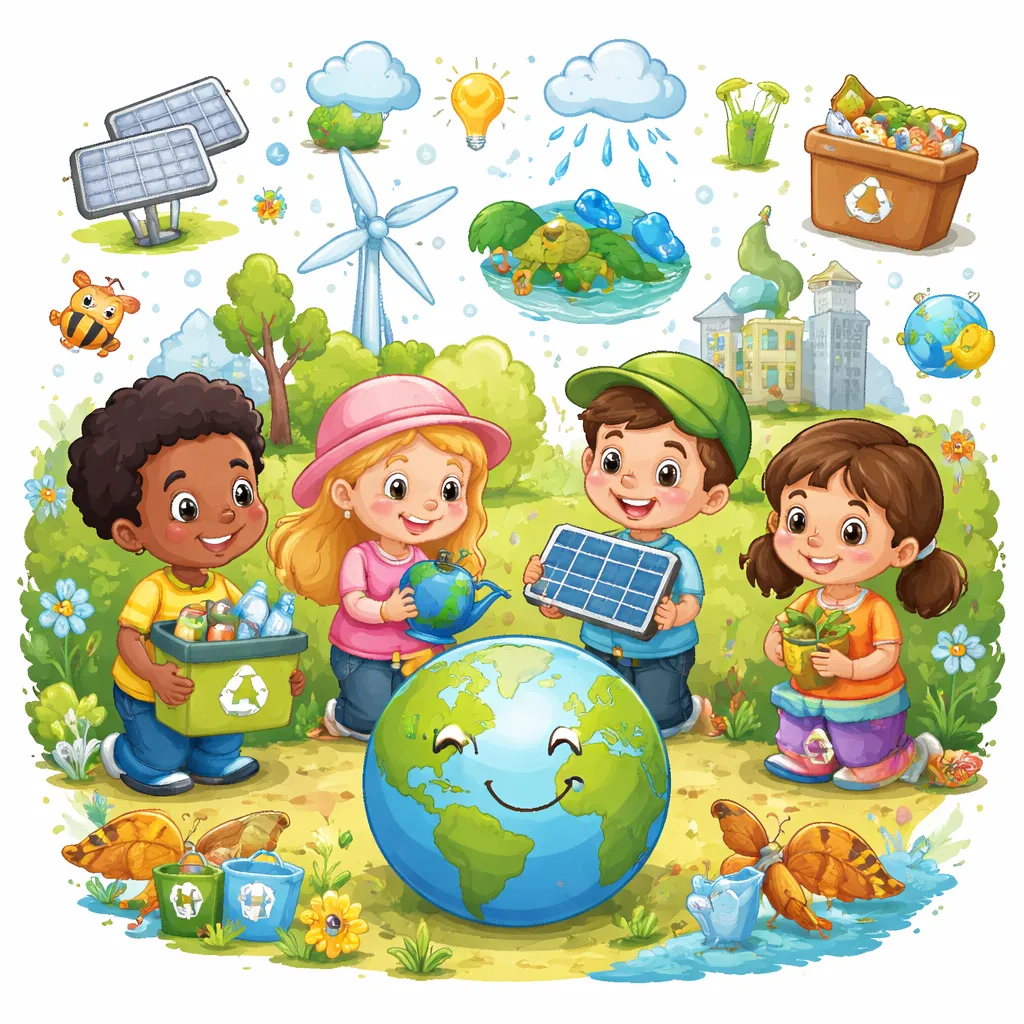
Now, let's learn the good words! The words for solutions. Conservation means protecting nature and using resources wisely. Recycling means taking something old, like a plastic bottle, and making it into something new. This creates less waste. Reduce means using less of something. Use less water. Use less plastic. Reuse means using something again. Use a cloth bag again and again. Sustainability means living in a way that doesn't hurt the planet for the future. These are the main environmental issues words for kids. Knowing both the problems and the solutions makes you smart and hopeful.
Fun Interactive Learning
Let's play a game called "Eco-Sort." You need three boxes or bags. Label them: Recycle, Reuse, Trash. Now, collect some clean, safe items from your home. A plastic bottle, a newspaper, a broken toy, a plastic bag, a can. Look at each item. Decide where it should go. The bottle and can can be recycled. The plastic bag can be reused for shopping. The broken toy might be trash, unless you can fix it! As you sort, say the words. "I am recycling the can. This helps reduce waste." This game teaches you the environmental issues words for kids through action.
Another fun activity is the "Energy Detective." Walk around your house with an adult. Look for things that use energy. A light, a TV, a tap. Your mission is to find "energy leaks." Is a light on in an empty room? That wastes electricity. Is the tap dripping? That wastes water. Make a sign that says "Please turn off the light" and put it near the switch. This makes you aware of conservation. You can also make a "Reuse Art" project. Use an old cardboard box to make a robot. Use bottle caps to make a picture. This is reusing! It's creative and good for the planet.
Expanded Learning
Environmental issues affect everyone, everywhere. Kids all over the world are learning the same environmental issues words for kids. In different languages, the words are different, but the ideas are the same. Long ago, there was less pollution because there were fewer people and less industry. Today, we have to be more careful. Many countries have rules to protect the environment. Scientists work hard to find solutions, like electric cars and solar panels.
There are special days to remember the planet, like Earth Day on April 22nd. On this day, people plant trees, clean up parks, and learn about the environment. When you learn these words, you join a global team of planet protectors. Even small actions help. If millions of kids turn off the water while brushing their teeth, we save millions of liters of water! Let's make an eco-chant. Chants are powerful and easy to remember.
Reduce, reuse, and recycle, that's the way to go! To help our planet thrive and grow! Pollution is a word we know, it makes our environments low. Conservation is the key, for you, for me, for all to see! Endangered animals need our care, it's only fair to be aware! Climate change we can fight, by using less and doing right! Learn the words and play your part, with a kind and caring heart!
What You Will Learn
You are learning about science, responsibility, and global citizenship. You are learning important environmental issues words for kids: pollution (air, water, land), waste, landfill, deforestation, climate change, global warming, endangered, conservation, recycling, reduce, reuse, sustainability. You are also learning what the environment is.
You are learning descriptive and action-oriented sentences. You can say, "Litter causes land pollution." You can explain, "Recycling paper helps save trees." You can promise, "I will reduce my waste by using a lunch box." You are using English to talk about real-world problems and positive actions. This builds critical thinking and agency.
You are building crucial knowledge and skills. You are building scientific vocabulary. You learn the terms for ecological concepts. You are building empathy. You care for animals and nature. You are building problem-solving skills. You think of solutions. You are building responsible habits. You learn to act sustainably. You are building confidence. You can speak up for the planet.
You are forming a mindful and proactive habit. The habit of thinking about the impact of your actions. You see yourself as a caretaker of Earth. Learning these environmental issues words for kids empowers you to understand news, make better choices, and inspire others. It is the first step to becoming an environmental steward.
Using What You Learned in Life
Use your new words every day. When you see litter, say, "That's pollution. I'll pick it up." When you finish a drink, say, "This bottle is for recycling." Remind your family, "Let's reuse these bags." Talk about endangered animals when you visit the zoo. "The tiger is endangered. We need to protect its forest." At the store, you can choose products with less packaging to reduce waste.
At school, you can start a recycling club. Make posters with the new words. "Don't be a litter bug! Recycle!" You can also do a project on an endangered animal. Share the environmental issues words for kids with your friends. Teach them the eco-chant. The more you use these words, the more they will guide your actions. You are not just learning words; you are learning to live in a way that loves and protects your home, planet Earth.
Closing Encouragement
You are an Earth helper. You are a word warrior for the planet. You are a thoughtful and caring learner. I am so incredibly proud of you. Learning these environmental words shows you have a big heart and a smart mind for our world.
Keep using your words for good. Keep making small, kind choices for the Earth. Remember, you are powerful. Your voice and your actions matter. Together, we can write a new story for our planet.
You are knowledgeable, you are responsible, and you are learning the language of care for our beautiful world. Great work, my wonderful planet protector.