
What Is This Animal?
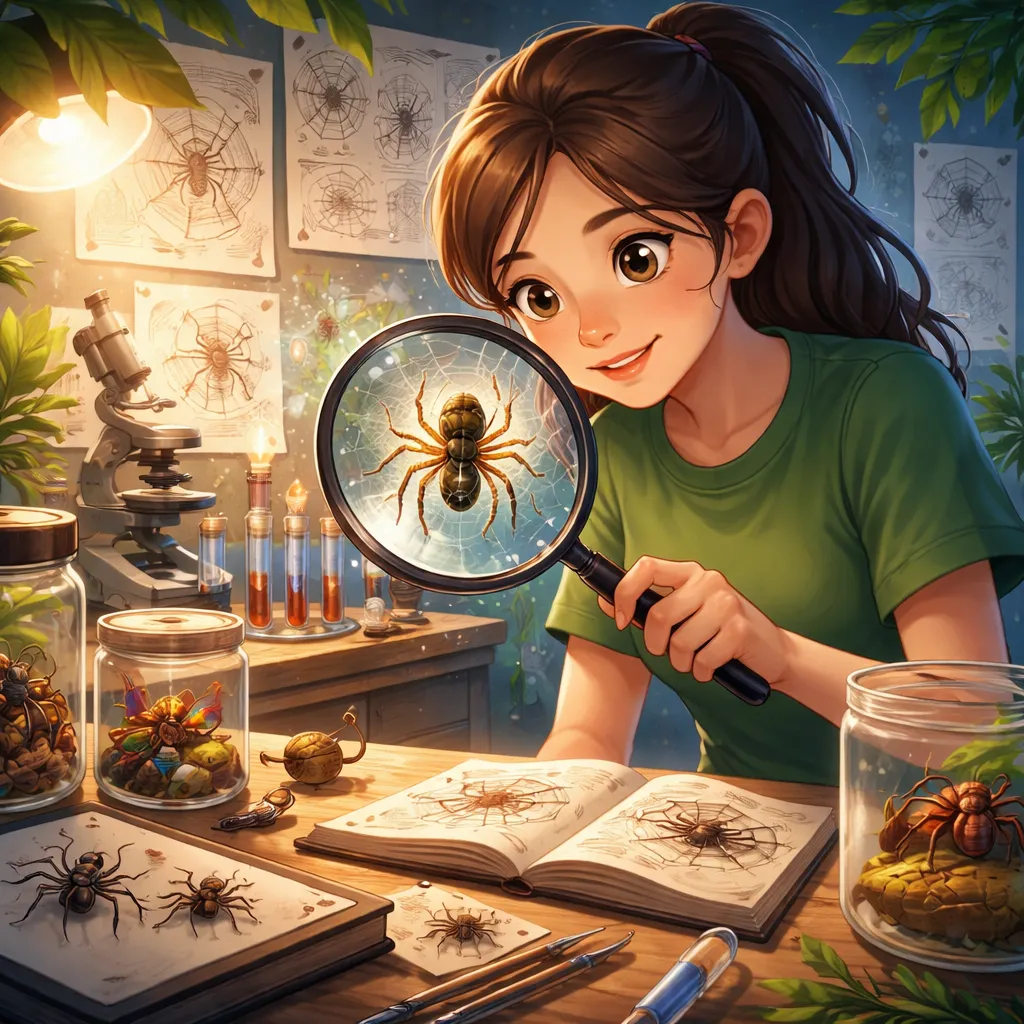
A spider is a small creature with eight legs. It has two main body parts. The front part holds the eyes and mouth. The back part holds the silk glands. Most spiders make silk. They use it to build webs and catch food.
Spiders are not insects. Insects have six legs and three body parts. Spiders belong to a group called arachnids. This group also includes scorpions and ticks. Spiders have been on Earth for hundreds of millions of years.
Many people feel scared of spiders. But most spiders are harmless. They help us by eating insects. A single spider eats hundreds of bugs each year. They keep gardens and homes free of pests.
Spiders live almost everywhere. You find them in gardens, forests, and corners of rooms. They build webs in quiet spots. Some spiders hunt without webs. They chase their food. For children, spiders are interesting architects and hunters.
English Learning About This Animal
Let us learn the English word spider. We say it like this: /ˈspaɪdər/. The word has two parts. Spy sounds like “spy.” Der sounds like “dur.” Put them together: spider. Say it three times. Spider. Spider. Spider.
Now let us learn words about a spider’s body. The cephalothorax is the front body part. It holds the eyes and legs. The abdomen is the round back part. The eyes are small. Most spiders have eight eyes. The legs are eight long jointed limbs. The spinnerets are small tubes at the back. They release silk.
There is a famous story about a spider. It comes from Scottish history. A king named Robert the Bruce watched a spider try to build a web. It failed six times. On the seventh try, it succeeded. The king learned to keep trying. A saying from this story is, “If at first you don’t succeed, try, try again.” Another simple saying is, “The spider waits patiently for its meal.”
These English words help children understand spider anatomy. When they say cephalothorax, they learn a science word. When they say spinnerets, they know where silk comes from. Parents can practice these words while looking at spider pictures. Point to the parts. Say the words together.
Animal Facts and Science Knowledge
Spiders belong to the class Arachnida. They are not insects. They have eight legs. They have no wings. They have no antennae. Spiders have fangs called chelicerae. They use these to inject venom into their prey.
Spiders live in many habitats. They live in forests, deserts, grasslands, and homes. Some live in water. Some live high in trees. Spiders adapt to almost any place. They build webs in corners, between branches, and under leaves.
Spiders eat insects and other small creatures. They catch flies, mosquitoes, moths, and beetles. Some large spiders eat small birds or fish. Spiders do not chew. They inject digestive juices into their prey. The liquid turns the prey into a soft drink. The spider then sucks it up.
Spiders have special abilities. They produce silk stronger than steel of the same thickness. They use silk for webs, egg sacs, and safety lines. Some spiders jump many times their body length. Others run fast across water. Some spiders live for twenty years.
Spiders make different kinds of webs. Orb webs are round and spiral. Funnel webs look like tunnels. Sheet webs are flat layers. Each spider builds its web in its own way. The web shape helps catch specific prey. Spiders repair their webs daily. They eat the old silk and make new silk.
How to Interact With This Animal Safely
Spiders are wild creatures. Most spiders are shy. They want to hide, not bother people. If you see a spider, watch it from a distance. Do not touch it. Let it go about its work. Spiders help us by eating pests.
Teach children to respect spiders. Do not poke them. Do not try to catch them with bare hands. Some spiders can bite if they feel scared. A spider bite usually causes mild swelling. But it is best to avoid being bitten.
If a spider is in the house, you can move it outside. Use a cup and a piece of paper. Place the cup over the spider. Slide the paper underneath. Carry it outside. Tip it gently near a bush or garden. This keeps the spider safe and your home peaceful.
Teach children which spiders to be aware of. In most places, only a few spiders are dangerous. Learn about local spiders together. Knowing which ones to admire from a distance helps children feel confident.
Never kill spiders unless necessary. Spiders are beneficial. They control insect populations. A garden with spiders is a healthy garden. When we let spiders live, we help nature stay balanced. Children learn that even small creatures have important roles.
What Can We Learn From This Animal
Spiders teach us about patience. A spider waits for hours for its prey. It does not give up. Children learn that waiting is part of life. Waiting for a turn, waiting for a birthday, or waiting for a skill to grow takes patience. Good things come to those who wait.
Spiders teach us about persistence. The spider builds its web again and again. If the web breaks, it rebuilds. Children learn to try again when something fails. A drawing that does not look right, a word that is hard to spell, or a game that is difficult are chances to try again.
Spiders teach us about creativity. Each spider builds a unique web. The web design fits its needs. Children learn that there are many ways to solve problems. One way may work better than another. Being creative means finding your own way.
Spiders teach us to be helpful. Spiders eat insects that bother us. They work quietly without thanks. Children learn that helping others does not need praise. Small acts of kindness, like tidying up or sharing, make the world better.
Fun Learning Activities
Let us make learning about spider fun. One activity is the web weaving game. Give your child a paper plate. Cut notches around the edge. Wrap yarn around the notches to make a web. Add a small toy spider. Talk about how spiders build their homes.
Another activity is spider observation. Find a spider web outside. Look closely. Notice the shape. Look for the spider waiting nearby. Draw what you see. Count the legs. Draw the pattern of the web. Use words like “web,” “spinnerets,” and “prey.”
Draw a spider and label its parts. Draw the cephalothorax, abdomen, eight legs, eyes, and spinnerets. Write the words next to each part. Say them aloud. For younger children, draw the spider first. Let them point to the parts as you say the words.
Create a story about a spider’s day. Ask your child what the spider catches in its web. Does it catch a fly? Does it fix a torn web? Does it lay eggs? Write a few sentences together. Let your child draw pictures. Read the story aloud.
Make a spider from craft materials. Use a black pom-pom for the body. Add eight pipe cleaner legs. Glue on small eyes. Let it sit on a paper web. Play with the craft spider. Practice saying “spider spins silk” and “spider waits.”
These simple activities bring learning to life. Children build English vocabulary while playing. They learn science through observation. They connect with nature in gentle ways. Learning about spider becomes a journey of discovery. Each moment spent together strengthens language, curiosity, and a lasting respect for the quiet architects that share our world.