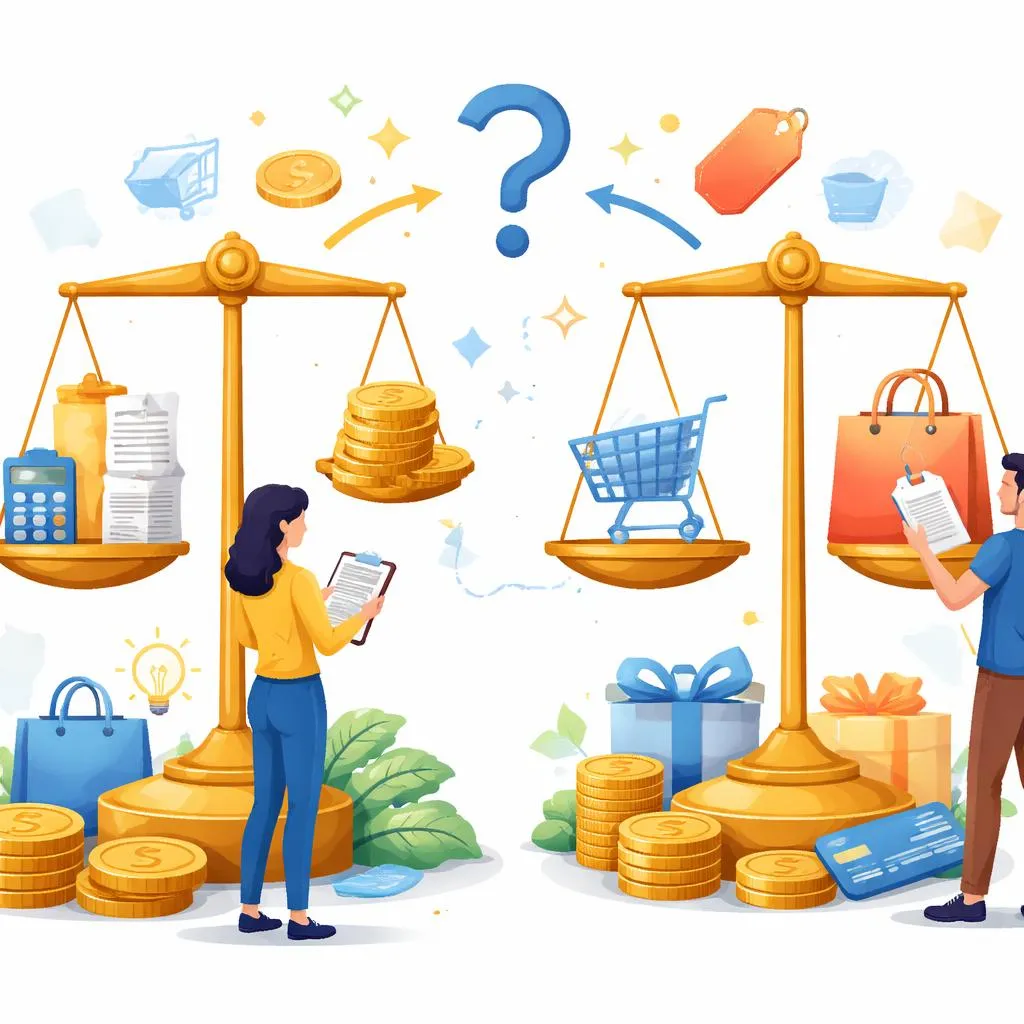

Hello, word explorer! Have you ever been shopping? You look at a toy. It has a price tag. Your parent might say, "The cost is too high." They both talk about money for the toy. But are they the same? They are like two different views of a treasure. One is the store's tag. One is your family's budget. Let's find out! Today, we explore the word friends "cost" and "price". Knowing their secret makes you a super smart shopper. Let's begin our money adventure!
First, let's be Shopping Detectives. Listen at home. Here are two sentences. "The price of this new video game is sixty dollars." "My dad says the cost of our vacation was big this year." They both talk about money needed. Sixty dollars. Vacation money. Do they sound the same? One feels like a simple number on a tag. One feels like a bigger idea of what is used. Can you sense it? Great observation! Now, let's look closer.
Adventure! Into the World of Value and Money
Welcome to the world of buying and selling! "Cost" and "price" are about money. But they are not the same. Think of "price" as the asking tag. It is the number written on the item. Think of "cost" as the total bill. It is all that is given up or used. Both involve money. But one is the "labeled number". One is the "full story". Let's learn about each one.
The Tagged Number vs. The Full Story Think about the word "price". "Price" feels simple and fixed. It is the set number. The price of the candy is one dollar. What is the price? It is a fact. Now, think about "cost". "Cost" feels broader. It is what is needed to get or do something. The cost includes time and effort. The cost of the car is high. The word "cost" can be a verb too. It costs ten dollars. "Price" is like the tag on a shelf. "Cost" is like the total bill with everything added. One is the asking number. One is the true impact.
The Simple Tag vs. The True Impact Let's compare their feeling. "Price" is usually neutral. It is just information. The price is on the sticker. That is the selling price. "Cost" can feel heavier. It often includes a feeling of sacrifice or loss. The high cost of the ticket made me sad. Failing the test has a high cost. The price is what you see. The cost is what you feel. A toy's price is 20. Its cost to your savings is your 20. One is the number. One is the consequence.
Their Special Word Partners and Common Uses Words have best friends. "Price" loves words about selling, tags, and lists. The asking price. Full price. Price tag. Set a price. "Cost" loves words about living, doing, and totals. The cost of living. The cost of a mistake. High cost. It costs a lot. Note: You ask, "What is the price?" You say, "It comes at a cost." "Price" is the labeled number. "Cost" is the true effect.
Let's visit a school scene. Your class is having a bake sale. Your friend points and says, "The price for one cupcake is two dollars." This is the labeled number for buyers. Later, your teacher talks about the project. She says, "The cost of this field trip includes the bus, tickets, and time." The word "price" fits the simple tag on the cupcake. The word "cost" fits the bigger picture of all trip expenses. One is simple. One is complex.
Now, let's go to the playground. You see a cool water gun at a stand. You ask, "What's the price?" The seller says, "Five dollars!" This is the set number to buy it. Later, you think about buying it. You say, "The cost is all my allowance money. I can't buy ice cream later." The word "price" fits the simple question about the tag. The word "cost" fits your personal sacrifice of other treats. One is on the tag. One is in your wallet and mind.
Our Little Discovery So, what did we find? "Price" and "cost" are a money team. "Price" is the set amount of money for buying something. It is the number on the tag. The price of the book is fixed. "Cost" is what is given up to get or do something. It can be money, time, or effort. The cost of the new bike was high. The cost of winning was hard work. The price is the asking number. The cost is the true total. Knowing this helps you shop and think wisely.
Challenge! Become a Value Word Champion
Ready for a nature test? Let's try your new skills!
"The Best Choice" Challenge Let's imagine a nature scene. A bee finds a beautiful flower full of nectar. The flower is free! The flower has no price. No one is selling it. This is about a set selling amount, which does not exist. Now, think about the bee's work. Flying far uses energy. Fighting the wind is hard. The cost of getting that sweet nectar is the bee's great effort. "Price" wins for the idea of a selling value, which is zero here. "Cost" is the word for the bee's personal effort and energy used. "Price" is the tag. "Cost" is the effort.
"My Sentence Show" Your turn to create! Here is your scene: Buying a new backpack for school. Can you make two sentences? Use "price" in one. Use "cost" in one. Try it! Here is an example: "The price tag on the blue backpack said thirty dollars." This is about the labeled number on the item. "The total cost for my school things was a lot for my parents." This is about the full amount of money they spent. Your sentences will show the tag and the total!
"Eagle Eyes" Search Look at this sentence. Can you find the word that could be better? Let's check a home context. "My mom said the cost of the milk is on the sticker." Hmm. The sticker on the item in the store shows the set amount for sale. This is the labeled number, not the broader impact or sacrifice. The word "price" is the better, more accurate choice. "My mom said the price of the milk is on the sticker." Using "cost" here makes it sound deep or heavy. "Price" is the champion for the simple number on the tag. Did you spot it? Excellent word work!
Harvest and Action! Turn Knowledge Into Your Superpower
Great exploring! We started thinking "price" and "cost" were similar. Now we know they are two different money views. "Price" is the word for the set number on a tag, the asking amount. "Cost" is the word for the total that is given up, in money, time, or effort. You can now talk about shopping and value with perfect accuracy. This is a great skill for a smart buyer.
What you can learn from this article: You can now see that the "price" is the set amount of money written on a tag or asked for something you want to buy, like the price of a toy or a candy bar. You can now understand that the "cost" is what you give up to get or do something, which can be money, time, or effort, like the cost of a trip or the cost of staying up late. You know that the price on the pizza menu is $15, but the cost of the party includes drinks and decorations too. You learned to match the word to the idea: "price" for the labeled number; "cost" for the total sacrifice or amount.
Life practice application: Try your new skill today! Be a value word expert. Go to a store with an adult. Look at a price tag. Think about the total cost of your shopping trip. Next time you watch an ad, listen. Does it show a low price? Does it talk about the cost of not buying it? Tell a friend the price of your favorite snack. Explain the cost (time, practice) of learning a new skill. You are now a master of value words! Think about the price tag and the true cost.