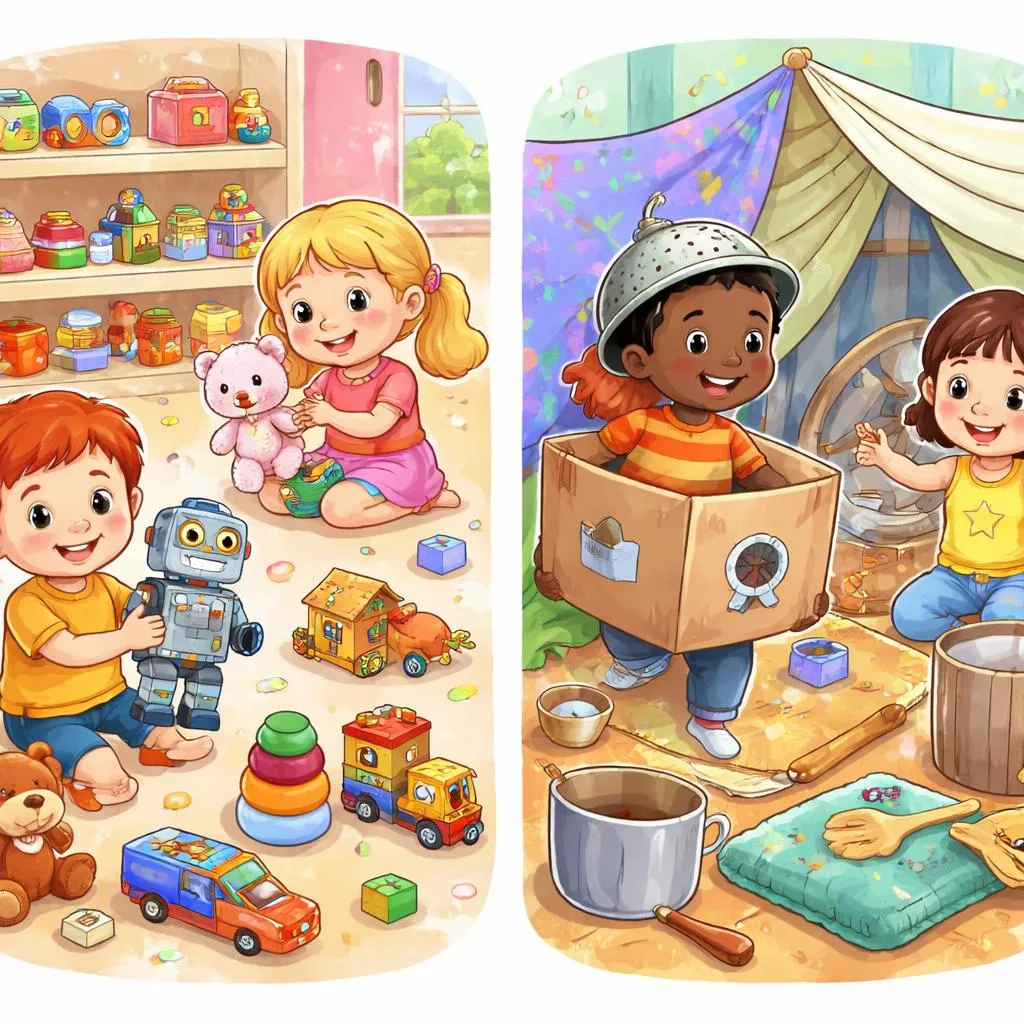

Start! Find a Pair of 'Playful Twin' Words
Hello, word explorer! What do you call your favorite game or doll? The thing you have fun with. You probably say "toy." But sometimes, in a book or a song, you might hear the word "plaything." They both mean something you play with. Are they the same? This is a playful word puzzle. Today we explore a word pair. We explore toy and plaything. They are like two friends in the playroom. But they have different personalities! Knowing the difference is a superpower. Your playtime stories will be more colorful and precise. Let us start our fun word game!
Be a Language Observer now. Our first clue is at home. You are cleaning your room. Your parent says, "Put your toys away." Then, you read a old story. It says, "The child cherished her simple plaything." They are both about objects for play. But are they the same? Let us test with two sentences.
"My favorite toy is a remote-control car." This is a common, modern object. "She made a doll from a stick, her only plaything." This sounds simple and old-fashioned.
They both describe things to play with. But one feels like a bought item. One feels like a simple, maybe handmade object. Your observation mission starts. Let us play in their word world.
Adventure! Play in the Word World
Feel the Word's Modernity!
Feel the word toy. It is a bright, modern word. It feels like a store shelf. It is for fun, games, and laughter. The word plaything is a gentle, old-fashioned word. It feels like a story from long ago. It is simple and nostalgic. Toy is the shiny new video game. Plaything is the wooden spinning top. One is for today. The other is from yesterday. Let us see this at school.
In a show-and-tell, you say, "I brought my new toy robot." This sounds normal and current. In a history lesson, you learn about children in the past. They had few playthings. This sets a historical mood. Saying "they had few toys" is also okay. But "playthings" sounds more formal and old. The feeling of time is different.
Compare Their Commonness and Feeling!
Think about a popular app and a classic book. The word toy is the popular app. Everyone uses it today. It is the normal word. The word plaything is the classic book. It is less common. It feels more poetic or formal. Their usage is different. A toy is an everyday word. A plaything is a special word for writing or stories. One is casual talk. The other is story talk. Let us test this on the playground.
You are trading items with a friend. You say, "Do you want to trade toys?" This sounds natural. Now, imagine you are in a play. You say, "This plaything is my greatest treasure!" This sounds dramatic and fancy. The word toy is for the playground. The word plaything is for the stage. The playground shows the difference in setting.
Meet Their Best Word Friends!
Words have favorite play partners. The word toy likes modern and specific words. It teams up with 'store', 'box', 'car', 'soldier', 'educational', and 'chest'. You go to the toy store. You have a toy chest. The word plaything likes poetic and general words. It teams up with 'simple', 'mere', 'humble', 'cherished', and 'imaginary'. The doll was a mere plaything. He was just a plaything of fate. Their partners are different. Let us go back to school.
In a math class, you solve a problem about a toy factory. This is about business. In a literature class, you read a poem about a "plaything of the wind." This is a beautiful image. You would not usually read about a "toy of the wind." The word friends set the style.
Our Little Discovery!
We played in the word toy box. We made a fun discovery. The words toy and plaything mean the same thing: an object for play. But we use them differently. The word toy is the common, everyday word. It is modern and normal. The word plaything is a more formal, old-fashioned, or poetic word. Toy is for the shopping list. Plaything is for the storybook. One is what you ask for. The other is what you read about.
Challenge! Become a Playful Word Expert
"Best Choice" Challenge!
Let us look at two scenes. Read each one. Pick the champion word. Scene one: You are writing a birthday wish list. You tell your dad, "I want a new toy for my birthday." Is it Toy or Plaything? The champion is Toy! It is the natural, everyday word. Scene two: You are reading a fairy tale. It says, "The poor girl had but one plaything, a cloth doll." Is it toy or plaything? The champion is plaything! It fits the old-fashioned style of the story. Great choice!
"My Sentence Show"!
Now, create your own sentences. Here is a fun scene: Imagine a messy, fun bedroom full of stuff. Use the word toy in one sentence. Now imagine a quiet, old-fashioned nursery from a book. Use the word plaything in another. Try it! Here is an example. Sentence one: "His toys were scattered all over the floor." Sentence two: "Her only plaything was a smooth stone from the river." See the difference? The first is about a modern, messy room. The second is about a simple, single object from the past.
"Eagle Eyes" Search!
Can you find the word that needs help? Read this sentence: "The museum had an exhibit about ancient Egyptian playthings; it showed many dolls and board games from long ago." Hmm. This is actually a good use! In a museum context, "playthings" is a fine, slightly formal word. But if we want to sound more like everyday talk, we might say "toys." Both are acceptable, but "toys" is more common. For a child's ear, "toys" might be simpler. "The museum had an exhibit about ancient Egyptian toys; it showed many dolls and board games from long ago." This is also correct and more direct. You have a good eye for context!
What a wonderful playdate with words! You started as a curious player. Now you are a word collector. You know the secret of toy and plaything. You can feel their different modernity. You see their commonness and feeling. You know their best word friends. This is a real language superpower.
You can learn amazing things from this article. You now know that a 'toy' is the common, everyday word for an object you play with. You understand that a 'plaything' means the same but is a more formal, old-fashioned, or poetic word. You can explain that you use 'toy' when talking to friends and 'plaything' when reading stories. You learned that we say 'toy store' and 'toy box', but in tales, a character might have a 'humble plaything'.
How can you use this today? It is easy and fun. Next time you are with your friends, use the word toy. When you read a book, look for the word plaything. See how it makes the story feel special. Organize your own toys. Can you call them "playthings" for fun? Draw two pictures. Draw a pile of modern toys. Draw one simple plaything from long ago. You are using your new skill every day.
Keep your explorer eyes open. The world of play is full of wonderful words. You are learning to choose the right one for the right time. Great work, word expert. Your English journey is getting more playful and precise with every new word pair you discover!