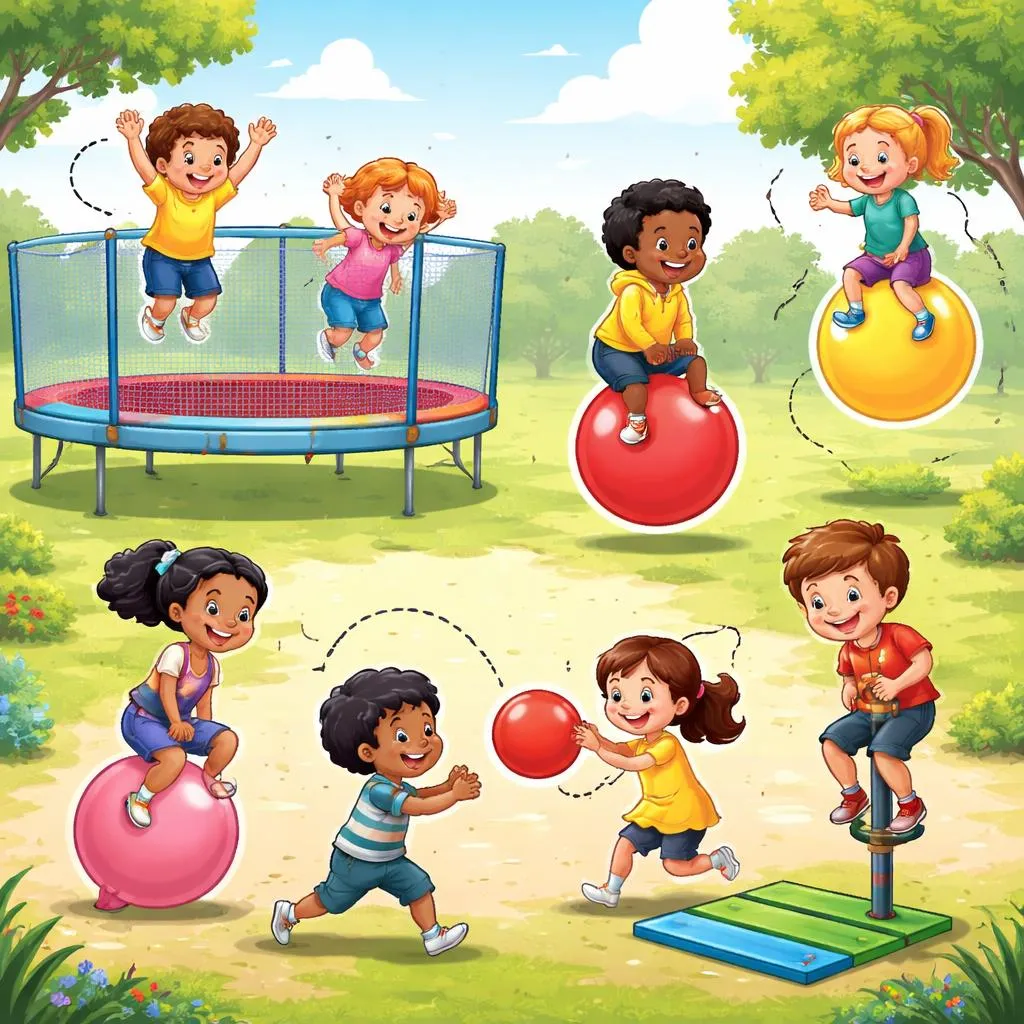

Hello, action word explorer! Do you love watching things move? What does a ball do? Does it bounce on the ground? What happens in basketball? Does the ball rebound off the backboard? They both seem to be about springing back. But are they the same? They are like two different kinds of springs. One is like a happy hop. One is like a quick ricochet. Let's find out! Today, we explore the word friends "bounce" and "rebound". Knowing their secret is a superpower. It makes you a sports and science expert. Let's begin our springy adventure!
First, let's be Motion Detectives. Listen at home. Here are two sentences. "I dropped my rubber ball, and I watched it bounce on the kitchen floor." "My little brother threw a tennis ball against the wall, and I saw it rebound right back to him." They both involve a ball springing back. On the floor. Off a wall. Do they sound the same? One feels like a simple, playful hop. One feels like a fast, angled return. Can you sense it? Great observation! Now, let's look closer.
Adventure! Into the World of Springy Motion
Welcome to the world of springs and returns! "Bounce" and "rebound" are two different springy moves. Think of "bounce" as a simple, often up-and-down hop. Think of "rebound" as a more specific, angled return after hitting something. Both mean to spring back. But one is the "everyday hop". One is the "sports carom". Let's learn about each one.
The Happy Hop vs. The Quick Ricochet Think about the word "bounce". "Bounce" feels fun, simple, and active. It is the main word for something springy hopping. A ball can bounce. A child can bounce on a trampoline. It is a common, lively action. Now, think about "rebound". "Rebound" feels more technical and quick. It means to spring back after hitting a surface, often at an angle. It sounds more like a reaction. A basketball can rebound off the rim. Light can rebound off a mirror. "Bounce" is like a cheerful, playful jump. "Rebound" is like a swift, sharp return. One is for fun. One is for physics.
Simple Action vs. Reactive Return Let's compare their nature. "Bounce" is the general, everyday action. It often means to move up and away from a surface after hitting it. You can bounce a ball. You can bounce on a bed. "Rebound" is more specific. It focuses on the action of flying back from a surface it just hit. A hockey puck can rebound off the goalie's pads. Your voice can rebound as an echo. You bounce a ball for fun. A ball rebounds after a missed shot. "Bounce" is the active, simple verb. "Rebound" is the reactive, result verb. One is the action you do. One is the result you see.
Their Special Word Partners and Common Uses Words have best friends. "Bounce" loves playful actions and simple objects. Bounce a ball. Bounce on a bed. Bounce a check. Have a bounce in your step. "Rebound" loves sports, angles, and recovery. Rebound in basketball. Rebound off a wall. The economy rebounded. A rebound relationship. Note: You "bounce up and down". A ball "rebounds to" a player. You can have a "bouncy castle". You can grab a "rebound" in a game.
Let's visit a school scene. In gym class, you are playing with playground balls. Your teacher says, "Let's see how high you can bounce the ball!" Everyone starts bouncing balls on the floor. This is a simple, controlled, playful action. Later, in science class, you learn about force. The teacher drops a ball at an angle onto a hard surface. It doesn't just bounce straight up. It shoots off to the side. The teacher says, "Watch how the ball will rebound at an equal angle." The word "bounce" fits the gym class fun. The word "rebound" fits the science of angles and force.
Now, let's go to the playground. You are on a pogo stick. You jump, and the spring makes you go up. You come down and spring up again. You are trying to bounce as high as you can. This is a repeated, up-and-down hopping motion. Later, you are playing wall ball. You throw a ball hard against the brick wall. It doesn't come straight back. It hits the wall and shoots off to the left. Your friend catches it. The ball took a crazy rebound. The word "bounce" fits your pogo stick hops. The word "rebound" fits the ball's angled return from the wall.
Our Little Discovery So, what did we find? "Bounce" and "rebound" both involve springing back. But they are used differently. "Bounce" is the common, general word for something springy hopping up and down or off a surface. It's often for fun. "Rebound" is a more specific word. It means to spring back, especially at an angle, after hitting something. It's often used in sports or to describe a quick recovery. You bounce a ball to a friend. In basketball, a player catches the rebound after a missed shot. Knowing this helps you talk about play and physics clearly.
Challenge! Become a Springy Word Champion
Ready for a nature test? Let's try your new skills!
"The Best Choice" Challenge Let's imagine a nature scene. A young kangaroo, called a joey, is learning to hop. It pushes off with its strong back legs. It goes up into the air. It lands softly on the grass. Then it pushes off again. The happy joey loves to bounce around its mother. This is a simple, repeated, hopping action. Now, watch a dolphin playing with a beach ball in a pool. The dolphin noses the ball high into the air. The ball hits the surface of the water. Instead of stopping, it springs back up into the air at a different angle. The ball takes a quick rebound off the water's surface. "Bounce" wins for the kangaroo's joyful, rhythmic hops. "Rebound" is the word for the ball's swift, angled return from the water. "Bounce" is the main action. "Rebound" is the specific result.
"My Sentence Show" Your turn to create! Here is your scene: Playing ball games outside. Can you make two sentences? Use "bounce" in one. Use "rebound" in one. Try it! Here is an example: "We took turns to see who could bounce the basketball the most times without stopping." This is a controlled, repetitive action. "My shot hit the rim, and the rebound went straight to the other team." This describes the ball's specific return after hitting the rim. Your sentences will show two kinds of springy action!
"Eagle Eyes" Search Look at this sentence. Can you find the word that could be better? Let's check a home context. "The toddler was so full of energy, she would rebound on the sofa all afternoon." Hmm. A toddler jumping on a sofa is doing a simple, up-and-down hopping action for fun. The word "rebound" is too technical. It describes a return after a hit, not just playful jumping. The correct word is "bounce". "The toddler was so full of energy, she would bounce on the sofa all afternoon." Using "rebound" here makes the toddler's play sound like a physics experiment, which is silly. Did you spot it? Excellent word work!
Harvest and Action! Turn Knowledge Into Your Superpower
Great exploring! We started thinking "bounce" and "rebound" were similar. Now we know they are two different springy moves. "Bounce" is the fun, general hop. "Rebound" is the specific, angled return. You can now describe playful jumps and sports moves with perfect accuracy. This is a great skill for a player and a thinker.
What you can learn from this article: You can now feel that to "bounce" is the common, fun word for something springy hopping up and down, like a ball on the ground or a child on a trampoline, and it is a general action you can do. You can now feel that to "rebound" is a more specific word for springing back after hitting something, often at an angle, like a basketball off the backboard or a sound off a wall, and it is often the result you see. You know that you can bounce on a pogo stick for fun, but in a game, you try to catch the rebound after a missed shot. You learned to match the word to the action: "bounce" for general, playful hopping; "rebound" for a specific return after a hit.
Life practice application: Try your new skill today! Be a springy word expert. Watch things that spring back. Is someone choosing to bounce a ball? In a game, does the ball rebound off the rim? Next time you are playing, name the action. Say, "Watch how high I can bounce this ball!" or "I got the rebound after your shot hit the post!" Tell a friend about something that is fun to bounce. Describe a cool rebound you saw in a game. You are now a master of springy words! Keep playing and observing.