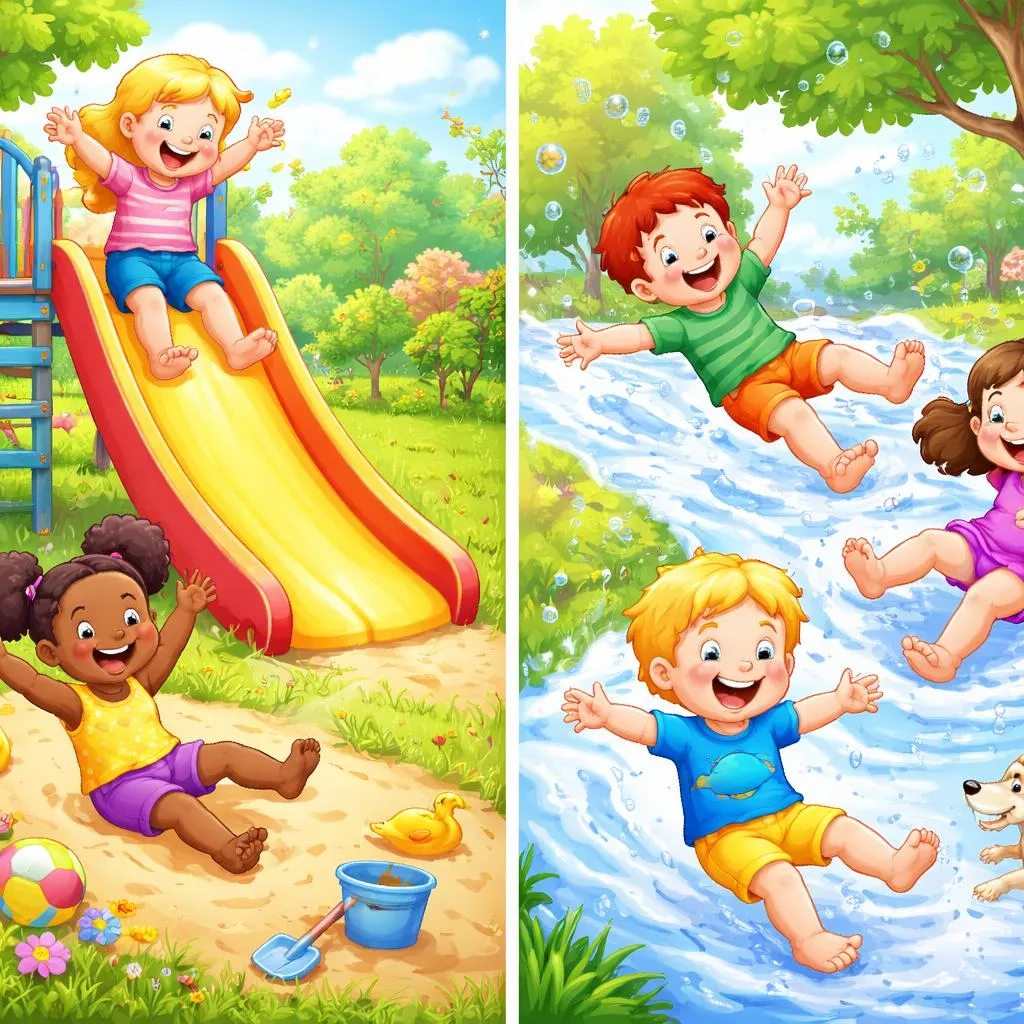

Hello, action word explorer! Have you ever moved in a smooth, gliding way? What do you do on a playground? Do you slide down the big, curly slide? What happens on a wet floor? Do your feet slip on the slick surface? They both seem to be about moving smoothly. But are they the same? They are like two different kinds of gliding. One is like a fun, planned ride. One is like a surprise, tricky move. Let's find out! Today, we explore the word friends "slide" and "slip". Knowing their secret is a superpower. It makes you a safety and fun expert. Let's begin our gliding adventure!
First, let's be Movement Detectives. Listen at home. Here are two sentences. "My little sister loves to slide down the carpet in her socks." "Be careful! The spilled juice made the floor wet, and you might slip." They both involve smooth movement. On a carpet. On a floor. Do they sound the same? One feels like a fun, controlled game. One feels like a dangerous, unexpected accident. Can you sense it? Great observation! Now, let's look closer.
Adventure! Into the World of Smooth Moving
Welcome to the world of gliding! "Slide" and "slip" are two different smooth moves. Think of "slide" as a fun, controlled ride. You mean to do it. Think of "slip" as a sudden, accidental loss of grip. It happens by surprise. Both involve moving smoothly. But one is the "playful glide". One is the "surprise skid". Let's learn about each one.
The Fun Ride vs. The Surprise Skid Think about the word "slide". "Slide" feels like a planned, fun action. It is a smooth, often fast movement over a surface. You slide down a slide. You slide into home base. A penguin can slide on its belly. It is often on purpose. Now, think about "slip". "Slip" feels like a mistake or an accident. It means to slide suddenly and lose your balance. It is usually unexpected. You can slip on ice. A glass can slip from your hand. "Slide" is like a fun, little roller coaster ride. "Slip" is like a scary surprise where you almost fall. One is for fun. One is a warning.
On Purpose vs. By Accident Let's compare their control. "Slide" is often something you decide to do. It is a controlled move. You can slide a book across a table. You can slide into a seat. "Slip" is something that happens to you. It is a loss of control. You might slip on a banana peel. Your foot can slip off a step. You slide on purpose for fun. You slip by accident, and it can be dangerous. "Slide" is the planned action. "Slip" is the unplanned surprise. One is active. One is reactive.
Their Special Word Partners and Common Uses Words have best friends. "Slide" loves fun activities and smooth surfaces. Slide down the slide. Slide into base. Slide on the ice (for fun). Let's go sliding. "Slip" loves accidents, warnings, and mistakes. Slip and fall. Slip on a wet floor. It slipped my mind. A slip of the tongue. Note: You "slide something" to someone. You "slip on" something. You can have a "sliding door". You can have a "slippery" floor.
Let's visit a school scene. In the hallway, a sign is on the floor. The sign has a picture of a person falling. It says, "Caution! Wet Floor." The teacher says, "Walk slowly, or you might slip and get hurt." This is a warning about an accidental danger. Later, in science class, you do a fun experiment. You have a smooth ramp and a toy car. You let the car go. The teacher says, "Watch the car slide down the ramp." The word "slip" fits the accident warning. The word "slide" fits the planned experiment.
Now, let's go to the playground. You climb the ladder to the big slide. You sit at the top. You push off and go down, fast and fun! You love to slide down again and again. This is a fun, controlled action. Later, you are running near the drinking fountain. The ground is a little wet. Your shoe hits the wet spot. Your foot moves forward quickly. You almost fall. You yell, "Whoa! I almost slipped!" The word "slide" fits the fun playground activity. The word "slip" fits the scary, almost-accident.
Our Little Discovery So, what did we find? "Slide" and "slip" are both about smooth movement. But they are very different. "Slide" usually means to move smoothly over a surface, often on purpose. It is controlled and can be for fun. "Slip" means to slide suddenly and accidentally, often losing your balance or grip. It is unexpected and can be dangerous. You slide down a snowy hill on a sled for fun. You slip on an icy patch on the sidewalk. Knowing this helps you talk about fun and safety clearly.
Challenge! Become a Gliding Word Champion
Ready for a nature test? Let's try your new skills!
"The Best Choice" Challenge Let's imagine a nature scene. A group of sea lions are on a flat, smooth rock. One sea lion is at the top. It wiggles its body. Then, it pushes off! It moves smoothly on its belly all the way down the rock and into the ocean. The sea lion loves to slide into the water. This is a fun, intentional action. Now, imagine a deer is drinking from a stream. The rocks near the water are wet and mossy. The deer takes a careful step. But its hoof cannot grip the slick surface. Its leg suddenly shoots out. The deer starts to lose its balance. The deer might slip on the wet rock. "Slide" wins for the sea lion's fun, purposeful glide. "Slip" is the word for the deer's scary, accidental loss of footing. "Slide" is the fun ride. "Slip" is the dangerous surprise.
"My Sentence Show" Your turn to create! Here is your scene: A rainy day after school. Can you make two sentences? Use "slide" in one. Use "slip" in one. Try it! Here is an example: "We put on our rain boots to slide in the big puddles on the sidewalk." This is a fun, on-purpose action. "My mom reminded me not to run, or I might slip on the wet leaves." This is a warning about an accidental fall. Your sentences will show two very different kinds of gliding!
"Eagle Eyes" Search Look at this sentence. Can you find the word that could be better? Let's check a home context. "I put on my warm mittens so I could slip down the snowy hill on my sled." Hmm. Using a sled on a snowy hill is a planned, fun activity. The word "slip" means an accidental, often dangerous slide. The correct word for the fun sled ride is "slide". "I put on my warm mittens so I could slide down the snowy hill on my sled." Using "slip" here makes the fun sledding sound scary and accidental. Did you spot it? Excellent word work!
Harvest and Action! Turn Knowledge Into Your Superpower
Great exploring! We started thinking "slide" and "slip" were similar. Now we know they are two different gliding heroes. "Slide" is the fun, controlled glide you choose to do. "Slip" is the sudden, accidental skid that can be scary. You can now talk about playground fun and safety warnings perfectly. This is a great skill for a careful and fun-loving explorer.
What you can learn from this article: You can now feel that to "slide" is often a fun, smooth movement you do on purpose, like going down a playground slide or sliding on ice for fun, and it is usually under your control. You can now feel that to "slip" is a sudden, accidental slide where you lose your grip or balance, like on a wet floor or a banana peel, and it is usually a surprise that can be dangerous. You know that you slide into home plate during a baseball game, but you might slip on a loose base if you're not careful. You learned to match the word to the control: "slide" for fun and on-purpose glides, "slip" for scary and accidental losses of balance.
Life practice application: Try your new skill today! Be a gliding word expert. Look at moving things. Is someone choosing to slide on a slippery mat? Is someone about to slip on a slick spot? Next time you are at the playground or on a wet day, name the action. Say, "Watch me slide across the floor in my socks!" or "Walk carefully so you don't slip." Tell a friend about a time you had fun and did a slide. Describe a time you saw a warning sign about a slip. You are now a master of gliding words! Keep having safe fun.