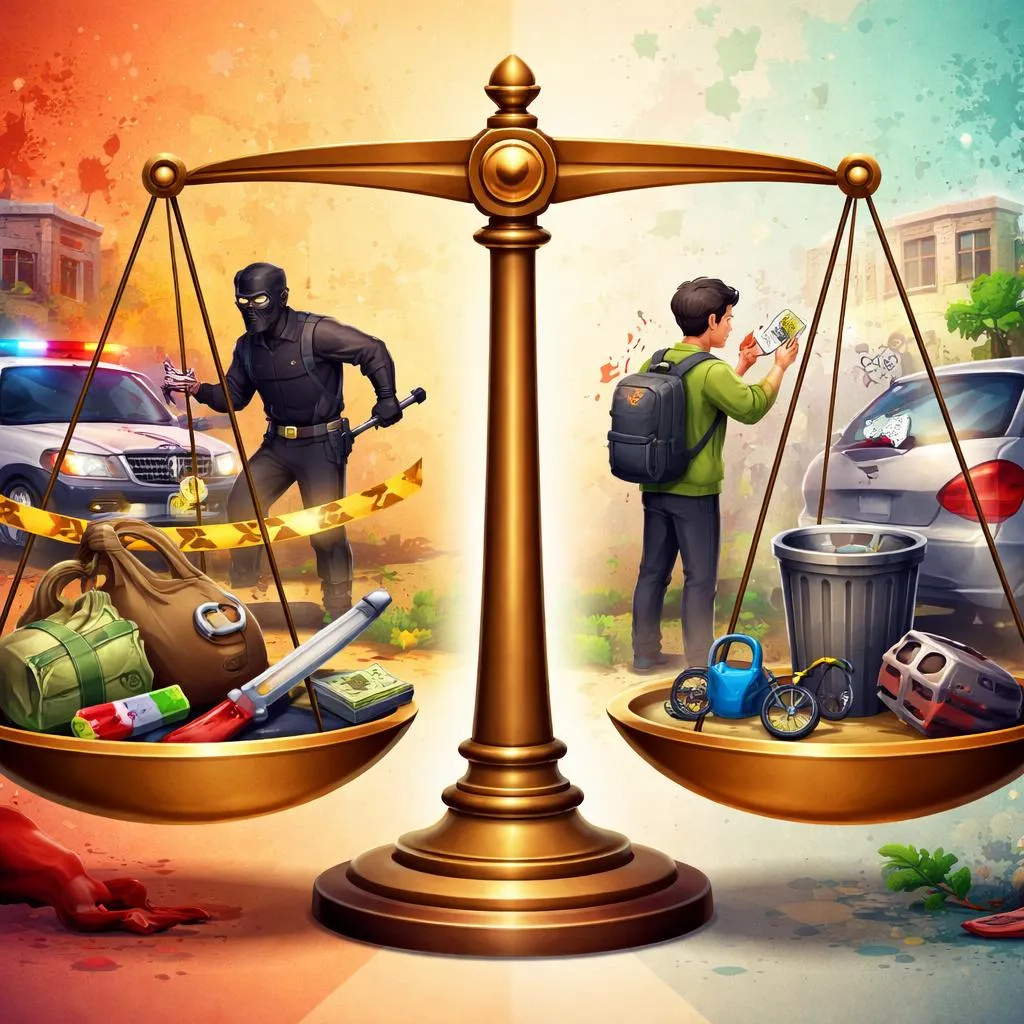

Hello, word explorer! The news talks about a serious crime. The teacher talks about a school rule offense. Both are about doing something wrong. But are they the same kind of wrong? They are two levels of breaking rules. One is like a loud, scary thunderstorm. One is like a small, sudden rain shower. Let's discover their secret! Today, we explore the rule-breaking word pair "crime" and "offense". Knowing the difference helps you understand the world better. Let's begin.
First, let's be Language Listeners. Listen at home. Here are two sentences. "Stealing a car is a serious crime." "Not finishing your veggies is not a crime, it's just a small offense." Both talk about breaking rules. A car. Vegetables. Do they sound the same? One sounds huge and serious. One sounds much smaller. Can you sense the difference? Great listening! Now, let's look closer.
Adventure! Into the World of Broken Rules
Welcome to understanding wrong actions. A "crime" and an "offense" are both about rules. But their seriousness is very different. Think of a "crime" as a huge, scary elephant. It is big, loud, and serious. It breaks the most important rules of all. Think of an "offense" as a small, quick monkey. It is smaller, lighter, and breaks smaller rules. Both are "against the rules". But one is the "big elephant" of the law. One is the "small monkey" of manners. Let's learn about each one.
Huge Law vs. Smaller Rule Think about the word "crime". A "crime" is a very serious wrong. It breaks the official laws of a country or city. Robbery is a crime. The police deal with crime. Now, think about "offense". An "offense" is a wrong or a mistake. It breaks a rule, but not always a big law. A traffic offense. A minor offense. The feeling is less serious. A "crime" is the huge elephant of the law. An "offense" is the small monkey of a broken rule. One is for courts. One is for rulebooks.
Very Serious vs. Less Serious Let's compare their weight. A "crime" is heavy and scary. It is for very bad actions. Murder is a terrible crime. The feeling is strong and bad. An "offense" can be lighter. It can be small or big, but often smaller. Parking in the wrong spot is a traffic offense. The feeling is less scary. Committing a crime is a huge deal. Committing an offense might just get you a warning. One shakes the whole ground. One is a small rustle in the leaves.
Their Special Word Partners and Common Uses Words have best friends. "Crime" often partners with serious words and law. Commit a crime. A violent crime. Fight crime. "Offense" often partners with levels and types. A minor offense. A serious offense. A criminal offense. Note: You are a "criminal" for a crime. You are an "offender" for an offense. "Crime" is a big category. "Offense" can describe the act.
Let's visit a school scene. The police officer taught us about the serious crime of theft. This is about breaking a major law. The student's rudeness was a minor offense against class rules. The word "crime" fits the major, illegal act of theft. The word "offense" fits the smaller act of being rude, breaking a school rule. One is against state law. One is against school policy.
Now, let's go to the playground. Cutting in line is not a crime, but it is a rude offense. The word "crime" is too big for this small action. The word "offense" fits perfectly for a small rule break. Using bad words can be an offense against the playground rules. The word "crime" fits the huge elephant of law. The word "offense" fits the small monkey of playground manners. One is for police. One is for teachers.
Our Little Discovery So, what did we find? A "crime" and an "offense" are both wrongs. But a "crime" is a very serious wrong against the law. It is a major, illegal act. An "offense" is a wrong that breaks a rule. It can be small or big, but is often less serious than a crime. Stealing is a crime. Being late is an offense. A "crime" is the huge, scary elephant. An "offense" is the smaller, quick monkey.
Challenge! Become a Rules Word Champion
Ready for a nature test? Let's try your new skills!
"The Best Choice" Challenge Let's imagine a nature scene. A fox stealing all the farmer's chickens is like a crime. This is a serious, harmful act. A squirrel taking one sunflower seed might be a tiny offense. The word "crime" is the champion for the fox's major, harmful theft. The word "offense" is the best choice for the squirrel's small, sneaky act. One is a major violation. One is a minor nuisance.
"My Sentence Show" Your turn to create! Here is your scene: A library. Can you make two sentences? Use "crime" in one. Use "offense" in one. Try it! Here is an example: "Stealing a book from the library is a crime." This is about breaking a major law. "Being too loud in the library is a small offense." This is about breaking a smaller library rule. Your sentences will show a major law break versus a minor rule break!
"Eagle Eyes" Search Look at this sentence. Can you find the word that could be better? Let's check a home context. "Not sharing your toys with your sister is a terrible crime." Hmm. Not sharing is bad, but it is not a serious, illegal act. The word for a smaller bad act or rule break is "offense", not "crime". "Crime" is much too strong here. A better sentence is: "Not sharing your toys with your sister is a small offense." Using "offense" correctly describes a minor wrong. "Crime" would be for something like stealing a car. Did you spot it? Super thinking!
Harvest and Action! Turn Knowledge Into Your Superpower
Great exploring! We started thinking "crime" and "offense" were similar wrongs. Now we know they are different levels. A "crime" is a very serious, illegal act that breaks a country's or city's laws. It is a major wrong. An "offense" is an act that breaks a rule. It can be minor or serious, but is often less serious than a crime. You can now talk about rules and laws with perfect clarity.
What you can learn from this article: You can now see that a "crime" is a very serious wrong, like stealing or hurting someone. It is against the law, and police deal with crimes. You can now understand that an "offense" is an act that breaks a rule. It can be small, like a traffic ticket, or bigger, but the word is often used for less serious things than crimes. You know that breaking into a house is a crime. Jaywalking is a minor traffic offense. You learned to match the word to the seriousness: "crime" for major illegal acts; "offense" for rule-breaking acts, big or small.
Life practice application: Try your new skill today! Be a word detective. When you hear news about bad acts, see if they are major crimes or smaller offenses. When you read school rules, they list offenses, not crimes! Remember, knowing the difference helps you understand how serious a situation is. Use "crime" for talking about very serious, illegal actions. Use "offense" for talking about breaking rules, from small to more serious. Your understanding of rules and society will be much sharper!