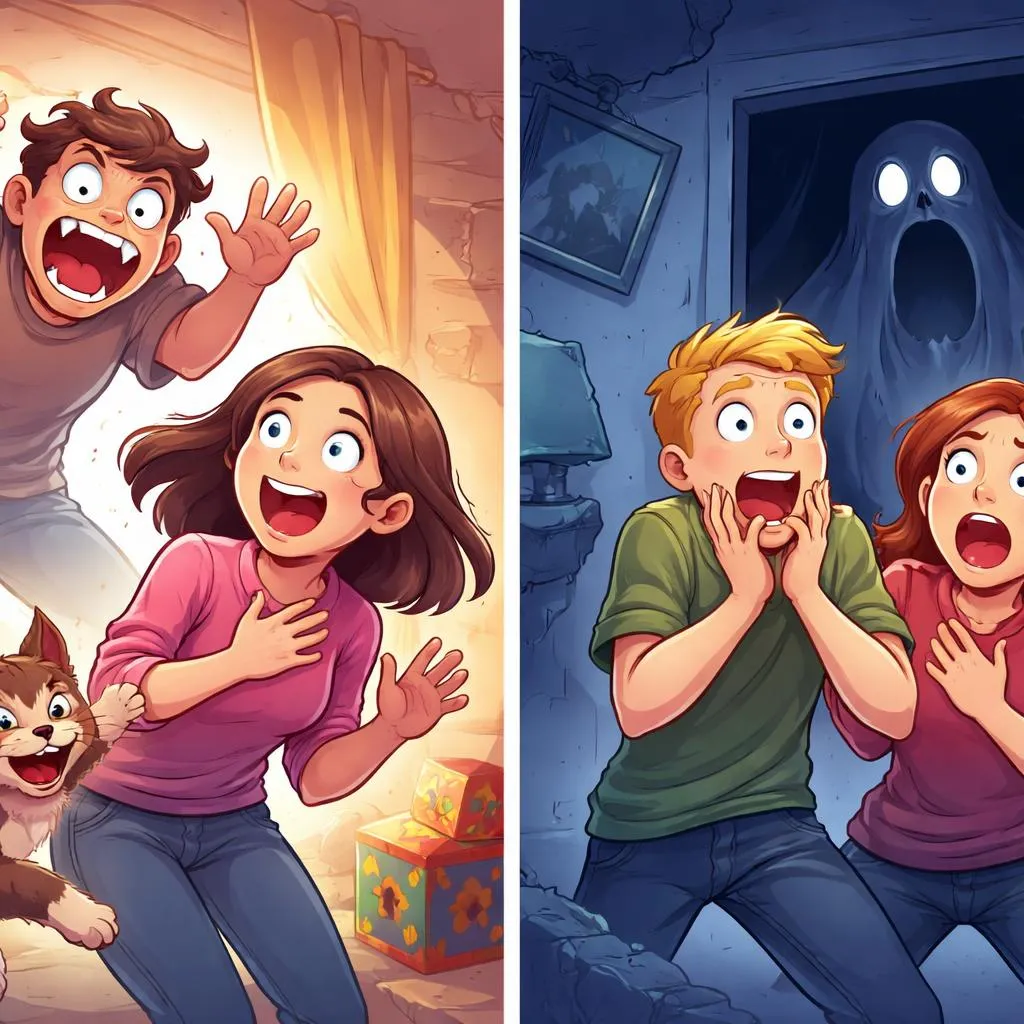

Hello, brave word explorer! A loud noise might scare you. A dark, strange shadow could frighten you. They both talk about fear. But do they make you feel the same way? They are like two different types of spooky sounds. One is a sudden "Boo!" One is a creepy, quiet whisper. Let's discover their secrets! Today, we explore the word friends "scare" and "frighten". Knowing their secret makes you a fear-feeling expert. Let's begin our adventure!
First, let's be Language Listeners. Listen at home. Here are two sentences. "My brother jumped out to scare me." "The howling wind at night can frighten our dog." They both cause fear. A jump. The wind. Do they sound the same? One feels like a quick, sudden jump-scare. One feels like a deeper, uneasy feeling. Can you sense it? Great listening! Now, let's look closer.
Adventure! Into the World of Fear and Startles
Welcome to the world of scary feelings! "Scare" and "frighten" are about causing fear. But they cause fear in different ways. Think of "scare" as a quick jump. It is sudden and sharp. It might make you yell. Think of "frighten" as a deeper worry. It is more serious. It makes you feel uneasy. Both are about "fear". But one is a "jump". One is a "worry". Let's learn about each one.
A Sudden Jump vs. A Deeper Unease Think about the word "scare". "Scare" feels like a flash. It is quick and often playful. A prank can scare you. A loud movie scene can scare you. The feeling is sudden and loud. Now, think about "frighten". "Frighten" feels like a chill. It is more serious and deeper. A strange noise can frighten you. A big storm can frighten pets. The feeling lasts longer. "Scare" is the popping balloon. "Frighten" is the dark room. One is the quick event. One is the lasting feeling.
Often Playful or Sudden vs. Often More Serious Let's compare their common uses. A "scare" can be fun or just sudden. A surprise party can scare you happily. A jack-o-lantern might scare you for fun. "Frighten" is usually more serious. Bad news can frighten people. A growl can frighten an animal. The feeling is different. "Scare" can be light. "Frighten" feels heavier. You get a scare on a roller coaster. A thunderstorm might frighten you. One is a thrill. One is real worry.
Their Special Word Partners and Common Uses Words have best friends. "Scare" loves words about fun, pranks, and quick things. Scare someone. Scare away. A little scare. "Frighten" loves words about real danger, deep feelings, and being serious. Frighten easily. Frighten into hiding. I was frightened. Note: Something can "scare" you. The cat scared me. Something can "frighten" you. The dark frightens me. You can say "That was scary!" or "I am frightened."
Let's visit a school scene. A friend hides behind a door. They yell to scare you. This is a sudden, playful jump. Reading a very spooky story might frighten the class. The word "scare" fits the fun, sudden prank. The word "frighten" fits the deeper, uneasy feeling from a scary tale. One is a quick shout. One is a creepy story.
Now, let's go to the playground. The fast drop on a ride might scare you. It is a fun, sudden thrill. Seeing a wasp nest could frighten you. This is a real worry. The word "scare" fits the exciting, sudden fear on a ride. The word "frighten" fits the worried feeling about real danger. One is for fun. One is for caution.
Our Little Discovery So, what did we find? "Scare" and "frighten" both cause fear. But "scare" is often a sudden, quick feeling. It can be playful or just a startle. "Frighten" is usually a deeper, more serious feeling of fear or worry. A fun Halloween mask can scare you. A dark, lonely path can frighten you. "Scare" is the quick jump. "Frighten" is the lasting chill.
Challenge! Become a Fear Word Champion
Ready for a nature test? Let's try your new skills!
"The Best Choice" Challenge Let's imagine a nature scene. A rabbit might get a scare from a falling pinecone. This is a sudden, harmless startle. The same rabbit feels frightened by a fox's smell. This is a deep, serious fear for safety. "Scare" wins for the sudden, harmless startle from the pinecone. "Frighten" is the word for the deep, worried fear from a predator's smell. One is a quick surprise. One is a serious fear.
"My Sentence Show" Your turn to create! Here is your scene: Watching a movie with friends. Can you make two sentences? Use "scare" in one. Use "frighten" in one. Try it! Here is an example: "The loud monster roar made everyone jump and scare." This is about the sudden, jumpy moment. "The creepy music and dark shadows began to frighten us." This is about the growing, uneasy feeling. Your sentences will show a sudden jump versus a deeper worry!
"Eagle Eyes" Search Look at this sentence. Can you find the word that could be better? Let's check a home context. "The silly clown at the party really frightened the little children." Hmm. A silly clown is meant to be funny, not cause deep fear. The word "frightened" suggests a serious, worried feeling. The word "scared" is a better choice for a sudden, maybe fun surprise. A better sentence is: "The silly clown at the party really scared the little children." Using "scared" fits a sudden, playful startle. "Frightened" sounds too strong and serious. Did you spot it? Super thinking!
Harvest and Action! Turn Knowledge Into Your Superpower
Great exploring! We started thinking "scare" and "frighten" were similar. Now we know they are two different types of fear. "Scare" is the word for a sudden, often quick feeling of being startled. It can be fun, like a game, or just a surprise. "Frighten" is the word for a deeper, more serious feeling of fear or worry that makes you feel uneasy. You can now talk about fear with perfect clarity.
What you can learn from this article: You can now see that to "scare" someone or to be "scared" often means to give or feel a sudden, quick startle. It is like a "Boo!" moment. It can be playful or just surprising. You can now understand that to "frighten" someone or to be "frightened" means to cause or feel a deeper, more serious kind of fear or worry. It is a feeling that sits with you. You know that a friend jumping out might scare you for a second. A strange sound in the house at night could frighten you. You learned to match the word to the fear: "scare" for the sudden jump; "frighten" for the deeper worry.
Life practice application: Try your new skill today! Be a feeling word expert. Telling a spooky story? Try to scare your friends with a loud part. Hearing a worrying news report? It might frighten people. If you watch a funny ghost cartoon, it might scare you in a fun way. If you read a very spooky book, it could frighten you. You are now a master of these words! Use "scare" for sudden, jumpy moments. Use "frighten" for deeper, uneasy feelings. Your way of describing fear will be perfectly clear!