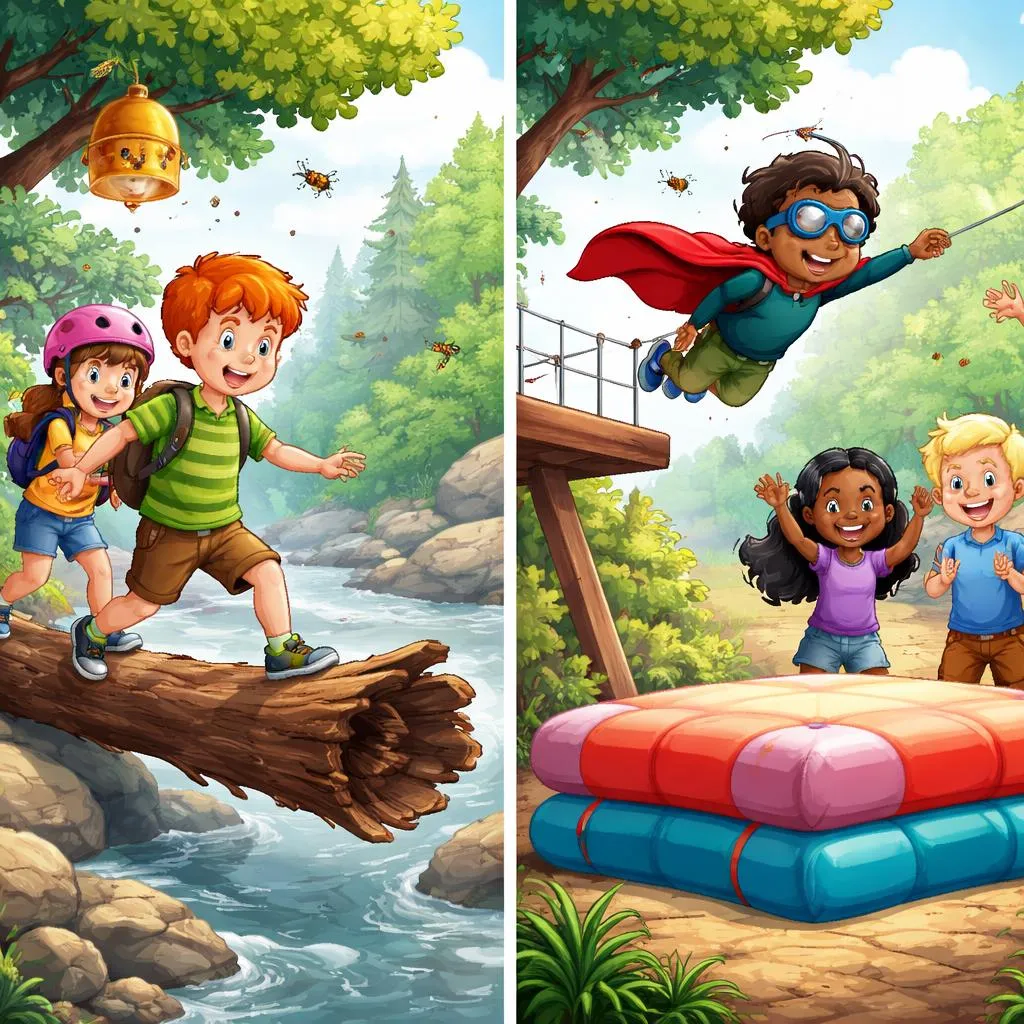

Hello, word explorer! Do you like adventure? Is it a risk to try the tallest slide? Did a friend dare you to eat a sour lemon? They both seem to be about trying things. But are they the same? They are like two different flavors of adventure. One is like a "warning" sign. One is like a "challenge" flag. Let's find out! Today, we explore the word friends "risk" and "dare". Knowing their secret helps you describe adventures. Let's begin our brave word adventure!
First, let's be Adventure Detectives. Listen at home. Here are two sentences. "There is a risk of rain today, so take an umbrella." "I dare you to finish your vegetables first!" They both involve something uncertain. The rain. Finishing food. Do they sound the same? One feels like a possible danger. One feels like a playful challenge. Can you sense it? Great observation! Now, let's look closer.
Adventure! Into the World of Trying Things
Welcome to the world of courage! "Risk" and "dare" are about uncertainty. But they are not the same. Think of "risk" as the warning sign. It is the chance of something bad happening. Think of "dare" as the challenge flag. It is an invitation to do something bold. Both involve action. But one is the "possible danger". One is the "bold challenge". Let's learn about each one.
The Warning Sign vs. The Challenge Flag Think about the word "risk". "Risk" feels serious and careful. It is about possible danger. Crossing a busy street is a risk. There is a risk of falling. It makes you think twice. Now, think about "dare". "Dare" feels exciting and bold. It is about courage. Your friend might dare you to sing loudly. You dare to dream big. "Risk" is like a dark cloud. "Dare" is like a cheering crowd. One warns you of trouble. One pushes you to be brave.
The Danger Itself vs. The Action You Take Let's compare their focus. "Risk" is often the danger itself. It is the noun. Smoking is a health risk. You take a risk when you guess. "Dare" is almost always an action. It is the verb. I dare you to jump. He took the dare. You can also say "a dare" as a noun. But it is a challenge to do something. You assess a risk. You accept a dare. "Risk" is what might go wrong. "Dare" is the act of being brave. One is the problem. One is the response.
Their Special Word Partners and Common Uses Words have best friends. "Risk" loves words about chance, safety, and assessment. Take a risk. High risk. Risk factor. At your own risk. "Dare" loves words about challenges, courage, and boldness. I dare you. Double dare. How dare you! A dare. Note: You can be "risky". You can be "daring". You "risk" getting hurt. You "dare" to do something scary.
Let's visit a school scene. In science class, you do an experiment. Your teacher says, "There is a risk of spills. Wear your safety goggles." This is a warning about possible mess or harm. Later, at lunch, your friend says, "I dare you to try the super-spicy salsa!" This is a fun challenge to be bold. The word "risk" fits the science safety warning. The word "dare" fits the lunchtime food challenge. One is serious. One is playful.
Now, let's go to the playground. You look at the tall climbing frame. It looks shaky. Your brain thinks, "Climbing that is a risk. I might fall." This is you seeing a possible danger. Then, your best friend says, "I bet you can't reach the top in ten seconds! I dare you to try!" This is a challenge to be brave. The word "risk" fits your thought about the possible fall. The word "dare" fits your friend's exciting challenge. One is a thought. One is a spoken challenge.
Our Little Discovery So, what did we find? "Risk" and "dare" are about uncertain actions. But they are very different. "Risk" is mainly about the chance of danger or a bad result. It is often a noun for the danger itself. "Dare" is about the courage to face fear or difficulty. It is a challenge, usually a verb for the act of challenging. Riding a bike fast has a risk. Your friend might dare you to race. Knowing this helps you talk about safety and bravery.
Challenge! Become a Courage Word Champion
Ready for a nature test? Let's try your new skills!
"The Best Choice" Challenge Let's imagine a nature scene. A young monkey sees ripe fruit. The fruit hangs from a thin branch. The branch is over a river. The monkey thinks, "That branch might break. There is a risk of falling into the water." This is the monkey's careful thought about danger. Now, imagine the monkey's brother. He says, "You are too scared! I dare you to go get that fruit!" This is a spoken challenge to be brave. "Risk" wins for the monkey's thought about possible falling. "Dare" is the word for the brother's bold challenge. "Risk" is the danger. "Dare" is the challenge.
"My Sentence Show" Your turn to create! Here is your scene: A group of friends at a sleepover telling stories. Can you make two sentences? Use "risk" in one. Use "dare" in one. Try it! Here is an example: "We heard a strange noise. Going to look alone in the dark was a big risk." This is about the possible danger of the action. "My friend turned to me and whispered, 'I dare you to go look.'" This is the spoken challenge to be brave. Your sentences will show the difference between seeing danger and giving a challenge!
"Eagle Eyes" Search Look at this sentence. Can you find the word that could be better? Let's check a home context. "My mom said eating cookies before dinner is a dare of spoiling my appetite." Hmm. Eating cookies might ruin your dinner. This is a possible bad result. It is not a challenge from a person. The word "risk" is the better, more accurate choice. "My mom said eating cookies before dinner is a risk of spoiling my appetite." Using "dare" here makes it sound like a fun challenge. "Risk" is the champion for this warning about a bad result. Did you spot it? Excellent word work!
Harvest and Action! Turn Knowledge Into Your Superpower
Great exploring! We started thinking "risk" and "dare" were similar. Now we know they are two different adventure words. "Risk" is the word for the chance of something bad happening. "Dare" is the word for a bold challenge to do something. You can now talk about careful choices and brave acts with perfect accuracy. This is a great skill for a smart and courageous thinker.
What you can learn from this article: You can now see that a "risk" is the possibility of something bad or dangerous happening, and it often makes you stop and think carefully before you act. You can now understand that to "dare" means to be brave enough to do something difficult or scary, or to challenge someone else to do it. You know that climbing a high tree has a risk of falling, but a friend might dare you to climb it. You learned to match the word to the idea: "risk" for the possible danger; "dare" for the courage or challenge.
Life practice application: Try your new skill today! Be an adventure word expert. Listen to your thoughts and your friends. Do you see a risk in a situation? Does someone dare you to try something? Next time you read a book, notice the words. Say, "The character knew the journey was a big risk." or "The knight dared to enter the dark cave." Tell a family member about a smart choice you made to avoid a risk. Talk about a fun dare you did with friends. You are now a master of adventure words! Think about risks and be brave about dares.