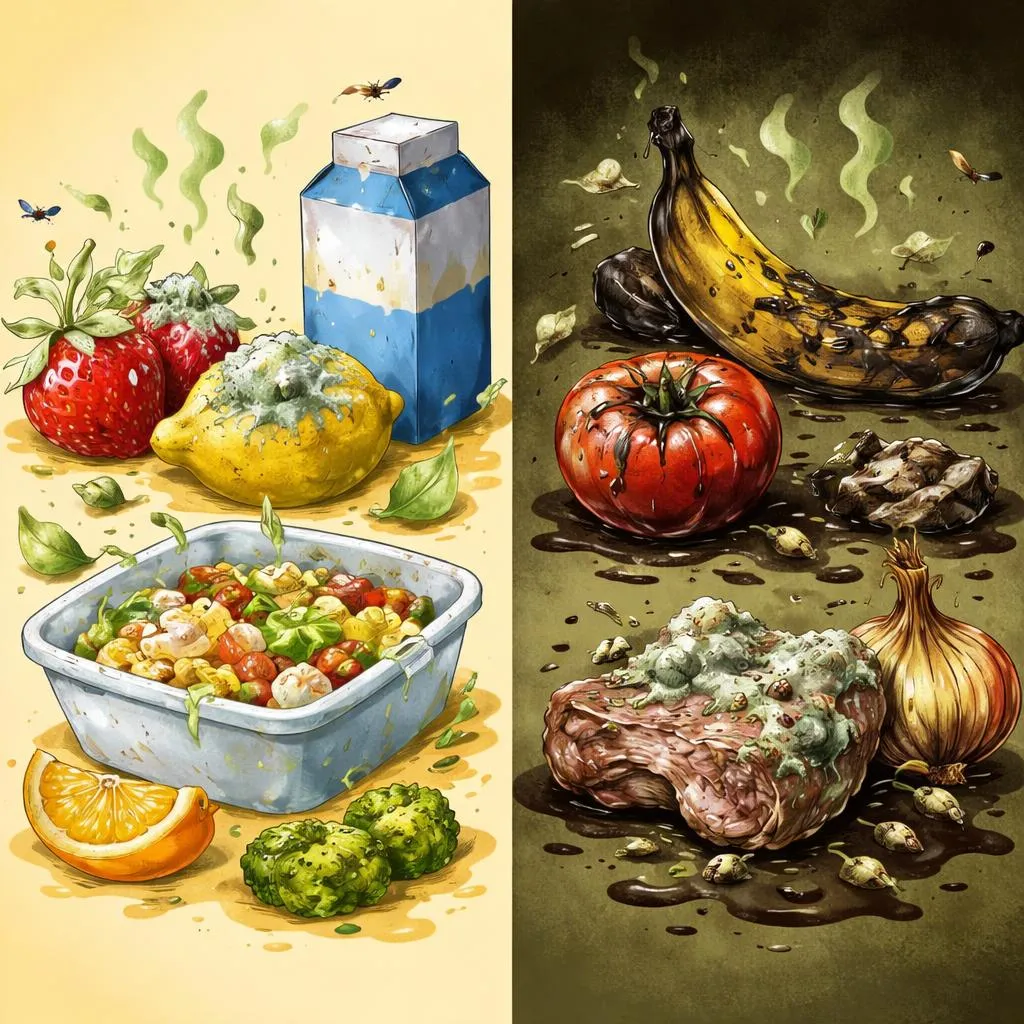

Hello, word scientist! Left-out milk can spoil. An old apple can rot. They both talk about things going bad. But do they go bad in the same way? They are like two different bad processes. One is like a messy party. One is like a slow change. Let's discover their secrets! Today, we explore the word friends "spoil" and "rot". Knowing their secret makes you a kitchen and garden expert. Let's begin our decay discovery!
First, let's be Language Listeners. Listen at home. Here are two sentences. "Don't leave the milk out, or it will spoil." "The old pumpkin on the porch started to rot." They both involve things going bad. Milk. A pumpkin. Do they sound the same? One feels like becoming useless or yucky. One feels like breaking down and getting mushy. Can you sense it? Great listening! Now, let's look closer.
Adventure! Into the World of Going Bad
Welcome to the world of things turning yucky! "Spoil" and "rot" are about decay. But they describe different kinds of decay. Think of "spoil" as a messy party for food. It means to become bad, unfit, or less good. Think of "rot" as a slow, wet, messy change. It means to slowly decompose or break down. Both are "bad". But one is a "messy party". One is a "slow, wet change". Let's learn about each one.
Becoming Bad vs. Decomposing Think about the word "spoil". "Spoil" feels like a sudden change to bad. Food can spoil. A plan can spoil. A mood can spoil. The feeling is about becoming useless, ruined, or less fun. Now, think about "rot". "Rot" feels like a slow, physical process. It is about organic matter breaking down. Wood can rot. A tooth can rot. Leaves rot. The feeling is about decomposition. "Spoil" is the messy party that ruins things. "Rot" is the slow, wet change. One is about becoming bad. One is about breaking down.
For Many Things vs. For Organic Matter Let's compare their uses. You can "spoil" many things. You can spoil food, fun, surprises, or children! The rain spoiled our picnic. You "rot" mostly organic, once-living things. Plants, wood, food, and teeth can rot. The log began to rot. The feeling is different. "Spoil" is for ruining quality or fun. "Rot" is for natural decay. Fruit can spoil (become inedible). Fruit can also rot (decompose). But "rot" shows the physical decay more. One is broader. One is specific.
Their Special Word Partners and Common Uses Words have best friends. "Spoil" loves words about ruining things. Spoil your dinner. Spoil the surprise. Spoil a child (give too much). "Rot" loves words about natural decay and things sitting. Rot away. Rotting wood. Stop the rot. Note: You say "The milk is spoiled." You say "The wood is rotting." You can say "Food goes bad" which is like spoil. You say "Food rots" which shows the decaying process.
Let's visit a school scene. If you peek at the answers, you spoil the test for yourself. This ruins the challenge. The forgotten banana in the lunchbox began to rot. The word "spoil" fits ruining the experience of the test. The word "rot" fits the physical decaying of the banana. One ruins an experience. One is a physical process.
Now, let's go to the playground. A sudden rainstorm can spoil the fun. This ruins the good time. The wet wood on the old bench might rot. The word "spoil" fits ruining the fun of the day. The word "rot" fits the slow decay of the wet wood material. One is about an event. One is about a material.
Our Little Discovery So, what did we find? "Spoil" and "rot" are both about going bad. But "spoil" means to become bad, unfit, or less good. It can ruin food, plans, or fun. "Rot" means to decompose or break down slowly. It happens to organic materials like plants, food, or wood. Milk left out will spoil. An old tree stump will rot. "Spoil" is the messy party ruiner. "Rot" is the slow, natural changer.
Challenge! Become a Decay Word Champion
Ready for a nature test? Let's try your new skills!
"The Best Choice" Challenge Let's imagine a nature scene. Fallen fruit left on the ground will rot. This describes the natural process of decomposition. Too many bugs can spoil a crop of strawberries. The word "rot" wins for the natural, physical breakdown of the fruit on the ground. The word "spoil" is the champion for ruining the quality and usefulness of the crop. One is a process. One is a result.
"My Sentence Show" Your turn to create! Here is your scene: A picnic. Can you make two sentences? Use "spoil" in one. Use "rot" in one. Try it! Here is an example: "Leaving the salad in the sun will spoil it." This is about making it bad to eat. "If we leave the apple cores here, they will rot." This is about them decomposing on the ground. Your sentences will show ruining food versus natural decay!
"Eagle Eyes" Search Look at this sentence. Can you find the word that could be better? Let's check a home context. "The old newspapers in the garage are spoiling." Hmm. Newspapers are paper (from trees). The more accurate word for old, damp paper breaking down is "rot". "Spoil" is more for things becoming useless or less good, not decomposing. A better sentence is: "The old newspapers in the garage are rotting." Using "rotting" fits the idea of the paper material decomposing. "Spoiling" sounds odd for paper decay. Did you spot it? Super thinking!
Harvest and Action! Turn Knowledge Into Your Superpower
Great exploring! We started thinking "spoil" and "rot" were similar. Now we know they describe different bad changes. "Spoil" is the word for things becoming bad, ruined, or less enjoyable. It can happen to food, plans, moods, and surprises. "Rot" is the word for the slow process of decay and decomposition. It happens to natural, once-living materials like food, plants, and wood. You can now describe things going bad with perfect clarity.
What you can learn from this article: You can now see that to "spoil" something means to ruin it, make it go bad, or make it less good. It can spoil your appetite, spoil a secret, or spoil milk. The focus is on becoming unfit or less enjoyable. You can now understand that to "rot" means to slowly decay, break down, and decompose. This is a natural process for organic things like leaves, old fruit, or wet wood. The focus is on the physical process of breaking apart. You know that forgetting lunch in your bag can spoil the food. A pile of leaves in the yard will rot over time. You learned to match the word to the change: "spoil" for ruining; "rot" for decomposing.
Life practice application: Try your new skill today! Be a decay word expert. In the kitchen, you can say the meat will spoil if not in the fridge. In the garden, you can say the old leaves are rotting into soil. Help your family by not letting food spoil. Observe how a compost pile uses rot to make new soil. You are now a master of these words! Use "spoil" for talking about ruining food or fun. Use "rot" for talking about things naturally breaking down. Your way of describing the world will be perfectly clear!