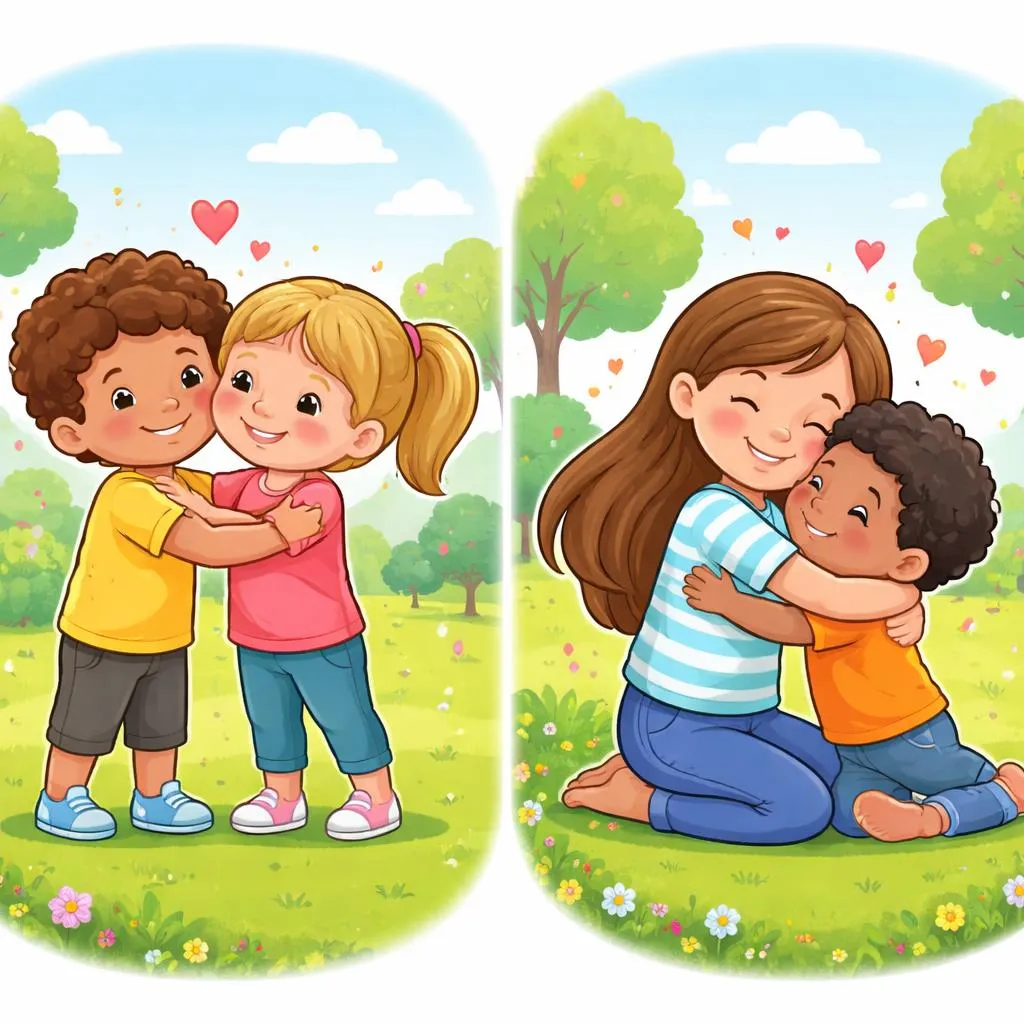

Hello, word explorer! Have you ever wrapped your arms around someone? What do you do when you greet your best friend? Do you give them a hug? How do you describe a very special, warm moment? Do you talk about a loving embrace? They both seem to be about holding someone close. But are they the same? They are like two different kinds of cozy blankets. One is like your favorite everyday sweater. One is like a super special, warm blanket for a big occasion. Let's find out! Today, we explore the word friends "hug" and "embrace". Knowing their secret is a superpower. It makes you a feelings expert. Let's begin our warm adventure!
First, let's be Feeling Detectives. Listen at home. Here are two sentences. "When I came home from school, Mom gave me a big, quick hug at the door." "After winning the big game, the whole team shared a group embrace full of happy shouts." They both involve holding. A welcome home. A team celebration. Do they sound the same? One feels like a common, everyday action. One feels like a deeper, more special moment. Can you sense it? Great observation! Now, let's look closer.
Adventure! Into the World of Warm Holds
Welcome to the world of care and closeness! "Hug" and "embrace" are two different ways to hold someone. Think of "hug" as the simple, common action. It is the act of putting your arms around someone. Think of "embrace" as a deeper, warmer, or more formal way to hug. It often carries more feeling. Both show you care. But one is the "everyday hold". One is the "special hold". Let's learn about each one.
The Everyday Action vs. The Special Moment Think about the word "hug". "Hug" feels simple, common, and full of everyday love. It is the action you know well. You hug your parent goodbye. You hug a friend hello. It is quick, friendly, and warm. Now, think about "embrace". "Embrace" feels deeper, warmer, and more meaningful. It often lasts longer. It is for very happy or very sad moments. A long-lost friend might embrace you tightly. A family might embrace in a group hug. "Hug" is like a friendly high-five with arms. "Embrace" is like a heartfelt thank you with your whole body. One is common. One is special.
A Quick Hello vs. A Deep Feeling Let's compare their feeling. "Hug" is the simple, physical act. It can be short or long. It is a normal part of life. You can get a good luck hug. You can give a thank you hug. "Embrace" is a stronger, deeper word. It is for big feelings. People embrace after a long time apart. You might read about characters in a book who embrace their new life. You hug your friend at a party. Two people might embrace tightly at a wedding. "Hug" is the action you do. "Embrace" is the feeling you share. One is casual. One is deep.
Their Special Word Partners and Common Uses Words have best friends. "Hug" loves words about daily life, greetings, and simple love. Give a hug. A big hug. A quick hug. Hug hello. Group hug. "Embrace" loves words about big feelings, acceptance, and special moments. A warm embrace. A tight embrace. Embrace the idea. Embrace the challenge. Note: You can "hug it out". You can "hug someone tightly". You can "welcome an embrace". You can "be locked in an embrace".
Let's visit a school scene. Your friend is sad about a lost game. You walk over and put your arm around their shoulder. You give them a comforting hug. This is a simple, kind action to make them feel better. Later, imagine the school play is over. The actors take a bow. The two main characters, who played best friends in the story, hold each other close on stage. This is not just a quick hug. It is a part of the play's emotional ending. They share a final, stage embrace. The word "hug" fits the simple, comforting action for your friend. The word "embrace" fits the deep, emotional stage moment.
Now, let's go to the playground. You see your cousin you haven't seen in months! You run to them. You throw your arms around them. You give them a big, happy hug. This is a normal, joyful greeting. Later, imagine winning the championship soccer match. The final whistle blows. Your whole team runs together. You all jump and hold each other in a big, jumping, screaming pile. This is a group celebration full of huge emotion. The team shares a joyful, jumping embrace. The word "hug" fits the happy greeting for your cousin. The word "embrace" fits the team's deep, excited group celebration.
Our Little Discovery So, what did we find? "Hug" and "embrace" are both about holding someone close. But they are used a little differently. "Hug" is the everyday word. It is the simple, common action of putting your arms around someone. It is for greetings, goodbyes, and comfort. "Embrace" is a deeper, warmer, or more formal word. It is for stronger feelings, special moments, or accepting ideas. You hug your mom every day. You might read about a loving embrace in a special story. Knowing this helps you understand daily love and deep connection.
Challenge! Become a Warm Word Champion
Ready for a nature test? Let's try your new skills!
"The Best Choice" Challenge Let's imagine a nature scene. A young elephant calf is playing near its mother. The calf gets a little scared by a loud noise. It runs quickly to its mother's side. The mother elephant gently wraps her trunk around the calf. This is a comforting, protective, and common action. The mother gives her calf a reassuring hug with her trunk. Now, think of two grown-up elephants meeting after a long journey. They touch trunks gently. Then they stand very close, leaning their large heads together. They stay that way for a long, quiet moment. This shows deep friendship and reunion. Their quiet, close holding is a powerful embrace. "Hug" wins for the common, comforting action. "Embrace" is the word for the deep, emotional reunion. "Hug" is the everyday comfort. "Embrace" is the special bond.
"My Sentence Show" Your turn to create! Here is your scene: Saying goodbye to a family member who is going on a trip. Can you make two sentences? Use "hug" in one. Use "embrace" in one. Try it! Here is an example: "At the airport, I gave my grandma a tight hug before she walked to her gate." This is a loving, common goodbye action. "At the airport, our whole family shared a long, tearful embrace with Grandma before her long trip." This is a deeper, more significant goodbye moment. Your sentences will show two different levels of caring holds!
"Eagle Eyes" Search Look at this sentence. Can you find the word that could be better? Let's check a home context. "The little girl was so happy to get a new puppy, she gave it a big embrace when she first saw it." Hmm. The word "embrace" here is very deep and formal. Giving a new puppy a simple, happy, cuddly hold is a normal, everyday action. A better, more common word is "hug". "The little girl was so happy to get a new puppy, she gave it a big hug when she first saw it." Using "embrace" here sounds a little too serious for a happy kid and a puppy. "Hug" is the champion for this simple, joyful action. Did you spot it? Excellent word work!
Harvest and Action! Turn Knowledge Into Your Superpower
Great exploring! We started thinking "hug" and "embrace" were similar. Now we know they are two different caring heroes. "Hug" is the simple, everyday, wonderful action of holding someone. "Embrace" is the deeper, warmer word for very special holds or accepting big ideas. You can now talk about comfort and love with perfect accuracy. This is a great skill for a good friend and a great storyteller.
What you can learn from this article: You can now see that a "hug" is the simple, common, and loving action of putting your arms around someone, used for greetings, goodbyes, and everyday comfort. You can now understand that an "embrace" is a deeper, warmer, or more formal word for holding someone close, often used for very emotional moments, special reunions, or to show you accept an idea fully. You know that you give your friend a hug every day at school, but you might read about a character's loving embrace in an important storybook scene. You learned to match the word to the moment: "hug" for everyday love and comfort; "embrace" for deeper feelings and special times.
Life practice application: Try your new skill today! Be a feelings expert. Notice the holds around you. Do you get a good morning hug? Does a movie show a happy embrace? Next time you read a book, notice the difference. Say, "I gave my dog a big hug!" or "The story described a warm family embrace." Tell a friend about your favorite person to hug. Describe a time you saw a picture of a loving embrace. You are now a master of warm words! Keep sharing kindness and noticing deep feelings.