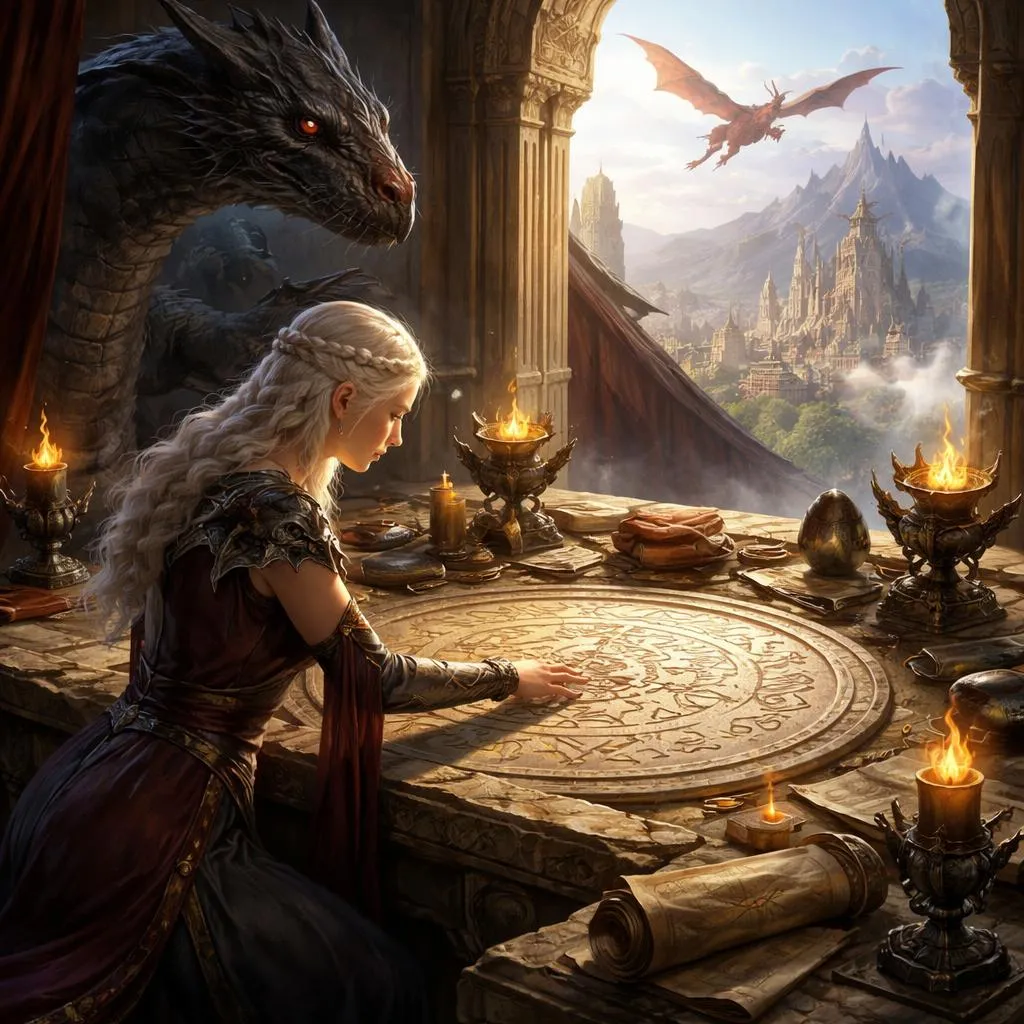

Valyrian is a fictional language created for the television series Game of Thrones, which is based on the book series A Song of Ice and Fire by George R. R. Martin.
It is not a natural language spoken in the real world. It is a constructed language, sometimes called a conlang. That means it was carefully designed for storytelling.
High Valyrian and Low Valyrian
There are two main forms of Valyrian in the story world:
High Valyrian Low Valyrian
High Valyrian is the ancient and formal version. It was spoken by the noble families of the old Valyrian Freehold in the fictional world.
Low Valyrian refers to regional variations that developed later in different cities.
High Valyrian is often compared to Latin in the real world because it is associated with education, power, and tradition.
Who Created the Language?
The full spoken version of High Valyrian for television was developed by linguist David J. Peterson.
He created grammar rules, vocabulary, and pronunciation systems so actors could speak it consistently.
Unlike random invented words, Valyrian has structure. It includes:
Verb conjugations Noun cases Gender categories Word order rules
This makes it a fully developed constructed language.
What Does Valyrian Sound Like?
Valyrian has flowing vowel sounds and soft consonants. It is designed to sound elegant and powerful.
A famous Valyrian phrase is:
“Valar morghulis”
It means “All men must die.”
Another phrase is:
“Valar dohaeris”
It means “All men must serve.”
These phrases became widely recognized by fans of the series.
Grammar Features
High Valyrian has grammatical cases. This means nouns change form depending on their role in the sentence.
It also has multiple genders for nouns.
Verbs change depending on number and person.
Because of these features, Valyrian grammar can be complex, similar to classical languages.
Is Valyrian Used Today?
Although it is fictional, some fans study and practice High Valyrian. Language learning apps have even offered courses in it.
People use it for:
Fan communities Creative writing Online discussions Cosplay events
However, it is not used as a real-world communication language in daily life.
Why Create a Fictional Language?
Creating a language adds depth to a fictional world. It makes the story feel more realistic and immersive.
In Game of Thrones, different regions have different languages. This reflects culture, history, and power structures within the story.
A well-developed language makes a fantasy world feel alive.
Valyrian as a Constructed Language
Valyrian belongs to a group of constructed languages created for entertainment. Other examples include languages built for science fiction and fantasy stories.
Constructed languages demonstrate how grammar systems can be designed from the ground up. They show creativity in linguistics and storytelling.
Valyrian is an example of how language can enhance narrative, culture, and identity within a fictional universe.
High Valyrian as a Classical Language
Within the fictional world, High Valyrian is considered a prestigious language. It is associated with education, nobility, and ancient knowledge. Characters who speak High Valyrian are often portrayed as well-educated or connected to powerful traditions.
This mirrors how Latin functioned in medieval Europe. Latin was not commonly spoken in daily life, but it remained important in religion, law, and scholarship.
In the world of Game of Thrones, High Valyrian carries symbolic authority. Speaking it can signal intelligence, heritage, or political power.
Pronunciation and Sound System
High Valyrian has a carefully designed sound system. Vowels are clear and consistent. Consonants are softer compared to some harsh-sounding fictional languages.
Stress patterns are predictable. This makes pronunciation structured rather than random.
Because the language was professionally developed by David J. Peterson, it includes phonological rules. Words follow patterns that feel natural when spoken aloud.
This systematic design allows actors to deliver lines fluently and consistently.
Noun Genders and Cases
High Valyrian nouns belong to grammatical gender categories. Unlike English, which does not assign grammatical gender to most nouns, High Valyrian includes multiple gender classes.
Nouns also change form depending on their grammatical role. This system of cases shows relationships between words in a sentence.
For example, the form of a noun may change depending on whether it is the subject, object, or possession.
This structure gives the language flexibility in word order. Because endings show grammatical function, sentences can sometimes rearrange words without losing clarity.
Verb Conjugation
Verbs in High Valyrian change based on person and number. Singular and plural subjects require different verb endings.
This system resembles many real-world languages where verb forms shift depending on who performs the action.
For learners, this adds complexity. However, it also makes the language feel realistic and complete.
Writing System
In the television adaptation, High Valyrian is usually shown in Roman letters for accessibility. Within the fictional world, however, it is suggested that Valyrian once had its own writing tradition.
Because the language is fictional, the script is not as widely standardized as natural languages. Most learning materials present it using the Latin alphabet.
This allows fans to read and write it more easily.
Learning High Valyrian
Interest in constructed languages has grown in recent years. After the popularity of Game of Thrones, some language-learning platforms introduced introductory High Valyrian lessons.
Learners study:
Basic vocabulary Pronunciation Simple sentence structure Common phrases
While it is not used for daily communication, studying it can improve understanding of grammar concepts and language structure in general.
Cultural Impact
Valyrian phrases have become cultural references in popular media. Fans recognize expressions such as “Valar morghulis” even outside the context of the show.
The language contributes to world-building. It strengthens themes of legacy, empire, and lost civilizations within the story universe created by George R. R. Martin.
A fictional language can influence fan communities, online discussions, and creative projects.
Constructed Languages and Creativity
Valyrian belongs to a broader tradition of constructed languages designed for storytelling. These languages show how grammar, vocabulary, and sound systems can be intentionally designed.
They demonstrate that language is both a communication tool and an artistic creation.
Although Valyrian is fictional, its structure reflects real linguistic principles. Studying it highlights how languages develop systems for sound, meaning, and grammar.
In this way, Valyrian is more than a collection of invented words. It is a carefully built linguistic system that enhances narrative depth and demonstrates the creative possibilities of language design.