
What Is This Plant?
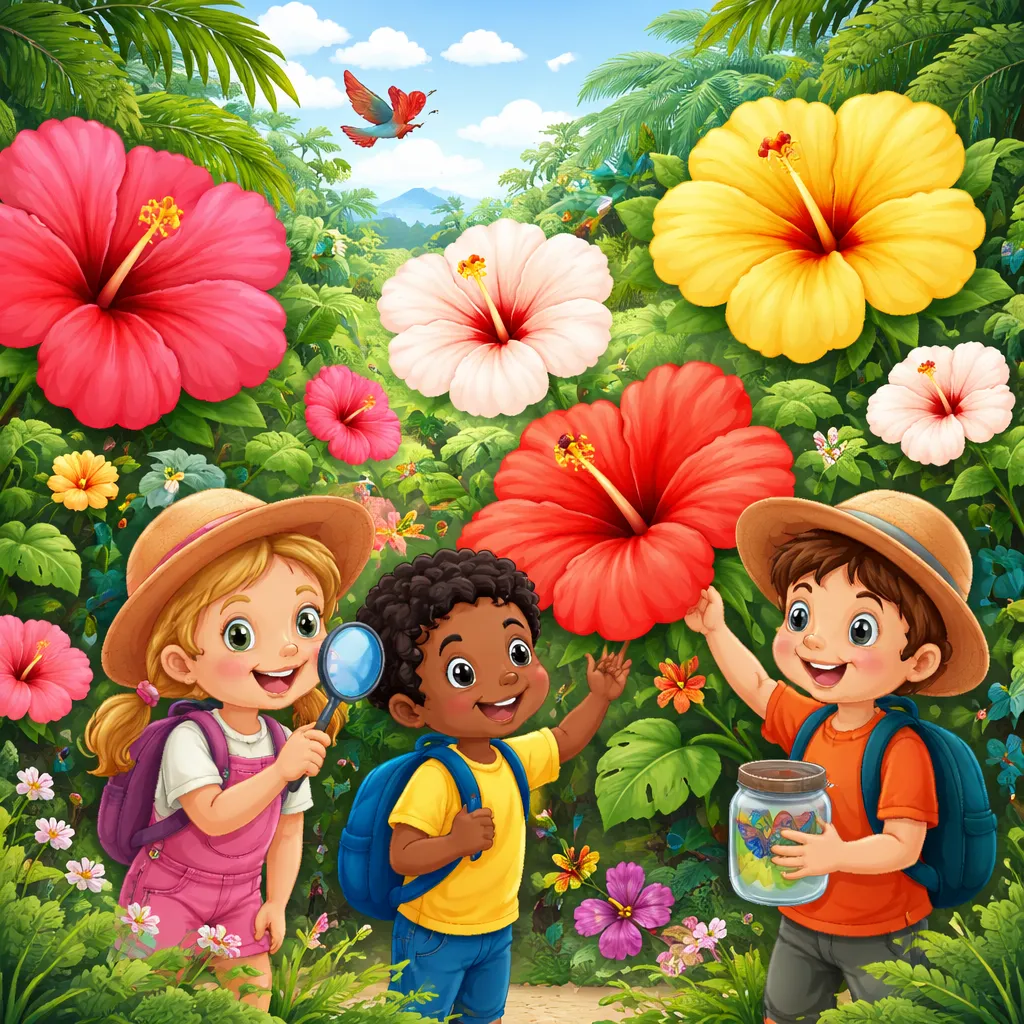
The hibiscus plant is a tropical shrub that produces some of the largest and most striking flowers in the garden. It can grow as a small bush or a medium-sized shrub, depending on the type. The leaves are dark green and glossy. They are oval-shaped with toothed edges. Some varieties have leaves with a reddish tint. The flowers are enormous. They can be as large as a dinner plate. Each flower has five large petals that spread wide open. From the center, a long stalk called the stamen sticks out. It holds yellow pollen. The flowers come in many colors. You can find red, pink, orange, yellow, white, and even purple hibiscus. Some have ruffled petals. Some have contrasting centers. Each flower lasts only one day. But the plant produces new flowers every day. For children, hibiscus flowers are like magic. A new giant flower appears each morning. Parents can plant hibiscus in a pot or garden bed. Children check each morning to see what new flower has opened.
English Learning About This Plant
The English name “hibiscus” comes from the Greek word “hibiskos.” It was the name for marshmallow plants. The pronunciation is “hi-bis-kus.” The International Phonetic Alphabet (IPA) is /hɪˈbɪskəs/. The word has three syllables. Children can say it: hi-bis-kus. When we learn about hibiscus plant, we learn words for its parts. The leaf is the dark green, oval part with toothed edges. The stem is the woody part that holds the leaves and flowers. The flower is the large, showy blossom. The petal is the soft, colorful part that spreads wide. The stamen is the long stalk in the center that holds pollen. These words help children describe this tropical beauty.
There is a saying about hibiscus. It goes, “The hibiscus wears the sun on its petals.” Another saying says, “Each hibiscus flower is a one-day celebration.” Parents can share these words with their child. They become gentle lessons about celebrating each day. Hibiscus is also the state flower of Hawaii. It represents hospitality and beauty.
Plant Facts and Scientific Knowledge
The hibiscus plant belongs to the genus Hibiscus. There are over 200 species. Hibiscus are native to warm regions around the world, including Asia, Africa, and the Pacific Islands. They are members of the mallow family, Malvaceae. This is the same family as okra and cotton.
There are two main types of hibiscus. Tropical hibiscus (Hibiscus rosa-sinensis) are evergreen in warm climates. They have glossy leaves and large flowers. Hardy hibiscus (Hibiscus moscheutos) are perennial in cold climates. They die back in winter and return in spring. Their flowers can be even larger than tropical hibiscus.
Hibiscus flowers have a unique structure. The five petals spread wide. In the center, a long tube holds the stamen and pistil. The stamen is covered with yellow pollen. The flower lasts only one day. But a healthy plant can produce hundreds of flowers over a season.
Hibiscus leaves are often used in herbal teas. Hibiscus tea is tart and red. It is rich in vitamin C. The flowers are also edible. They can be used in salads or as decorations.
Hibiscus have deep symbolic meaning. In many cultures, they represent beauty, femininity, and fleeting fame. In Hawaii, giving a hibiscus flower behind the ear means something. Behind the left ear means the woman is taken. Behind the right ear means she is available. Hibiscus also represents hospitality and welcome.
How to Grow and Care for This Plant
Growing a hibiscus plant is a wonderful family project. Choose a sunny spot. Hibiscus need at least six hours of sunlight each day. In cold climates, grow hibiscus in a pot. Bring it indoors for winter.
Plant hibiscus in spring. Dig a hole twice as wide as the root ball. Place the plant in the hole. Fill with soil. Water well. Children can help by holding the plant straight while you fill the hole.
Water hibiscus regularly. They like consistent moisture. Water when the soil feels dry. In hot weather, they may need water every day. Do not let the soil dry out completely. Hibiscus are thirsty plants.
Fertilize hibiscus every two weeks during the growing season. Use a fertilizer made for hibiscus or a balanced fertilizer. They need regular feeding to produce many flowers. Children can help by mixing the fertilizer with water.
Prune hibiscus in late winter or early spring. Cut back about one-third of the plant. This encourages new growth and more flowers. Remove dead or crossing branches. Children can help by collecting the pruned branches.
In cold climates, bring potted hibiscus indoors before frost. Place it in a sunny window. Water less in winter. In spring, move it back outside after the last frost.
Benefits of Growing This Plant
Growing a hibiscus plant brings many gifts to a family. First, the giant flowers create a tropical feel. They make the garden look like a vacation spot. Second, each flower is a one-day treasure. Children learn to appreciate each flower while it lasts.
Hibiscus attract pollinators. Bees and hummingbirds love the flowers. Children can watch the tiny birds hover at the blooms. This teaches about pollination and wildlife.
The flowers are edible. Children can help make hibiscus tea. Steep the flowers in hot water. The tea turns bright red. Add a little honey. This connects gardening to cooking and taste.
Hibiscus also teach about tropical plants. Children learn that some plants love heat and humidity. They learn about different climates around the world.
What Can We Learn From This Plant
A hibiscus plant teaches children about celebrating each day. Each flower lasts only one day. But a new one comes the next day. Children learn to enjoy what is here today. Tomorrow will bring something new.
Hibiscus also teach about being bold. The flowers are large and bright. They do not hide. Children learn that they can be bold too. They can share their gifts openly.
Another lesson is about hospitality. In many cultures, hibiscus welcomes guests. Children learn that they can welcome others. They can make people feel at home.
Hibiscus also teach about care. They need water and food to bloom. Children learn that care leads to beauty. When they care for something, it thrives.
Fun Learning Activities
There are many simple activities to help children learn about hibiscus plant. One activity is a daily flower count. Each morning, go outside together. Count how many hibiscus flowers are open. Write the number in a journal. See how many days in a row the plant blooms. This builds observation and counting skills.
Another activity is a flower dissection. Pick one hibiscus flower that has faded. Take it apart. Find the five petals. Find the stamen with pollen. Find the pistil in the center. Use a magnifying glass to look closely. This builds close observation and science skills.
A nature journal works well for hibiscus. Draw the large flower with five petals. Draw the long stamen in the center. Draw the glossy leaves. Label the parts: leaf, stem, flower, petal, stamen. Write the date when each flower opens.
For art, try painting hibiscus. Use bright red, pink, or yellow paint. Paint the five large petals spreading wide. Paint the long stamen in the center. Add the glossy green leaves. This creates a tropical summer picture.
Vocabulary games are fun too. Write the words hibiscus, leaf, stem, flower, petal, and stamen on cards. Say each word. Ask your child to point to the part on the plant. Practice saying hibiscus together. Clap the syllables: hi-bis-kus.
Finally, try a tea-making activity. Harvest a few hibiscus flowers. Wash them. Place them in a pitcher of hot water. Let them steep until the water turns red. Strain out the flowers. Add a little honey. Taste the tea together. This connects the plant to food and sensory experience.
Through these activities, children build a deep connection with a plant that gives a new giant flower every day. They learn new words, observe daily changes, and discover the joy of celebrating each moment. The hibiscus plant becomes a symbol of bold beauty and daily renewal. Each morning when they see the new flower, they remember that each day is a gift. They remember that they can be bold and welcoming. This tropical beauty opens a world of daily wonder, sensory exploration, and the lasting joy of watching giant flowers unfold in the morning sun.