
What Is This Plant?
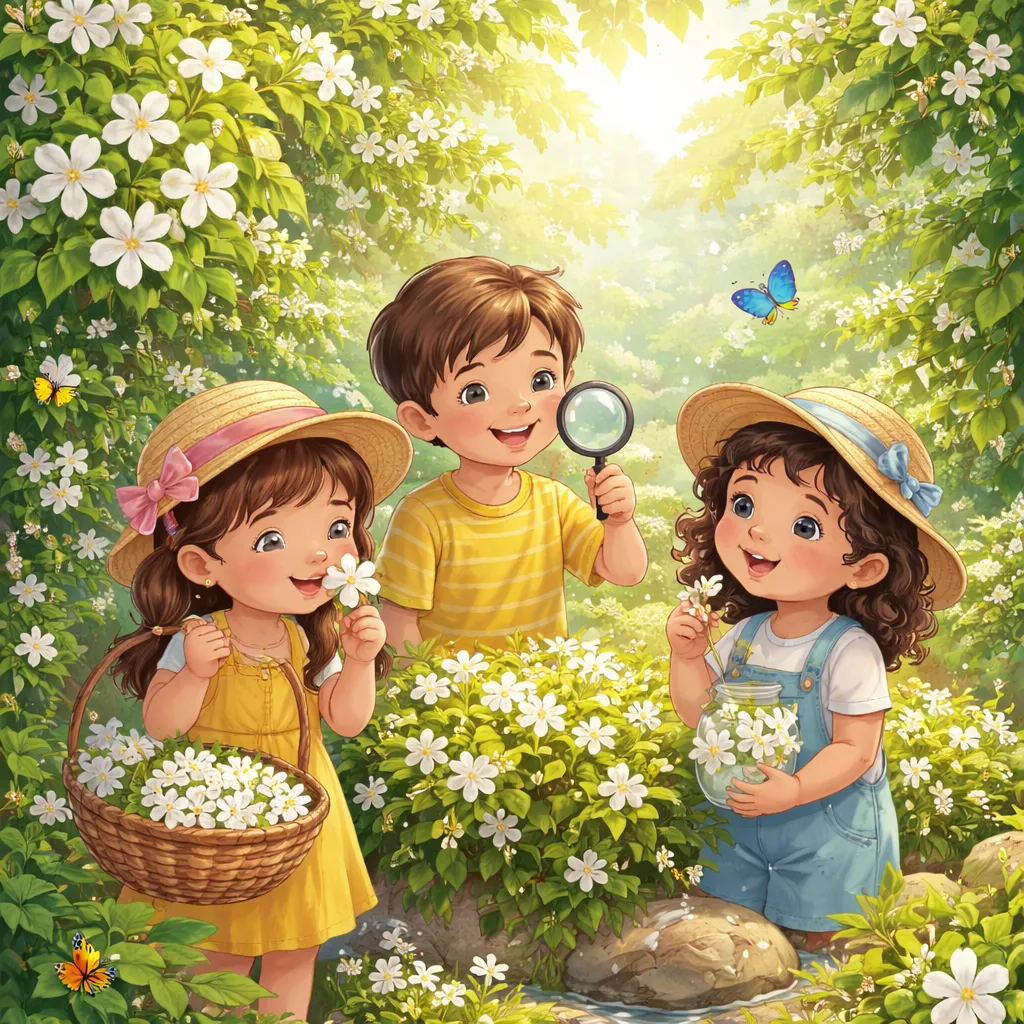
The jasmine plant is a climbing shrub with small, star-shaped flowers that fill the night air with a sweet, intense scent. It grows on long, slender stems that can climb up trellises, fences, or walls. The flowers are usually white or pale yellow. They open in the evening and release their strongest fragrance after sunset. The leaves are small, green, and grow in pairs along the stem. Some jasmine plants stay green all year. Others lose their leaves in winter. For children, jasmine feels like magic. The tiny flowers hide among the leaves during the day. Then at night, their scent travels through the air. Parents can plant jasmine near a window or a porch. Children can sit outside in the evening and smell the sweet perfume. This plant turns a simple evening into a special moment of wonder.
English Learning About This Plant
The English name “jasmine” comes from the Persian word “yasmin.” It means gift from God. The pronunciation is “jaz-min.” The International Phonetic Alphabet (IPA) is /ˈdʒæzmɪn/. The word has two syllables. Children can say it: jaz-min. When we learn about jasmine plant, we discover words for its parts. The stem is the long, flexible part that climbs. The leaf is the small, green part that grows in pairs. The flower is the tiny, star-shaped part that opens at night. The bud is the small, unopened flower that looks like a tiny pearl. The vine is the climbing stem that reaches upward. These words help children describe this delicate plant.
There is a beautiful poem about jasmine. The poet Rabindranath Tagore wrote about jasmine in his works. He described how the scent fills the air and touches the heart. Another famous saying goes, “Jasmine whispers secrets to the moon.” This means jasmine blooms at night when the moon is out. Its scent seems to share quiet stories. Parents can share this idea with children. It becomes a gentle way to talk about nighttime and rest. Jasmine also appears in many songs and stories as a symbol of love and sweet dreams.
Plant Facts and Scientific Knowledge
The jasmine plant belongs to the genus Jasminum. There are about 200 species. Most jasmine plants are native to tropical and warm regions. They grow in Asia, Africa, and Australia. Jasmine is a member of the olive family, Oleaceae.
Jasmine flowers have five or more petals. They form a star shape. Some species have double flowers with many petals. The flowers bloom in clusters. The strongest scent comes at night. This attracts moths and other night pollinators. Jasmine uses its sweet smell to invite these creatures to visit.
Jasmine can be evergreen or deciduous. Evergreen jasmine keeps its leaves all year. Deciduous jasmine loses its leaves in winter. Some jasmine plants grow as shrubs. Others grow as climbing vines. They can reach up to fifteen feet or more.
Jasmine has rich symbolism. In many cultures, jasmine represents love, beauty, and purity. In some countries, people use jasmine in weddings. The flowers represent sweetness and grace. Jasmine is also the national flower of several countries. It appears in art, poetry, and traditions around the world.
How to Grow and Care for This Plant
Growing a jasmine plant is a lovely project for families. Choose a sunny spot. Jasmine needs at least four to six hours of sunlight each day. It grows best in warm conditions. If you live in a cooler area, grow jasmine in a pot. You can move it indoors during winter.
Plant jasmine in well-drained soil. Dig a hole twice as wide as the root ball. Place the plant in the hole. Fill with soil. Water well. If you are planting a climbing jasmine, place it near a trellis or fence. The stems will need something to hold.
Water jasmine regularly. It likes consistent moisture. Water when the top inch of soil feels dry. Do not let the soil become soggy. Jasmine does not like wet roots. Children can help water with a small watering can. They can learn to check the soil with their fingers.
Fertilize jasmine in spring. Use a balanced fertilizer. Feed again in summer. This helps the plant produce many flowers. Prune jasmine after flowering. Cut back long stems to keep the plant tidy. For climbing jasmine, tie loose stems to the trellis. Children can help by holding the soft twine.
In cold areas, bring potted jasmine indoors before frost. Place it in a sunny window. Water less in winter. The plant will rest until spring. When warm weather returns, move it back outside.
Benefits of Growing This Plant
Growing a jasmine plant brings many gifts to a family. First, the scent fills the garden in the evening. It creates a peaceful atmosphere. Children love to go outside after dinner to smell the flowers. Second, jasmine attracts nighttime pollinators. Moths visit the flowers. Children can use a flashlight to see them. This teaches about animals that are active at night.
Jasmine also provides beauty. The small white flowers look like tiny stars against the green leaves. They are lovely to look at during the day. At night, their scent becomes the main gift. The plant offers two kinds of pleasure: one for the eyes and one for the nose.
Jasmine is also good for cutting. You can bring a few flowering stems inside. Place them in a small vase. The scent will fill the room. Children feel proud when their flowers make the house smell sweet.
The plant also teaches about patience. Jasmine may not bloom immediately after planting. It needs time to settle. Children learn to wait. When the first flowers open, the waiting feels worth it.
What Can We Learn From This Plant
A jasmine plant teaches children about hidden beauty. The flowers are small. They hide among the leaves during the day. But at night, their scent announces their presence. Children learn that beauty does not need to be loud. Quiet things can be wonderful too.
Jasmine also teaches about giving. The plant gives its scent freely to anyone who passes by. It does not keep it for itself. Children learn that sharing makes the world sweeter. A kind word or a small gift can lift someone’s day.
Another lesson is about timing. Jasmine blooms at night when most flowers sleep. It has its own schedule. Children learn that everyone has their own rhythm. Some people shine in the morning. Some shine at night. Both are valuable.
Jasmine also teaches about reaching high. The climbing stems reach upward. They look for support. Children learn that they can reach for their goals. They can ask for help when they need it. A trellis or a friend can help them grow tall.
Fun Learning Activities
There are many simple activities to help children learn about jasmine plant. One activity is an evening scent walk. Go outside after sunset. Walk to the jasmine plant. Close your eyes. Take deep breaths. Describe the scent. Is it sweet? Is it strong? Talk about how the air smells different at night.
Another activity is a bud watch. Each day, look at the jasmine plant. Notice the tiny buds. They look like little pearls. Count how many buds you see. Check again in the evening. Some may have opened. Draw the buds and the open flowers in a journal.
A nature journal works well for jasmine. Draw the star-shaped flowers. Draw the paired leaves. Label the parts: stem, leaf, flower, bud. Write down what time of day the flowers open. Note how the scent changes from day to night.
For art, try making jasmine stars. Use white paper. Cut out small star shapes. Glue them onto green stems drawn on a larger paper. Add small green leaves. This creates a simple, beautiful picture of the plant.
Vocabulary games are fun too. Write the words jasmine, stem, leaf, flower, bud, and scent on cards. Say each word. Ask your child to find the part on the plant. Practice saying jasmine together. Clap the syllables: jas-mine.
Finally, try a storytelling activity. Ask your child to imagine what the jasmine flower sees at night. Does it see the moon? Does it see moths flying? Let them tell a story from the flower’s point of view. This builds imagination and language skills.
Through these activities, children build a deep connection with a plant that gives its gifts in the quiet hours. They learn new words, observe nature, and discover the magic of nighttime. The jasmine plant becomes a symbol of hidden beauty and gentle giving. Each time they smell jasmine, they remember that some of the best things come quietly. They remember that sweetness does not need to shout. This delicate flower opens a world of sensory learning, patience, and wonder that stays with them through the years.