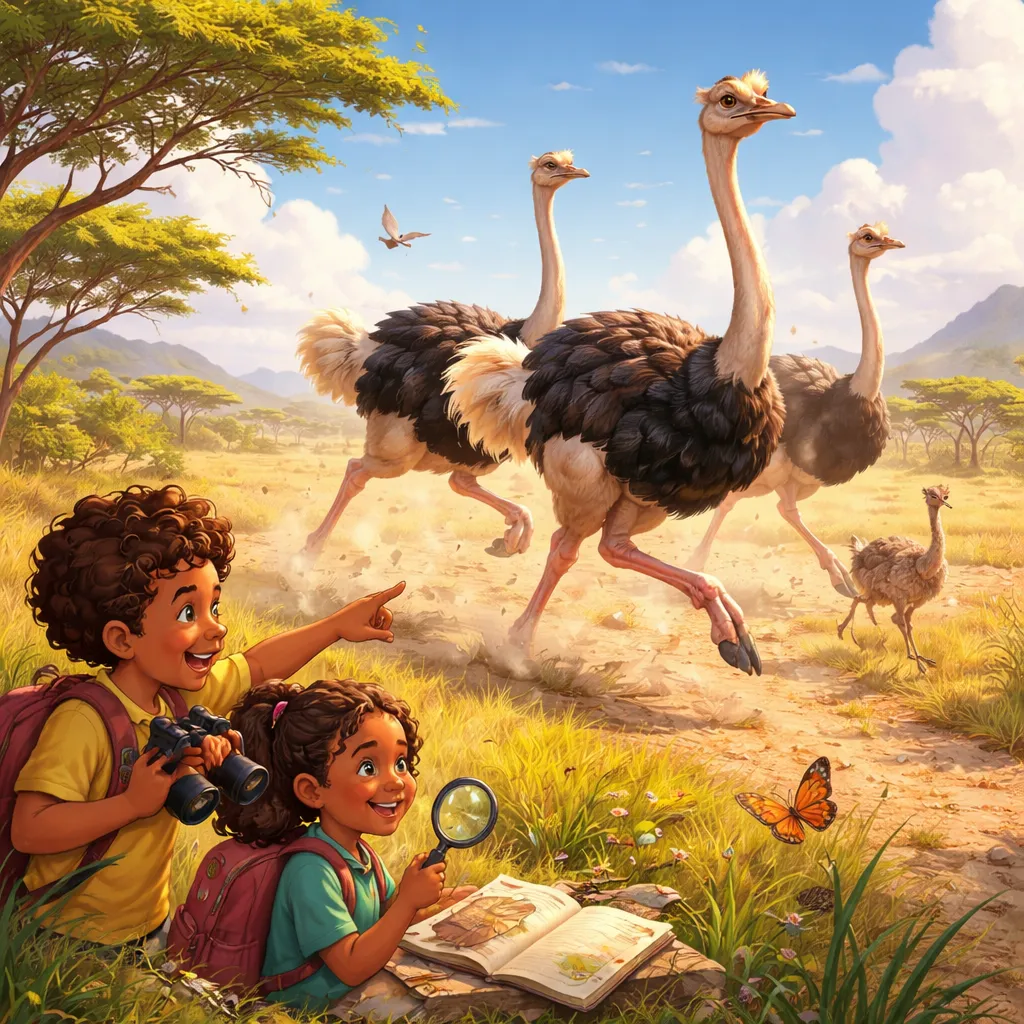

What Is This Animal?
An ostrich is a huge, flightless bird with a long neck and long, powerful legs. It has black-and-white feathers on males and brown feathers on females. Its wings are large but cannot lift it off the ground. Ostriches are the largest living birds in the world.
Ostriches live in Africa. They live in savannas, deserts, and grasslands. They can run very fast. They use their speed to escape predators. They can run up to forty miles per hour. Their legs are strong. They can kick with great force.
These birds belong to a group called ratites. This group includes emus, rheas, and kiwis. All ratites have flat breastbones. They cannot fly. Ostriches have two toes on each foot. Most birds have three or four toes.
For children, ostriches are fascinating. Their size, speed, and unique features make them unforgettable. Learning about ostriches teaches children about African wildlife, bird adaptations, and the responsibilities of caring for large farm animals.
English Learning About This Animal
Let us learn the English word ostrich. We say it like this: /ˈɒstrɪtʃ/. The os sounds like “oss.” The trich sounds like “trich.” Put them together: ostrich. Say it three times. Ostrich. Ostrich. Ostrich.
Now let us learn words about an ostrich’s body. The legs are long and powerful. The feet have two toes for running. The neck is long and featherless. The wings are large but cannot fly. The feathers are soft and used for display. The chicks are baby ostriches.
There is a famous saying about ostriches. People say, “The ostrich buries its head in the sand.” This is a myth. They do not do this. The saying means avoiding problems. Another saying is, “An ostrich’s kick can kill a lion.” This reflects their powerful defense.
These English words help children understand ostrich anatomy. When they say two toes, they learn about the unique feet. When they say chicks, they know the babies. Parents can practice these words while looking at pictures. Point to the parts. Say the words together.
Animal Facts and Science Knowledge
Ostriches belong to the ratite family Struthionidae. There are two ostrich species. The common ostrich lives in Africa. The Somali ostrich lives in the Horn of Africa. Ostriches have been on Earth for millions of years. They are one of the oldest bird groups.
Ostriches live in savannas, deserts, and open grasslands. They travel in groups called flocks. A flock can have up to fifty birds. They graze together. They watch for predators. They use their speed to escape. They can run at forty miles per hour for long distances.
Ostriches are omnivores. They eat plants, seeds, insects, and small animals. They swallow small stones. These stones help grind food in their stomach. They can go without water for long periods. They get moisture from the plants they eat.
Ostriches have special abilities. They have the largest eyes of any land animal. Their eyes are bigger than their brain. Their eyes help them spot predators from far away. Their kick is powerful. It can kill a lion. Their claws are sharp. They use their legs for defense.
Ostriches have unique parenting. Males have black-and-white feathers. Females have brown feathers. One male mates with several females. All females lay eggs in one nest. The male sits on the eggs at night. Females sit during the day. The eggs are the largest of any bird. One ostrich egg equals about twenty-four chicken eggs.
How to Interact With This Animal Safely
Ostriches are wild animals. They are also raised on farms. They are not pets. They can be dangerous if they feel threatened. Their kicks are powerful. Their claws are sharp. Always keep a safe distance.
If you visit an ostrich farm or wildlife park, follow the rules. Stay behind fences. Do not try to feed them without permission. Ostriches may bite or kick if they feel crowded. Observe from a safe distance.
Teach children to respect ostriches. Ostriches are huge and strong. They are not like small birds. They need space. Watching them from behind a fence is the best way to see them.
If you see a wild ostrich, do not approach. Stay in your vehicle. Ostriches may run away. If they feel threatened, they may kick. Give them plenty of space.
Ostriches are farmed in many countries. They are raised for their feathers, meat, and leather. Learning about them helps us understand how people and animals interact.
What Can We Learn From This Animal
Ostriches teach us about speed. They are the fastest birds on land. Children learn that moving quickly can help in some situations. Being fast in games, being quick to help, and acting swiftly when needed are good skills.
Ostriches teach us about strength. Their kick is powerful. Children learn that strength comes in many forms. Physical strength, mental strength, and emotional strength help us face challenges.
Ostriches teach us about being watchful. Their large eyes spot danger. Children learn that paying attention keeps us safe. Looking around, listening, and being aware of our surroundings are important habits.
Ostriches teach us about being different. They are birds that cannot fly. Children learn that being different is okay. Everyone has strengths. Ostriches run fast. We all have things we do well.
Fun Learning Activities
Let us make learning about ostrich fun. One activity is the ostrich run game. Ask your child to run like an ostrich. Stretch the neck forward. Run fast. Use long strides. Kick gently. Say “ostrich runs fast” and “ostrich kicks for defense.”
Another activity is drawing an ostrich. Look at pictures of ostriches. Notice the long neck, powerful legs, and two-toed feet. Draw an ostrich in the savanna. Add a nest with huge eggs. Label the parts. Say the words aloud.
Create a story about an ostrich family. Ask your child what the father does. Does he guard the eggs? Do the chicks run together? Do they escape a predator? Write a few sentences together. Let your child draw pictures. Read the story aloud.
Make an ostrich craft. Use black and white paper for the male. Use brown for the female. Add a long neck and small head. Add long legs with two toes. Add a nest with large eggs. Move the craft ostrich. Practice saying “ostrich runs” and “ostrich guards the nest.”
Learn about African animals. Compare ostriches to zebras, giraffes, and lions. Talk about what makes African wildlife special. Use words like “savanna,” “herbivore,” and “predator.”
Learn about flightless birds. Compare ostriches to emus, rheas, and kiwis. Notice the similarities and differences. Use words like “ratite,” “keel,” and “adaptation.”
These simple activities bring learning to life. Children build English vocabulary while playing. They learn science through understanding bird adaptations. They develop respect through learning about large, powerful animals. Learning about ostrich becomes a journey to the African savanna. Each moment spent together strengthens language, curiosity, and a growing appreciation for the giant, speedy birds that teach us that running fast, watching carefully, and being different are powerful things.