
A Friendly Hello and First Impressions
Salaam aleekum! (sah-LAHM ah-LAY-koom). This is a peaceful Arabic greeting. It means "Peace be upon you". Abarka! (ah-BAHR-kah). This is a warm "Thank you" in Soninke. People use many local languages. Learning reading about Gambia starts with these kind, traditional words.
The Gambia is a tiny country in West Africa. Its shape looks like a long, wiggly worm. The worm follows the Gambia River. The country is completely surrounded by Senegal. Only the Atlantic Ocean is to the west. The land is a narrow strip on either side of the river. It is the smallest country in mainland Africa. The river is its heart and soul.
People call it the "Smiling Coast of Africa". Gambians are famous for their big, friendly smiles. Another name is simply "The Gambia". The word "The" is part of its official name. Are you ready to follow the winding river of smiles?
Deep Dive into Culture and Stories
Echoes of History
A brave queen fought for her people. Her name was Jaja Jallow. She was a 20th-century woman. She led a protest against the British. The British were a colonial power. They wanted to tax her people. She refused. She organized a women's protest. This happened in 1959. Her courage inspired many. Her story is a key part of learning reading about Gambia. It is a story of a woman's strength.
A more recent leader is Dawda Jawara. He was the first president. He led the country to independence in 1965. He ruled for many years. He brought peace and stability. His time is remembered as a good period.
A World of Birdlife
The Gambia gives the world a bird paradise. Over 560 species of birds live here. The river and wetlands are perfect for them. Birdwatchers come from all over. They see kingfishers, eagles, and hornbills. This rich birdlife is a gift of nature. It is a key part of learning reading about Gambia. It teaches us to appreciate wildlife.
A Land of River and Savannah
The Gambia's geography is simple. The Gambia River runs through the middle. The land is flat on both sides. It is mostly savannah and mangroves. The coast has beautiful beaches. The landscape is green near the river. It is drier inland.
The climate is tropical. It has a long dry season. The rainy season is from June to October. The environment shapes everything. People grow peanuts, rice, and millet. They fish in the river. Houses in villages are often made of mud bricks. They have thatched roofs. In the city, houses are concrete. The main exports are peanuts, fish, and tourism.
A special animal is the hippopotamus. It lives in the river. It is huge and spends most of its day in water. The national animal is the hippo. The national bird is the green bee-eater. It is a small, colorful bird. The baobab tree is iconic. It stores water in its thick trunk. People call it the "upside-down tree".
Landmarks of Memory and Water
Visit Kunta Kinteh Island. It was once called James Island. It is a small island in the river. It was a slave fort centuries ago. Enslaved people were held here. It is a sad but important place. A UNESCO site now. A legend says spirits of the past remain. The island teaches about a painful history.
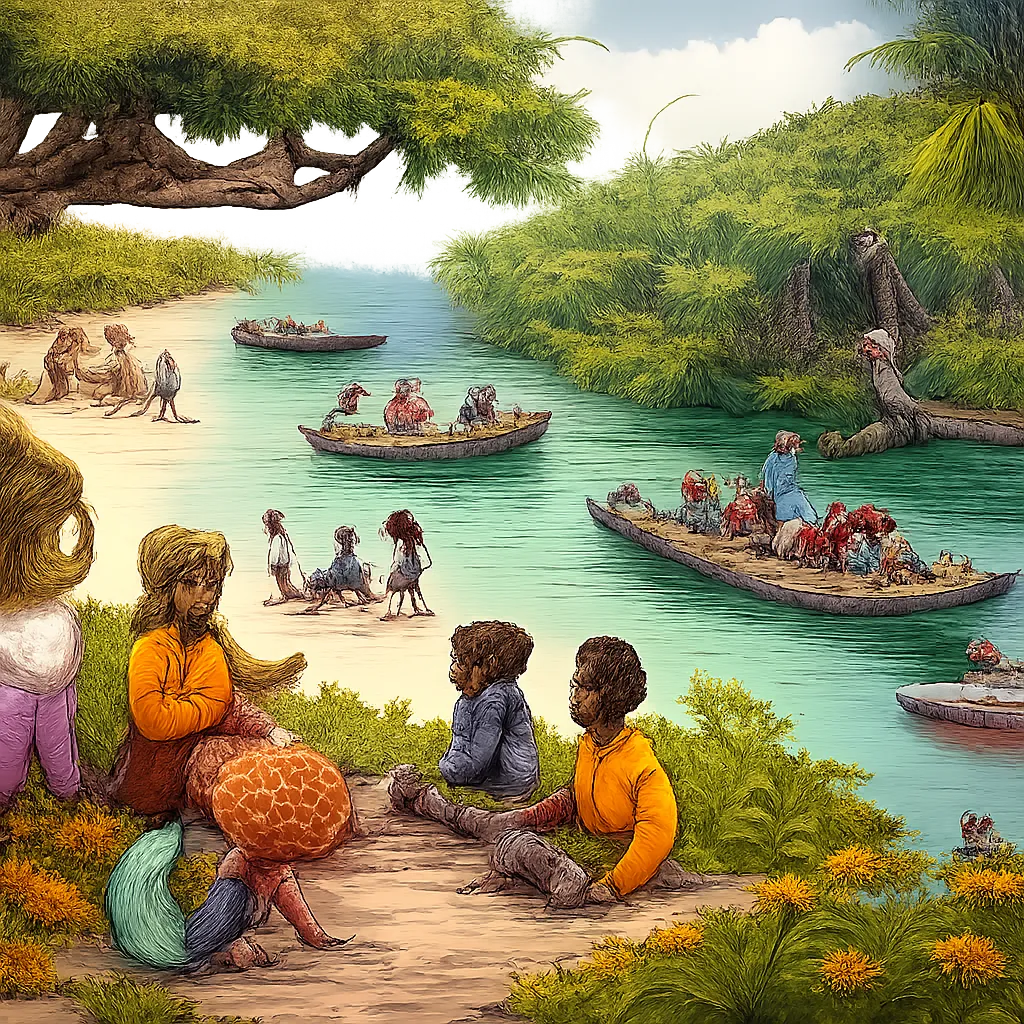
See the Gambia River. It is the country's lifeline. You can take a boat trip on it. You will see fishing villages. You will see birds and maybe hippos. The river is calm and wide. A fun story says a river spirit lives in it. The spirit protects the fishermen. The river is beautiful and central to life.
Another wonder is the Arch 22. It is a tall gate in the capital, Banjul. It celebrates a military coup in 1994. You can go to the top. The view of the city is great. The arch is a modern landmark. It shows a recent chapter in history.
Festivals of Culture and Freedom
The biggest national holiday is Independence Day. It is on February 18th. It marks freedom from Britain in 1965. There is a parade in Banjul. School children march. Cultural groups dance. People wear bright, colorful clothes. The national flag is everywhere. The colors are red, blue, green, and white. Families have parties. They listen to music and eat. The day is full of pride.
A unique cultural festival is the International Roots Festival. It happens every two years. People from the African diaspora visit. They come to connect with their heritage. There are naming ceremonies and concerts. The festival is about remembering ancestors. It is a celebration of return and identity.
Food and Flavors
The national dish is Domoda. It is a rich, peanut stew. It is made with meat, usually beef. The sauce is thick and nutty. It is served with rice. Families eat it for lunch or dinner. It tastes savory, creamy, and delicious. It is the ultimate comfort food.
You must try Benachin. It means "one pot". It is a rice dish. The rice is cooked with fish, meat, and vegetables. It is seasoned with spices. Everything cooks together. People eat it from a shared bowl. The meal is hearty, flavorful, and communal.
A Culture of Music and Story
Music and drums are everywhere. A popular style is "mbalax". It comes from Senegal and Gambia. The kora is a famous instrument. It is a harp-lute with 21 strings. Its sound is beautiful and peaceful. This love for rhythm is a joyful part of learning reading about Gambia.
The country is a young democracy. It has had peaceful changes of government. It also has a strong tradition of female leadership. The current vice president is a woman. This shows progress and respect for women's roles.
Tips for Young Explorers
Cultural Manners Matter
Gambians are very friendly and polite. Greetings are long and important. Always say "Salaam aleekum". Ask about the person's health, family, and work. This shows you care. Do not rush the greeting.
Use your right hand for everything. Give gifts, eat food, and shake hands with your right hand. The left hand is considered unclean. This rule is very important.
Respect elders greatly. Always greet the oldest person first. Listen when they speak. Stand up when an elder enters. Offer them your seat. This is good manners.
A Note on Staying Safe
The Gambia is a very safe and tourist-friendly country. But be smart in crowded markets. Watch for pickpockets. Keep your bag close. Do not walk alone on dark beaches at night. Use common sense.
The river and ocean can be dangerous. Do not swim in the river. Hippos and crocodiles live there. Only swim in the ocean where it is safe. Obey warning flags. Never swim alone.
A Tasty Stop
Look for "akara" on the street. It is a fried bean cake. It is made from black-eyed peas. It is spicy and crispy. People eat it for breakfast. Eat it hot. The akara is savory, crunchy, and delicious. It is a popular, cheap snack.
Healthy and Happy Travels
Drink only bottled or filtered water. This is the most important rule. Do not drink tap water. Avoid ice in drinks. Brush your teeth with bottled water. This keeps your stomach happy.
The sun is extremely strong. Use a high SPF sunscreen. Wear a hat. The sun can burn you quickly. Drink lots of water to stay hydrated.
Use insect repellent. Mosquitoes can be annoying, especially at dusk. It helps prevent itchy bites. Wear light, long sleeves in the evening.
Your Invitation to Explore
Start your journey with sound. Listen to the music of the kora. Hear the gentle, melodic strings. Try to clap a rhythm. Or, look at pictures of Gambian birds. See the bright colors. This is a wonderful way of learning reading about Gambia.
Visit a market. Look for peanuts or peanut butter. Taste the nutty flavor. Imagine the sunny fields. You can also try drawing a winding river. Add birds and a big baobab tree. Let your picture tell a story.
The world is a big, open book. Each country is a different chapter. Gambia's chapter is about a smiling coast, a mighty river, and a painful past. Open it with kindness. Read about its birds, beats, and brave people. Your curiosity is your guide.
Gambian families share a bowl of benachin. Friends play football on a sandy field. Children listen to stories from a griot. We all know these feelings. We love sharing meals. We enjoy playing games. We learn from storytellers. Learning about Gambia shows us this. Our global family shares the same simple joys. Keep exploring, one page, one country, at a time. Your adventure has just begun.