
What Is This Animal?
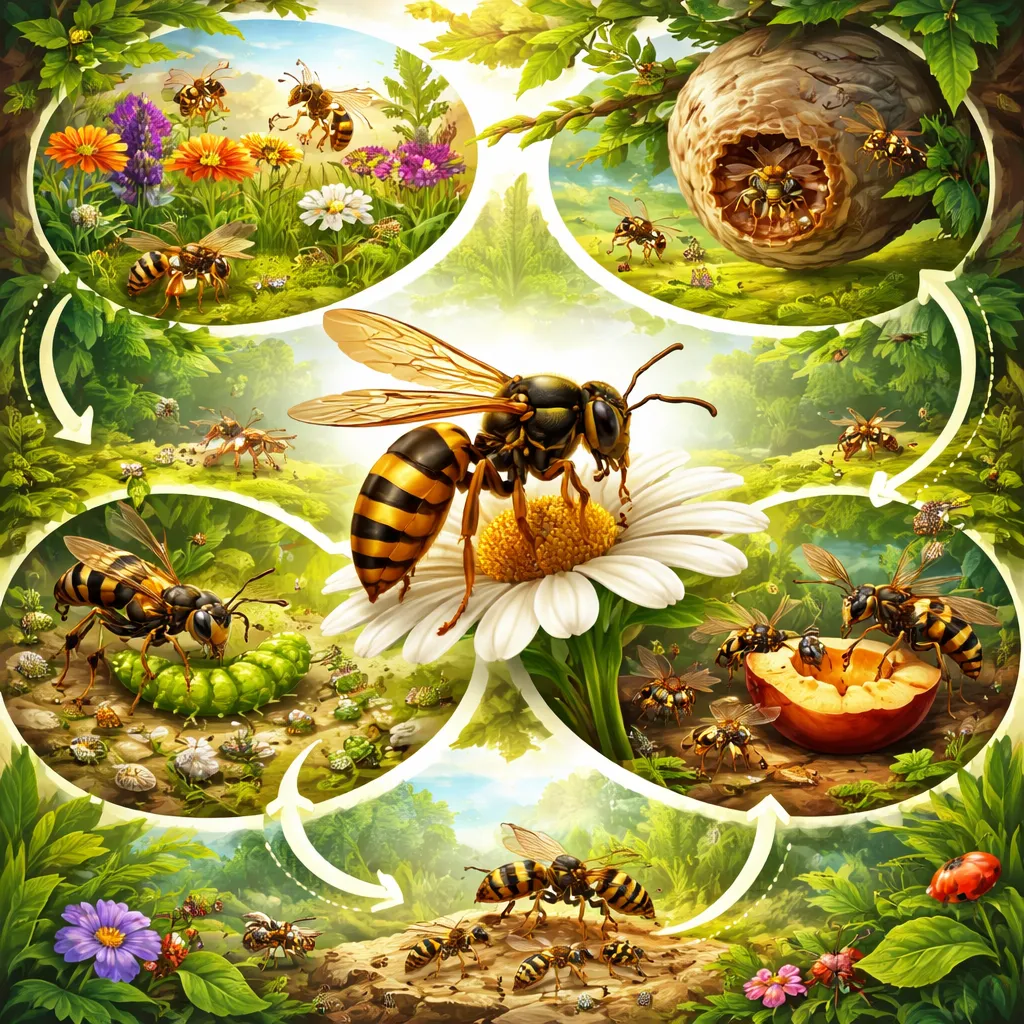
A wasp is an insect with a slender body and narrow waist. It has two pairs of wings. Its body often has bright yellow and black stripes. These colors warn other animals to stay away. Wasps can sting to defend themselves.
Wasps belong to the same insect group as bees and ants. They are not bees. Bees are fuzzy and collect pollen. Wasps have smooth bodies. They are predators. They hunt other insects to feed their young.
These insects live in many places. Some wasps live alone. Others live in large colonies. Social wasps build paper nests from chewed wood. You find nests under eaves, in trees, or underground.
For children, wasps require respect. They are important for nature. They help control pests. Learning about wasps teaches children to observe from a safe distance and appreciate the role of all creatures.
English Learning About This Animal
Let us learn the English word wasp. We say it like this: /wɒsp/. The w sound starts with rounded lips. The a is short, like in “hot.” The sp comes together quickly. Say it together: wasp. Say it three times. Wasp. Wasp. Wasp.
Now let us learn words about a wasp’s body. The head holds the eyes and antennae. The thorax is the middle part where wings and legs attach. The abdomen is the striped back part. The stinger is at the end of the abdomen. The wings are clear and folded when at rest. The mandibles are strong jaws for chewing wood and prey.
There is a thoughtful saying about wasps. The naturalist John Muir said, “When we try to pick out anything by itself, we find it hitched to everything else in the universe.” Wasps remind us that all creatures connect. Another simple proverb is, “The wasp builds its home from paper, yet it stands strong.” This highlights the wasp’s skill as an architect.
These English words help children understand wasp anatomy. When they say stinger, they learn about the defense tool. When they say mandibles, they understand how wasps build nests. Parents can practice these words while looking at pictures from a safe distance. Point to the parts. Say the words together.
Animal Facts and Science Knowledge
Wasps belong to the insect order Hymenoptera. This group includes bees, ants, and sawflies. There are thousands of wasp species. Some are social. Some are solitary. Social wasps live in colonies with a queen. Solitary wasps live alone.
Wasps live in many habitats. They live in forests, gardens, and meadows. Social wasps build nests from wood fibers mixed with saliva. The nest turns into paper-like material. Some wasps build nests underground. Others hang nests from trees or buildings.
Wasps eat other insects. They catch caterpillars, flies, and spiders. They chew the prey and feed it to their young. Adult wasps eat nectar and sweet liquids. They visit flowers for food. In doing so, they pollinate plants. Wasps help control insect populations in gardens.
Wasps have special abilities. They can sting multiple times. Their stinger does not have barbs like a bee’s stinger. A wasp can sting and fly away. Wasps communicate with each other. They use chemicals and body movements. Some wasps can recognize the faces of other wasps.
Wasps build complex nests. Social wasps start with a single queen in spring. She builds a small nest and lays eggs. Workers hatch and expand the nest. By summer, the nest can hold hundreds of wasps. In winter, most wasps die. Only new queens survive to start colonies in spring.
How to Interact With This Animal Safely
Wasps are wild insects. They can sting if they feel threatened. The best way to interact is to watch from a distance. Do not approach nests. Do not wave arms at wasps. Stay calm if a wasp flies near you.
Teach children to stay still if a wasp comes close. Wasps are curious. They may investigate. They usually leave if you do not move suddenly. Do not swat at them. Swatting makes them feel threatened. A calm wasp will fly away.
If you find a wasp nest near your home, keep children away. Do not try to remove it yourself. Contact a professional. Teach children to respect the nest from a distance. Explain that the wasps are protecting their home.
When eating outdoors, keep food covered. Sweet drinks attract wasps. Use cups with lids. Clean up spills quickly. This reduces the chance of wasps coming near. Teach children to eat calmly and not to leave food unattended.
If a child gets stung, stay calm. Remove the stinger if present. Wash the area with soap and water. Apply a cold pack. Watch for signs of allergy. Seek medical help if needed. Most stings cause mild pain that goes away. Teach children that wasps sting only to protect themselves.
What Can We Learn From This Animal
Wasps teach us about protection. They defend their nests with courage. Children learn that protecting what matters is important. Standing up for family, friends, and home shows strength.
Wasps teach us about building. They create complex nests from simple materials. Children learn that they can build too. Building skills, building friendships, and building knowledge take time and effort. Small pieces come together to make something strong.
Wasps teach us about balance. They eat pests that harm plants. They also pollinate flowers. Children learn that everything in nature has a role. Even creatures we may be cautious around serve important purposes.
Wasps teach us about working together. Social wasps cooperate to build and care for the colony. Children learn that teamwork makes hard jobs easier. Working with others helps everyone succeed.
Fun Learning Activities
Let us make learning about wasp fun. One activity is the wasp nest observation. In autumn, look for empty wasp nests. They are made of paper-like material. Observe the layers and cells. Talk about how wasps build their homes. Do not touch nests that look active.
Another activity is drawing a wasp. Look at pictures of wasps. Notice the narrow waist, striped abdomen, and clear wings. Draw a wasp. Label the head, thorax, abdomen, wings, and stinger. Say the words aloud.
Create a story about a wasp’s day. Ask your child where the wasp flies. Does it hunt a caterpillar? Does it visit a flower? Does it carry wood to the nest? Write a few sentences together. Let your child draw pictures. Read the story aloud.
Make a paper nest craft. Use strips of brown paper. Glue them together to form layers. Create small cells. Talk about how wasps chew wood to make paper for their nests. Use words like “nest,” “cells,” and “colony.”
Learn about wasp relatives. Compare wasps to bees and ants. Notice the differences and similarities. Talk about how each insect helps the garden. Use words like “pollinator,” “predator,” and “social insect.”
These simple activities bring learning to life. Children build English vocabulary while playing. They learn science through observation. They connect with nature in thoughtful ways. Learning about wasp becomes a lesson in respect and understanding. Each moment spent together strengthens language, curiosity, and a growing appreciation for the striped architects that patrol gardens, reminding us that every creature—even those with stingers—plays an essential part in the web of life.