
Opening Introduction
Leo is six years old. He loves learning new English words. He can say "cat", "dog", and "sun". His sister, Mia, is nine years old. She reads whole books in English. Leo wonders, "How did Mia learn so much? Will I ever read like her?" Dad hears his question. He brings a big piece of paper and some markers.
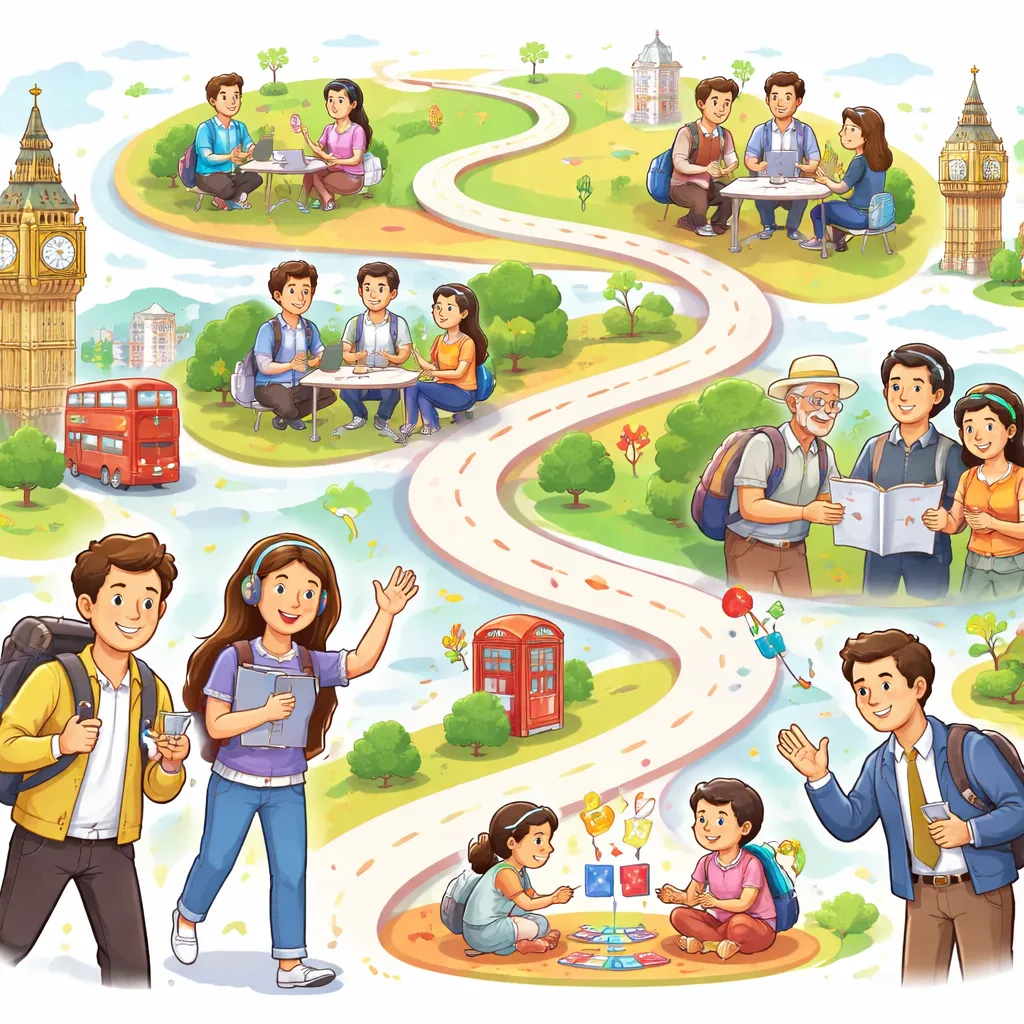
"Look," Dad says. He draws a winding path. At the start, he writes "Age 6". Then, "Age 7", "Age 8", "Age 9", and "Age 10". Along the path, he draws small pictures. For Age 6, he draws simple words. For Age 10, he draws a child reading a long book. "This," Dad explains, "is a roadmap. A roadmap shows you the way. This one is special. It is made just for you. It is an age-specific and roadmaps for learning English. It shows what you can learn at each age. It is your personal adventure map." Leo looks at the path. It does not seem so scary now. He can see the steps. Let's learn how to read and make our own learning map.
Core Knowledge Explanation
What does "age-specific" mean? 'Age' is how old you are. 'Specific' means it is just for that. So, age-specific means it is made for a certain age. A toy for a two-year-old is different from a toy for an eight-year-old. The two-year-old toy is soft and simple. The eight-year-old toy might be a puzzle. Learning is the same. What you learn at age six is perfect for a six-year-old brain. What you learn at age nine is perfect for a nine-year-old brain. Your brain grows. It can handle more. Age-specific and roadmaps for learning understand this. They give you the right steps at the right time.
Now, what is a roadmap? A roadmap is a map for a road trip. It shows you where to start. It shows you the turns. It shows you where you will finish. A learning roadmap is like that. It is a plan. It shows you what to learn first, what to learn next, and what to learn later. It breaks a big, scary goal into small, friendly steps. The goal might be "Read English fluently". That is a big mountain. The roadmap shows the small paths up the mountain. First, learn the alphabet. Next, learn sounds. Then, read small words. Then, read sentences. Then, read books. Step by step.
Why do we need this? Because it helps you feel good. If you try to read a big book at age six, you might feel sad. It is too hard. But if you start with a simple word, you feel happy. You say, "I can do this!" Then you try the next step. The roadmap gives you confidence. Confidence means you believe in yourself. It also helps your teachers and parents. They know what to teach you. They can find the right books and games for your age.
Let's look at an example of an age-specific and roadmaps for English. For a six-year-old, the roadmap says: Learn the alphabet. Know the letter sounds. Learn simple words like cat, dog, run, jump. Speak in short sentences. "I see a cat." For a seven-year-old: Read and write simple sentences. Learn common words like "the", "and", "is". Talk about your day. For an eight-year-old: Read short stories. Write a few sentences about a picture. Learn about past tense. "I played." For a nine-year-old: Read chapter books. Write a short paragraph. Learn to describe things in detail. For a ten-year-old: Read for information. Write a short story. Have a conversation about many topics.
Your own roadmap might look a little different. That is okay. The important thing is that it is a plan. It is a guide. It is not a race. You go at your own speed. Some steps you do quickly. Some steps you practice longer. The roadmap is flexible. Flexible means it can bend. It can change for you. But it always shows you the way forward.
Fun Interactive Learning
Let's make your own English learning roadmap. Take a long piece of paper. Draw a path from left to right. At the very left, write "Start Here! Today." At the very right, write "My Goal!" Now, divide the path into sections. You can have five sections. Label them: "Now (Age __)", "Next Year", "In Two Years", "In Three Years", "My Big Goal!".
Now, let's fill in the first section. Think about what you are learning now. Are you learning new words? Write that down. Draw a picture of a word card. Are you learning to write your name? Draw that. Now, think about what you want to learn next. Maybe you want to read a small book by yourself. Write that in the "Next Year" section. Draw a picture of a book. Keep going. Make the goals fun. In the "My Big Goal!" section, draw something amazing. Maybe you speaking English with a friend from another country. Maybe you reading a big, thick book.
You can also make a "Passport" for your roadmap. Every time you finish a step, you get a stamp. For example, when you learn 10 new words, you get a star stamp. When you read your first book alone, you get a special sticker. This makes the roadmap a game. You are collecting achievements.
Another fun activity is the "Roadmap Interview". Ask your parent or teacher what they think your roadmap should look like. Ask them, "What did you learn at my age?" "What is a good goal for me next?" Talk about it. This helps you understand that everyone has a learning journey. Your age-specific and roadmaps is a team project. You are the driver. Your family and teachers are the navigators. Navigators help read the map.
Expanded Learning
The idea of a learning plan is very old. Long ago, apprentices learned trades step by step. A young baker's apprentice would first learn to clean. Then, learn to mix. Then, learn to bake. It was a roadmap. In schools, curriculum is a roadmap for all students. Your age-specific and roadmaps is your personal curriculum.
Different countries have different education roadmaps. But they all have steps. In some countries, children start learning a second language very early. In other countries, they start later. The steps are different, but the idea is the same: learn step by step. Your personal roadmap is the most important one because it is all about you.
Let's sing a roadmap song. Songs make plans happy. Sing this to the tune of "She'll Be Coming 'Round the Mountain".
I am on my learning roadmap, yes, I am! (clap, clap) I am on my learning roadmap, yes, I am! (clap, clap) First, I learn my ABCs, then I read with ease! I am on my learning roadmap, yes, I am! (clap, clap) Next, I'll write a sentence, yes, I will! (clap, clap) Next, I'll write a sentence, yes, I will! (clap, clap) Then I'll write a paragraph, and it will make you laugh! I am on my learning roadmap, yes, I will! (clap, clap)
You can add your own verses. Sing it when you feel your roadmap is long. It gives you energy.
What You Will Learn
You are learning important words. You are learning plan words: roadmap, goal, step, milestone, progress, journey, path. You are learning age words: specific, appropriate, level, stage, grow. You are learning skill words: listen, speak, read, write, understand, communicate.
You are learning powerful sentences. You can say, "I have a roadmap for my English." You can ask, "What is the next step for me?" You can explain, "This book is age-specific for me." You are using English to talk about your own growth and future. This is mature and smart.
You are building wonderful skills. You are building goal-setting skills. You learn to set a goal and make a plan. You are building self-awareness. You know what you can do now and what you want to do next. You are building patience. You understand that learning takes time. You are building ownership of your learning. You are in charge.
You are forming a golden habit. The habit of planning. You look ahead. You break big tasks into small pieces. You celebrate small wins. This habit will help you in school, in sports, in music, and in life. Your understanding of age-specific and roadmaps teaches you that success is a journey, not a magic trick. You have the map.
Using What You Learned in Life
Use your roadmap thinking everywhere. For a big school project, make a mini-roadmap. "First, I will get the information. Next, I will make a poster. Then, I will practice my speech." This makes the project easy and fun.
At home, make a "Chore Roadmap". As you get older, you can help with more chores. When you are six, you can set the table. When you are eight, you can help load the dishwasher. When you are ten, you can help make a simple meal. Talk about this with your parents. It is an age-specific and roadmaps for responsibility.
When you feel frustrated because something is hard, look at your roadmap. See how far you have come. "Last year, I could not read this word. Now I can." This will make you feel strong. It will give you the power to try the next hard thing.
Share your roadmap with your friends. Ask them about their goals. You can cheer for each other. You can be roadmap buddies. Learning is more fun with friends on the same journey.
Closing Encouragement
You have done something amazing today. You are a planner. You are a goal-setter. You are the captain of your own learning ship. I am so incredibly proud of you. Your roadmap is a treasure map. The treasure is your own brilliant future.
Keep your roadmap. Look at it often. Update it. Change it. It is yours. As you grow, your dreams will grow. Your roadmap will grow with you.
Remember, every expert, every hero, every great person started with a first step. You have your map. You know your steps. Walk with confidence. Learn with joy. Celebrate every milestone. You are capable, you are thoughtful, and you are on your way. Fantastic work, my wonderful roadmap explorer. Your journey is just beginning, and it will be spectacular.