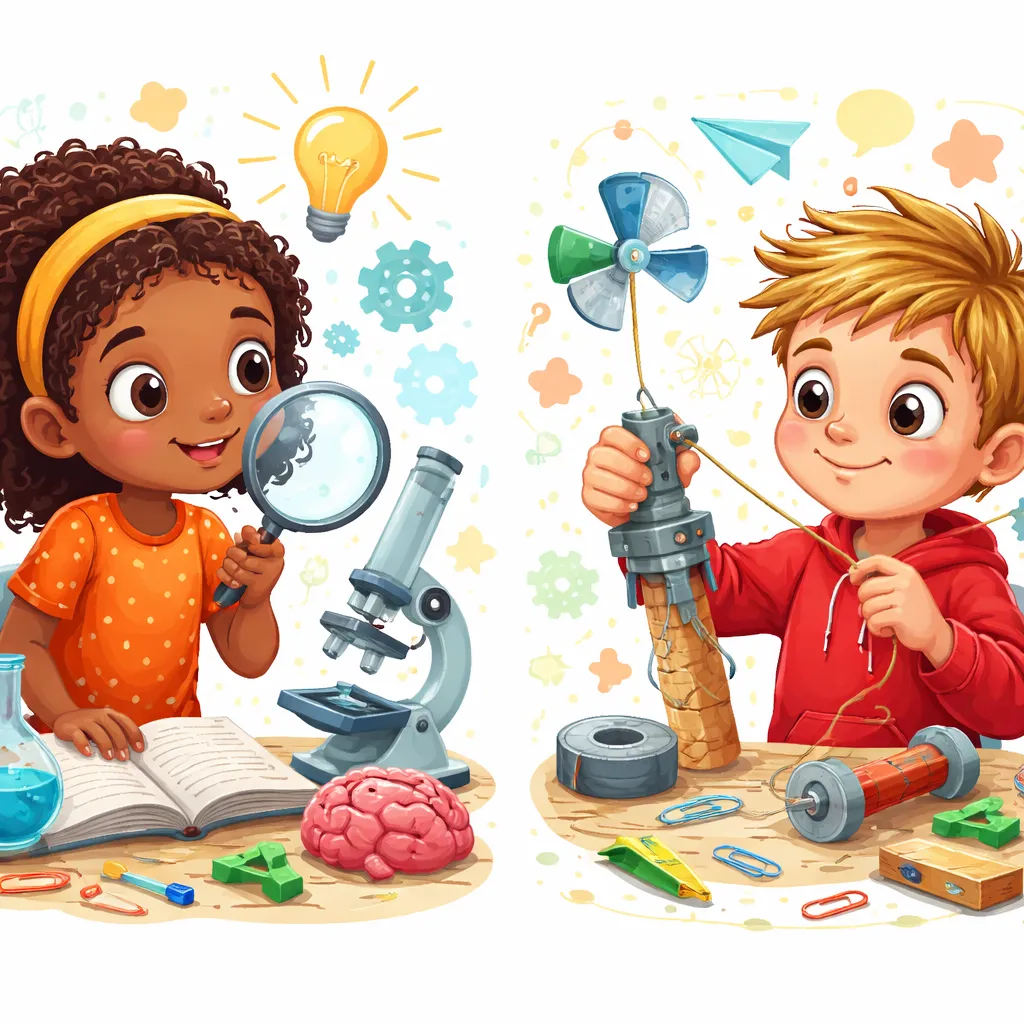

Hello, word explorer! Have you ever solved a tricky riddle? Or aced a big test? How do people describe you? They might say you are smart! Or they might say you are clever! They both seem to mean you have a good brain. But are they the same? They are like two different tools in a toolbox. One is a powerful flashlight. One is a handy Swiss Army knife. Let's find out! Today, we explore the word friends "smart" and "clever". Knowing their secret is a thinking superpower. It helps you understand people's minds better. Let's start our brainy adventure!
First, let's be Mind Detectives. Listen at home. Here are two sentences. "My big sister is very smart in science class." "My little brother is clever at finding hidden cookies." They both talk about being good with your mind. Science class. Finding cookies. Do they sound the same? One feels like book knowledge. One feels like a tricky solution. Can you sense it? Great observation! Now, let's look closer with our word microscope.
Adventure! Inside the World of Intelligence
Welcome to the world of intelligence! "Smart" and "clever" are two different kinds of mental power. Think of "smart" as a deep, wide ocean of knowledge. Think of "clever" as a quick, sparkling stream of ideas. Both are about thinking. But they think in different ways. Let's learn about each one.
The Deep Ocean vs. The Sparkling Stream Think about the word "smart". "Smart" feels like a deep, calm ocean. It is about having a lot of knowledge. It is about learning and understanding facts. A smart student gets good grades. A smart invention solves a big problem. It shows depth and wisdom. Now, think about "clever". "Clever" feels like a quick, sparkling stream. It is about being sharp and inventive in the moment. It is about finding a quick, tricky way. A clever fox outsmarts a hunter. A clever joke makes you laugh. "Smart" is the deep knowledge. "Clever" is the quick wit. One is about what you know. The other is about how you think on your feet.
The Steady Light vs. The Sudden Spark Let's listen to their style. "Smart" is like a steady, bright light. It shines consistently. It describes a person's general ability. He is a smart guy. She has a smart mind. It is a stable quality. "Clever" is like a sudden, bright spark. It flashes in a specific moment. It describes a quick, ingenious action or idea. That was a clever trick! What a clever thing to say! "Smart" is the whole bright room. "Clever" is the flash of a camera. One is a state of being. The other is a moment of doing.
Their Special Word Partners and Common Phrases Words have best friends. "Smart" often teams up with words about formal knowledge and learning. You can be book-smart. You can be street-smart. A smart decision is a wise one. A smart device is connected and intelligent. "Clever" loves to team up with words about tricks, ideas, and quick thinking. A clever plan. A clever solution. A clever remark. Note: In British English, "clever" can simply mean intelligent. But in American English, the difference is clearer. "Clever" can sometimes have a playful or tricky feeling.
Let's visit a school scene. Your friend always knows the answers in history class. She remembers all the dates and events. You say, "She is so smart." This praises her stored knowledge. Now, imagine a group project. You need to build a tall tower with only paper. One friend folds the paper in a special way to make it strong. You say, "That's a clever idea!" This praises the inventive, quick solution. Using "clever" for the history student is okay, but "smart" fits the knowledge better. Using "smart" for the paper idea is fine, but "clever" fits the inventive trick better.
Now, let's go to the playground. You are playing a strategy board game. Your friend thinks several moves ahead and wins. You say, "You are a smart player." This praises their strategic thinking. Later, you are playing tag. Your friend pretends to run left, then dashes right to escape. You say, "That was a clever move!" This praises the tricky, quick deception. The word "smart" paints the strategic thinker. The word "clever" paints the tricky move.
Our Little Discovery So, what did we find? "Smart" and "clever" are both about intelligence. But they highlight different aspects. "Smart" is about having a lot of knowledge and good judgment. It is broad and steady. "Clever" is about being inventive and quick-witted, often in a specific situation. It is nimble and sometimes tricky. A person can be both. But you can be smart without being clever, and clever without being book-smart. Knowing this helps you give the perfect compliment.
Challenge! Become a Word Choice Champion
Ready for a fun test? Let's try your new skills!
"The Best Choice" Challenge Let's imagine a nature scene. An octopus is in a tank. It has a complex brain. It can learn and solve puzzles over time. Scientists say the octopus is very... what? Smart or clever? The octopus is smart. This describes its general ability to learn and solve problems. Now, a raccoon wants food in a closed bin. It figures out how to lift the latch with its paws. The raccoon is clever. This describes its inventive solution to a specific problem. "Smart" wins for the octopus's learning ability. "Clever" is the champion for the raccoon's tricky latch move.
"My Sentence Show" Your turn to create! Here is your scene: Working on a puzzle with family. Can you make two sentences? Use "smart" in one. Use "clever" in the other. Try it! Here is an example: "My dad is smart and knows how all the puzzle pieces fit." This praises his overall understanding. "My sister had a clever idea to start with the corners." This praises her specific, smart tactic. Your sentences will show two kinds of mental strength!
"Eagle Eyes" Search Look at this sentence. Can you find the word that could be better? Let's check a home context. "She is so clever, she is at the top of her class in every subject and reads encyclopedia books for fun." Hmm. The phrase "top of her class" and "reads encyclopedia books" suggests broad, deep knowledge. The word "smart" often fits this general academic intelligence better. "She is so smart, she is at the top..." is a more common fit. "Clever" might understate her steady, strong knowledge. Did you spot it? Excellent word work!
Harvest and Action! Turn Knowledge Into Your Superpower
Great exploring! We started thinking "smart" and "clever" were the same. Now we know they are two different flavors of intelligence. We can see the deep ocean of "smart". We can see the sparkling stream of "clever". You can now describe thinking and ideas with perfect accuracy. This is a great social and learning skill.
What you can learn from this article: You can now feel that "smart" often describes having a lot of knowledge, good judgment, and steady intelligence. You can feel that "clever" often describes being quick, inventive, and tricky in finding solutions. You know that a professor is often called "smart", while a cartoon character's trick is "clever". You learned to match the word to the type of intelligence you see.
Life practice application: Try your new skill today! Read a book. Does the main character use smart knowledge or clever tricks? Do a puzzle. Was the solution smart or clever? Tell a friend one thing that makes them smart. Tell them about a clever idea you had. Listen to how teachers and parents use these words. You are now a master of mind words! Keep exploring the wonderful world of language.