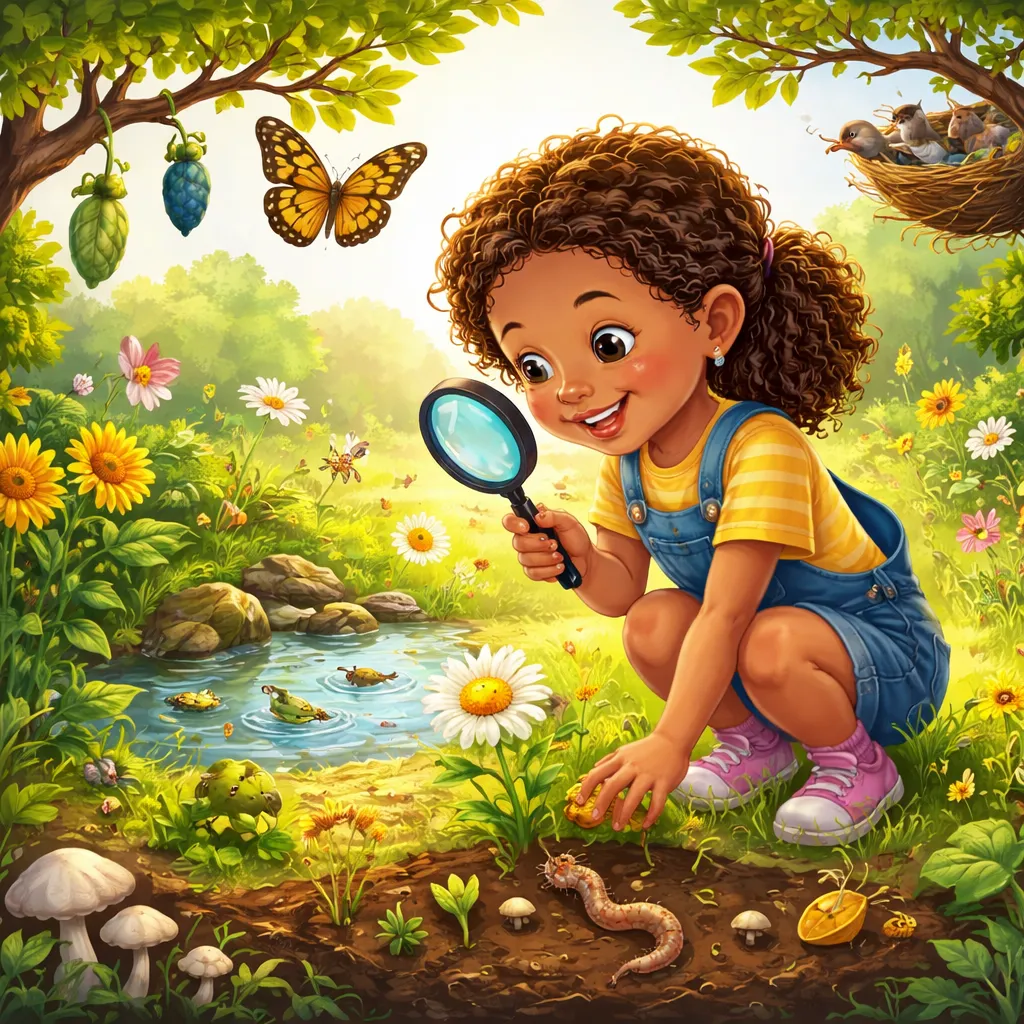

Young children notice living things first. They watch ants on a sidewalk. They spot a bird at a window. They ask why a flower opens and closes. These small moments connect biology and life naturally. You do not need a textbook. You just need to follow their gaze. This article helps you guide that curiosity. We will explore words and ideas together. You will learn how to talk about living things. Your child will discover the wonder of nature. Let us begin this gentle journey.
Are Similar Words Really Interchangeable? Many parents use “biology” and “life science” as the same. They share many ideas. But they are not perfect twins. Biology studies all living things. It looks at cells, genes, and bodies. Life science sometimes includes ecology and health. In schools, life science is often broader. Biology feels more precise. For young kids, the difference does not matter much. But knowing the nuance helps you teach. You can choose the right word for the right question. Children learn best with small, clear steps.
Set 1: Biology vs Life — Which One Is More Common? People say “life” every single day. “Life” appears in stories, songs, and questions. “Biology” sounds more like a school subject. You hear it in classrooms and science shows. For a five-year-old, “life” is very familiar. “Biology” might feel new. Start with the word “life” first. Talk about the life of a butterfly. Talk about your family’s life. Then introduce “biology” as the study of life. This connection makes sense. Your child will not feel confused. They will feel smart.
Set 2: Biology vs Life — Same Meaning, Different Contexts These two words overlap in beautiful ways. Biology describes a field of knowledge. Life describes the actual experience. You study biology in a book. You observe life in a garden. Both talk about the same creatures. A frog belongs to biology and life. Biology asks: How does a frog breathe? Life asks: What does a frog do all day? Share both questions with your child. Read a frog fact (biology). Then watch a frog jump (life). Learning becomes full and rich.
Set 3: Biology vs Life — Which Word Is “Bigger” or More Emphatic? Life feels like the bigger word. Life includes everything. Birth, growth, feelings, and death. Biology only studies the physical parts. Biology does not study dreams or love. But biology studies many things too. It studies bacteria, trees, and whales. For a child, “life” has more magic. Use “life” to inspire wonder. Use “biology” to explain the how. Both words matter. Neither is better. They work as partners. One gives poetry. One gives answers.
Set 4: Biology vs Life — Concrete vs Abstract Life can feel abstract. You cannot hold “life” in your hand. But you see life in action. A moving worm shows life. A growing seed shows life. Biology feels more concrete in one way. You can hold a biology book. You can look at a cell under a microscope. But cells are also tiny and invisible. Start with concrete examples. Touch a leaf. Watch a pet eat. Say “This leaf is alive. That is life.” Then say “Biology helps us understand the leaf.” Abstract ideas grow from real moments.
Set 5: Biology vs Life — Verb or Noun? First Understand the Role Both words are nouns. You cannot “biology” something. You cannot “life” something. But you can use related verbs. You can “live” (from life). You can “study biology” (the subject). Teach your child action words first. Say “This seed will grow.” Say “We breathe every minute.” These actions connect to life. After actions, introduce the big nouns. “All these actions are part of life.” “Biology is the name for studying these actions.” This order keeps learning simple.
Set 6: Biology vs Life — American English vs British English Both terms work the same in American and British English. No spelling differences exist. But school systems use them a little differently. In the US, “life science” often appears in early grades. In the UK, “biology” starts earlier. Do not worry about these small differences. Your child will learn both over time. Focus on the living things around you. A snail in your garden is biology and life. No matter what you call it, the snail is real. Real things teach best.
Set 7: Biology vs Life — Which Fits Formal Situations? Formal situations use “biology” more often. A science test says “biology.” A doctor studies biology. A researcher writes biology papers. “Life” appears in formal settings too. Philosophy talks about the meaning of life. Health classes discuss healthy life habits. But for school science, expect “biology.” Help your child recognize the word. Point to it in books. Say “This is the biology section.” Formal words become friendly when you meet them often. Practice makes the strange feel normal.
Set 8: Biology vs Life — Which One Is Easier for Kids to Remember? Life is much easier for young kids. It has only four letters. They hear it every hour. “How is your day?” “What a fun life!” Biology has three parts. Bi-o-lo-gy. That feels long. But you can make it fun. Clap the syllables together. Bi (clap) - o (clap) - lo (clap) - gy (clap). Turn it into a game. Say “Life is short and sweet. Biology is a longer friend.” Over time, both words will stick. Start with life. Add biology gently. Your child will remember both.
Mini Exercise: Can You Spot the Differences Between These Similar Words? Try these simple questions with your child. Use your own body and home.
Is your heartbeat biology or life? (Both)
Is a toy dinosaur alive? Does it have life? (No)
Does a tree have life? Does biology study trees? (Yes to both)
Can you see life in a sleeping cat? (Yes)
Does a biology book breathe? (No)
Now play a pointing game. Say a word. Your child points to something alive (life) or something a biologist studies (biology). A flower works for both. A rock works for neither. Give a high five for each correct point. This game takes two minutes. Play it while waiting for dinner. Small games build big knowledge.
Parent Tips: How to Help Kids Learn and Remember Similar Words Start with what your child loves. Bugs, dogs, or growing beans. Use that love as your door. Say “Your pet has life. Biology studies how pets grow.” Keep your voice light and curious. You are not a teacher right now. You are a partner in discovery.
Use picture books about animals and plants. Stop on each page. Ask “Is this alive?” and “What does it need to live?” Let your child point and name. Do not correct every small mistake. Celebrate the effort. Say “Good thinking!” first. Then gently show the right answer.
Watch short nature videos together. Pause on a close-up of a leaf or a fish. Say “Biology looks at tiny parts. Life looks at the whole animal.” Use your finger to trace the screen. Your child will follow your gaze. Shared attention makes learning stick.
Create a “life journal.” Draw or tape pictures of living things. A houseplant, a family member, a spider outside. Write one word next to each picture. “Grows,” “Eats,” “Breathes.” These are actions of life. Then write “biology” at the top of one page. Your child will see the connection.
Visit a park or a pond. Bring a magnifying glass. Look at moss, feathers, and mud. Ask “Is this part of life?” (Yes, all of it). Ask “Would a biologist study this?” (Yes again). Let your child collect one small thing. A feather or a smooth stone. Talk about why it was alive. Keep the tone like a treasure hunt.
Answer strange questions with joy. Your child may ask “Do rocks have life?” or “Is a robot alive?” Do not rush. Say “That is a great question. Let us think together.” List what living things do. Eat, grow, make babies. Compare a rock to a dog. Your child will figure it out. You just guided without giving the answer.
Praise curiosity more than correct answers. When your child asks “Why?” say “I love that question.” When your child says “I don’t know,” say “That is the first step to knowing.” Build a home where not knowing feels safe. That safety creates brave learners. Biology and life become not scary subjects but friendly mysteries.
Keep lessons woven into daily life. At breakfast, ask “Is this egg alive?” (No, but it came from a chicken). In the bath, ask “Is this soap alive?” (No). On a walk, ask “Is this grass alive?” (Yes). You just taught biology and life in three minutes. No flash cards. No stress. Just talk.
Finally, let your child teach you. Ask “What did you notice today about something alive?” Listen with your whole face. Say “Tell me more.” Your child becomes the expert. That feeling of expertise fuels more learning. You will not need to push. Your child will pull you into discovery. That is the deepest teaching of all. Biology and life become your shared language of wonder.