
Introduction to Romania
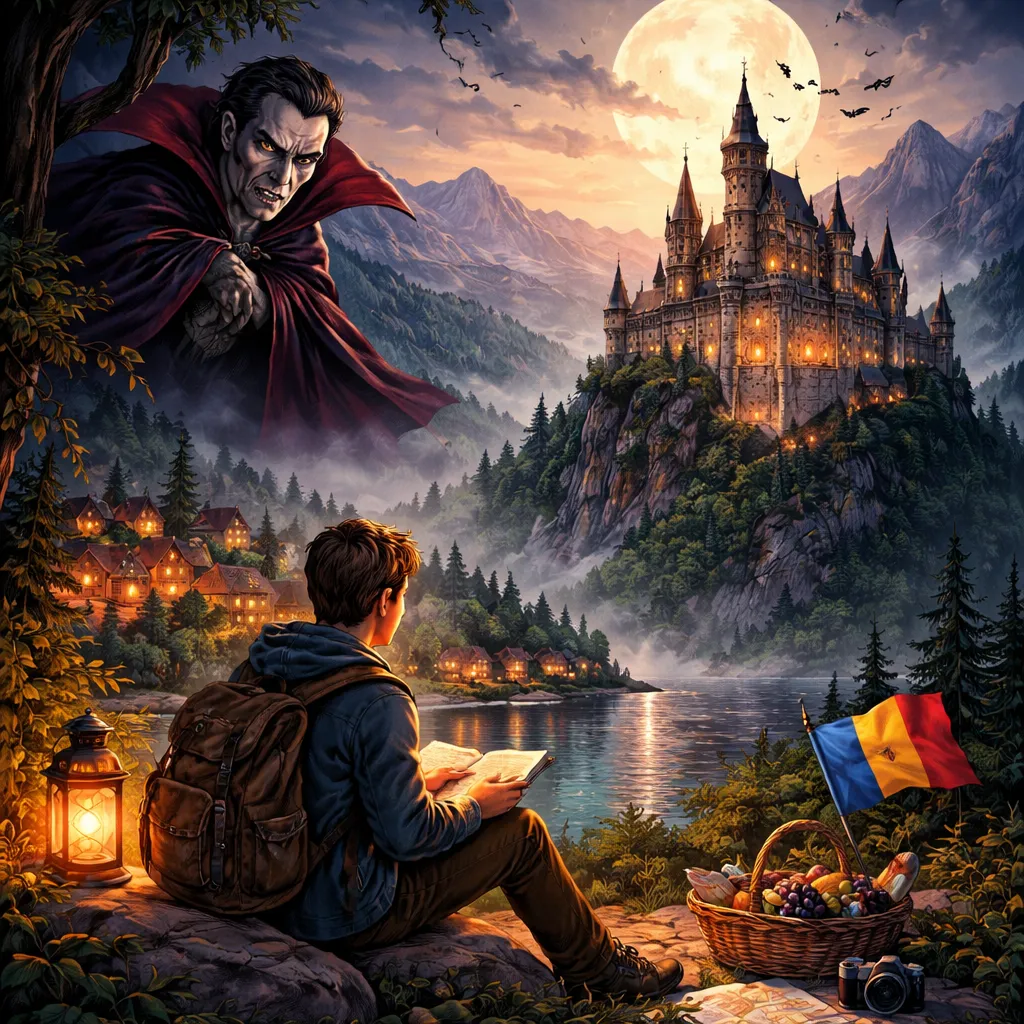
Language learning transports us to a land of misty forests and medieval castles. Today we explore a country in southeastern Europe with a rich folklore tradition. This nation holds the legendary home of Count Dracula. Children will discover painted monasteries that glow with stories on their outer walls. They will learn about the Carpathian Mountains that shelter wolves and bears. Exploring Romania builds reading skills while revealing a land of legends, art, and natural beauty. Every fact uncovers a new mystery. Every word invites young readers to imagine this Eastern European treasure.
Where Is Romania?
Romania lies in southeastern Europe on the lower Danube River. It shares borders with Ukraine to the north, Hungary to the northwest, Serbia to the southwest, Bulgaria to the south, and Moldova to the east. The Black Sea forms its southeastern coast. The capital city is Bucharest. Bucharest sits in the southern part of the country. The country covers over ninety-two thousand square miles. It ranks as the largest country in Southeastern Europe. The Carpathian Mountains curve through the center. The Danube River flows through the south before emptying into the Black Sea. Finding Romania on a map shows a country at the crossroads of Central and Eastern Europe.
Interesting Facts About Romania
Romania offers countless remarkable facts for young learners. It is home to the legendary Dracula. The character was inspired by Vlad the Impaler, a 15th-century ruler. Bran Castle, often called Dracula's Castle, sits high on a cliff in Transylvania. Another interesting fact involves painted monasteries. In the Bucovina region, monasteries feature exterior frescoes telling biblical stories. The vivid paintings have survived for over five hundred years.
Romania also has a unique natural feature. The Danube Delta ranks as the second largest river delta in Europe. It provides a haven for over three hundred species of birds. Another fun fact involves the Carpathian Mountains. These mountains hold the largest population of brown bears in Europe. Wolves and lynx also roam the forests.
The country also has a unique architectural style. The Merry Cemetery in the village of Săpânța features colorful tombstones with humorous epitaphs. Visitors laugh at poems describing the lives of those buried there. Another interesting fact involves gymnastics. Romania has produced some of the greatest gymnasts in history. Nadia Comăneci scored the first perfect ten in Olympic gymnastics in 1976. Romania also has a unique palace. The Palace of the Parliament in Bucharest ranks as the second largest administrative building in the world. These facts show children a country of legends, art, and athletic achievement.
Key Vocabulary About Romania
Let us build vocabulary for this Eastern European nation. These words help children describe what they learn.
Transylvania: a region in central Romania known for its forests and castles.
Fresco: a painting made on wet plaster on walls.
Monastery: a building where monks or nuns live.
Carpathian: the mountain range curving through Romania.
Delta: land formed by sediment at a river's mouth.
Epitaph: words written in memory of a dead person.
Gymnastics: a sport involving acrobatic movements. Introduce these words with pictures and stories. Show Bran Castle on its rocky cliff. Show a painted monastery with its colorful walls. Let children say each word aloud. These vocabulary words give children the language to explore Romania's legends and landscapes.
Simple Sentences for Reading Practice
Short sentences help new readers build confidence. Use these sentences about Romania for practice.
Romania is a country in southeastern Europe.
The capital city is Bucharest.
The Carpathian Mountains curve through the country.
Transylvania is a region with castles and forests.
Bran Castle is known as Dracula's Castle.
Painted monasteries have colorful outside walls.
The Danube Delta is home to many birds. Read each sentence together. Let children point to the words. Encourage them to repeat after you. Use pictures to show each fact. These simple sentences prepare young readers for longer passages.
Short Reading Passage About Romania
Here is a short passage for children to read together.
“Romania sits at the curve of the Carpathian Mountains. The mountains rise like a green spine through the center. In Transylvania, Bran Castle perches on a rocky cliff. Visitors cross a bridge to reach its towers. The castle inspired stories of Dracula. In the north, painted monasteries stand in quiet meadows. The outside walls of Voroneț Monastery glow with deep blue frescoes. Saints and angels cover the stone. The Danube River flows toward the Black Sea. Before reaching the sea, it spreads into a delta. Reeds and channels create a maze. Pelicans glide above the water. In the Merry Cemetery, carved wooden crosses bear colorful paintings. Poems tell funny stories about the people buried there. Bucharest, the capital, holds the massive Palace of the Parliament. Romania blends legends, art, and nature.”
Read this passage slowly together. Pause to talk about each idea. Ask children to find vocabulary words in the text. This activity builds reading fluency and deepens understanding.
Fun Questions About Romania
Questions make reading interactive and engaging. Use these to start conversations with young learners.
What is the capital city of Romania?
What mountains curve through the country?
What region is known for castles and forests?
What castle is associated with Dracula?
What are the painted monasteries known for?
What river delta is a haven for birds? Let children answer in complete sentences. Encourage them to use new vocabulary. Ask them to imagine visiting Bran Castle. What would they see from the towers? Creative questions make the topic personal and exciting.
Tips for Learning English with This Topic
Use Romania to create rich English learning experiences. Start with a map activity. Let children find Romania in southeastern Europe. Point out the Carpathian Mountains and the Danube River. Discuss how geography shaped its regions and folklore.
Next, introduce the vocabulary through a hands-on activity. Create a simple castle model using cardboard or blocks. Add towers and a bridge. For painted monasteries, draw or paint a scene on paper. Use bright colors to mimic the frescoes. Use the words "Transylvania," "fresco," and "monastery" during the activity.
Read the passage aloud with mystery and wonder. Let your voice reflect the legends of Dracula and the beauty of the monasteries. After reading, let children draw a scene from Romania. One child might draw Bran Castle on its cliff. Another might draw a painted monastery with colorful frescoes. Let them label their drawings with vocabulary words. Add green for the Carpathians and blue for the Danube.
Incorporate a history and literature connection. Talk about the legend of Dracula and its historical roots. Discuss how the painted monasteries preserved faith and art. This shows children that language learning reading connects to history, literature, and art.
Use music and movement to enhance the experience. Listen to Romanian folk music with panpipes and violins. Let children move like bears in the Carpathian forests. Pretend to climb castle towers. Physical activity reinforces learning in joyful ways.
Encourage children to share their knowledge. Let them tell a family member about Bran Castle and the Dracula legend. They can explain what makes the painted monasteries special. Teaching others builds confidence and deepens understanding.
Connect Romania to your child's world. Ask, “What stories or legends do we know?” Compare them to Dracula. Ask about art on walls in our community. Compare them to frescoes. These connections help children see that language learning reading is about understanding how stories and art connect to place. By exploring Romania together, you give children a rich experience. They learn new words, discover a land of castles and legends, and grow their love for reading. This Eastern European nation becomes a cherished part of their learning journey.