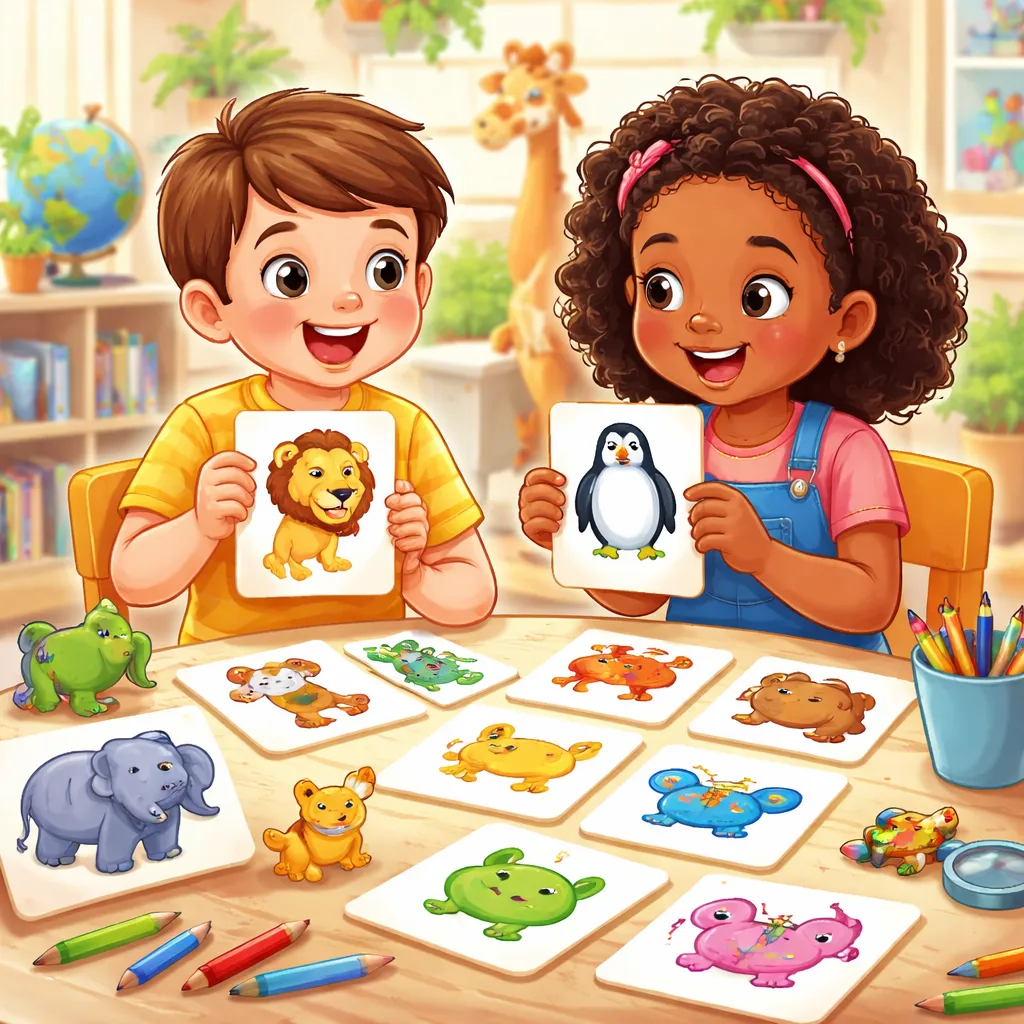

What Is This Situation? Animals are fascinating to children. They love to see pictures of lions, elephants, and monkeys. They love to learn their names. Flashcards are a simple, powerful tool. They show a picture and the word. Children see the animal. They hear the name. They learn.
Free printable flashcards for animals give parents an easy, affordable way to teach animal vocabulary. You print them at home. You cut them out. You have a set of learning tools. They are perfect for games, for practice, for fun.
This situation happens during learning time, during playtime, during quiet moments. Flashcards are portable. You can use them at the kitchen table, in the car, on the floor. Learning happens anywhere.
These flashcards are best used playfully. Games, songs, and matching activities make the words stick. With animal flashcards, your child builds vocabulary while having fun.
Key English Phrases for This Situation Use phrases for introducing flashcards. "Let us look at our animal flashcards. What is this animal?" "This is a lion. Lion starts with L."
Use phrases for practicing. "Let us say the animal names. Lion, tiger, elephant." "Now your turn."
Use phrases for games. "Let us play a matching game. Find the animal that says roar." "Let us sort the animals by where they live."
Use phrases for reading. "Let us read the words. Lion. Tiger. Elephant." "You read the words. Good job."
Use phrases for celebrating. "You know all the animals. Good job." "You are an animal expert."
Simple Conversations for Kids Dialogue 1: Introducing Flashcards Parent: "Let us look at our animal flashcards. What is this animal?" Child: "Lion." Parent: "Yes. Lion. What sound does a lion make?" Child: "Roar." Parent: "Good. Now what is this one?" Child: "Elephant." Parent: "Yes. Elephant. Elephants are big."
This conversation introduces flashcards. The child names the animals. The parent adds facts. The learning is active.
Dialogue 2: Matching Game Parent: "Let us play a matching game. I will say an animal. You find the card. Find the lion." Child finds lion card. Parent: "Good. Find the monkey." Child finds monkey card. Parent: "You found them all. Good job."
This conversation uses flashcards for a matching game. The child listens and finds. The game builds listening and recognition.
Dialogue 3: Sorting Animals Parent: "Let us sort the animals. Put all the farm animals here. Cow, pig, sheep." Child sorts. Parent: "Now put all the jungle animals here. Lion, tiger, monkey." Child sorts. Parent: "Good. You sorted by where they live."
This conversation uses flashcards for sorting. The child groups animals. The learning is active.
Vocabulary You Should Know Lion is a big cat that lives in Africa. It is a jungle animal. You can say "The lion roars."
Elephant is a huge animal with a trunk. It lives in Africa and Asia. You can say "The elephant is big."
Monkey is an animal that swings in trees. It lives in the jungle. You can say "The monkey eats bananas."
Cow is a farm animal that gives milk. You can say "The cow says moo."
Pig is a farm animal that is pink. You can say "The pig rolls in mud."
Sheep is a farm animal with wool. You can say "The sheep says baa."
How to Use These Phrases Naturally Use a playful and curious tone. Animals are fun. Your voice should show it. "Look at this lion. Roar!"
Say the phrases with the flashcards. Point to the picture. Say the word. Let your child repeat.
Play games. Matching, sorting, memory. Games make learning active.
Use the flashcards in different ways. Name the animal. Make the sound. Sort by habitat. Variety keeps it interesting.
Celebrate every success. "You found the lion. Good job." Celebration makes learning feel good.
Common Mistakes to Avoid One mistake is using the flashcards only for naming. Use them for games, sorting, matching. Make them active.
Another mistake is correcting pronunciation too much. If your child says "el-e-phant" instead of "elephant," gently model the correct word. "Elephant. Can you say elephant?"
Some children want to play with the same cards again and again. That is good. Repetition builds mastery.
Avoid making it a lesson. Flashcards are for play. If your child is not interested, try another day.
Tips for Parents and Practice Ideas Print the flashcards on cardstock. They last longer. Laminate them if you can.
Store them in a box or bag. Keep them where your child can reach. Independent play is learning.
Use them during bath time. Stick them to the wall with a little water. Bath time is learning time.
Take them in the car. Long drives become learning time.
Let your child choose which cards to use. Choice builds engagement.
Fun Practice Activities Play animal bingo. Use the flashcards as calling cards. Your child covers the animal on a bingo card. Bingo makes practice fun.
Make an animal book. Staple paper together. Your child glues animal flashcards and writes the names. The book is a reference.
Play animal charades. One person acts out an animal. The other finds the flashcard. The game builds movement and recognition.
Create an animal zoo. Use blocks or boxes to make enclosures. Your child puts the animal flashcards in the right place. The zoo makes learning active.
Sing the animal song. "Lion, lion, roar. Elephant, elephant, stomp. Monkey, monkey, swing. Cow, cow, moo." Music makes learning fun.
Free printable flashcards for animals are a simple, powerful learning tool. Lions, elephants, monkeys, cows. Print them at home. Play games. Sort and match. With playful practice and patient guidance, your child will learn animal names. They will know that lions roar and elephants stomp. They will build vocabulary. They will have fun. That is the power of flashcards. One animal at a time, your child will learn. And you will be there to roar and stomp along.