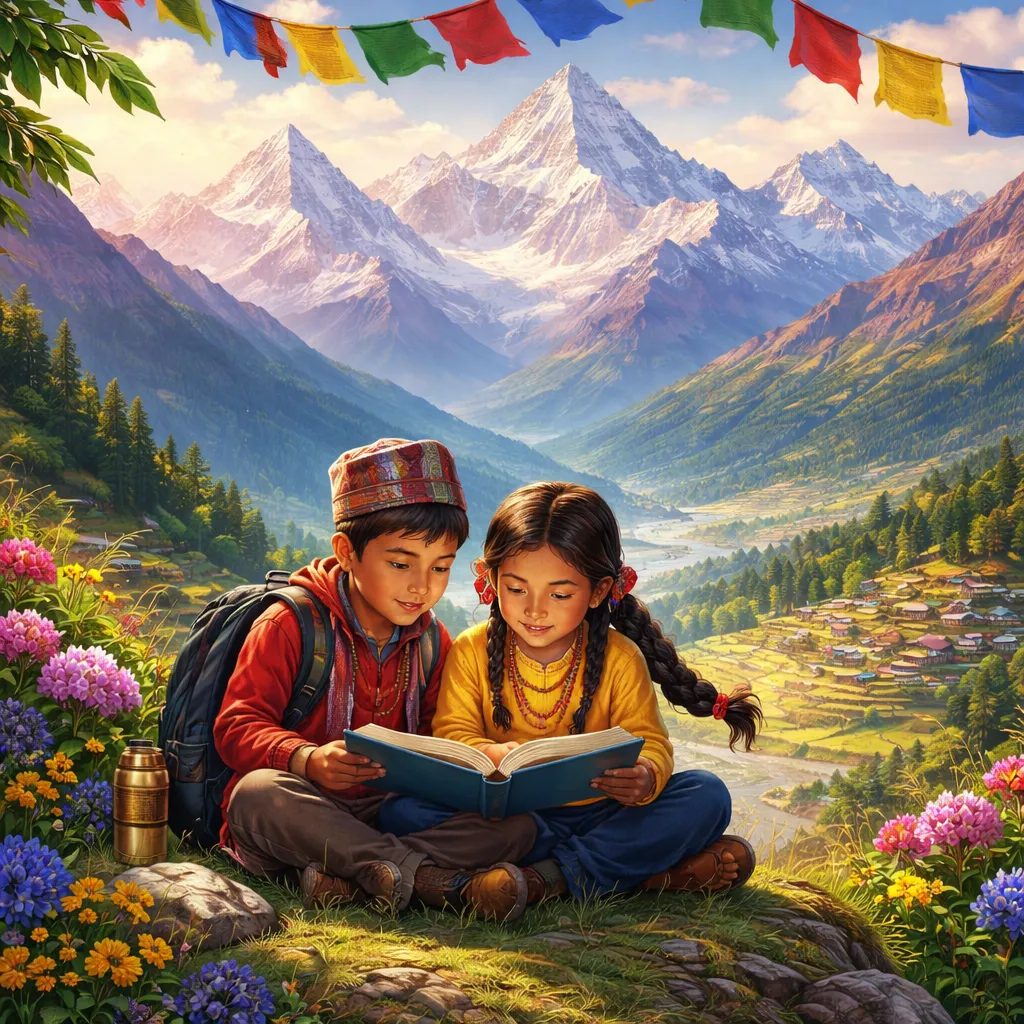

Introduction to Nepal
Language learning transports us to the rooftop of the world. Today we explore a small country cradled in the highest mountains on Earth. This nation holds eight of the world's fourteen tallest peaks. Children will discover the mighty Mount Everest, which reaches into the sky. They will learn about Sherpa people who guide climbers through dangerous slopes. Exploring Nepal builds reading skills while revealing a land of mountains, temples, and warm hospitality. Every fact uncovers a new wonder. Every word invites young readers to imagine standing among the clouds.
Where Is Nepal?
Nepal lies in South Asia between China and India. It sits landlocked in the Himalayas. China borders Nepal to the north. India borders the country to the south, east, and west. The capital city is Kathmandu. Kathmandu rests in a valley surrounded by green hills. The country covers about fifty-six thousand square miles. It ranks as one of the smaller nations in Asia. But it holds the highest mountains on Earth. The landscape rises from lowland jungles in the south to towering peaks in the north. Finding Nepal on a map shows a long, narrow country tucked between two large neighbors. Its location makes it a bridge between South Asia and the Tibetan Plateau.
Interesting Facts About Nepal
Nepal offers countless remarkable facts for young learners. It is home to Mount Everest, the highest mountain in the world. Everest rises over twenty-nine thousand feet above sea level. Climbers from around the world come to attempt its summit. Another interesting fact involves the flag. Nepal has the only national flag that is not rectangular. Its flag features two triangles representing the Himalayas and the country's two major religions.
Nepal also has a unique calendar. The official calendar is the Bikram Sambat. It runs about fifty-six years ahead of the Gregorian calendar. Another fun fact involves living goddesses. Nepal has a tradition of Kumari, young girls chosen to represent a living goddess. They live in special palaces and appear during festivals.
The country also holds a dense population of tigers and rhinos. Chitwan National Park protects one-horned rhinos and Bengal tigers. Visitors ride elephants to spot wildlife in the jungles. Another interesting fact involves the birthplace of Buddha. Lumbini in southern Nepal marks the birthplace of Siddhartha Gautama, who became the Buddha. Pilgrims travel there from many countries. Nepal also has over one hundred ethnic groups and more than one hundred languages. These facts show children a country of incredible diversity, from its peaks to its people.
Key Vocabulary About Nepal
Let us build vocabulary for this Himalayan nation. These words help children describe what they learn.
Himalayas: a mountain range in Asia containing the world's highest peaks.
Summit: the highest point of a mountain.
Sherpa: an ethnic group known for mountaineering skills.
Yeti: a legendary creature said to live in the Himalayas.
Prayer Flag: colorful flags with prayers, hung for blessings.
Stupa: a dome-shaped Buddhist structure.
Gurkha: soldiers from Nepal known for bravery. Introduce these words with pictures and stories. Show Mount Everest with its snow-covered summit. Show prayer flags fluttering in the wind. Let children say each word aloud. These vocabulary words give children the language to explore Nepal's mountains and culture.
Simple Sentences for Reading Practice
Short sentences help new readers build confidence. Use these sentences about Nepal for practice.
Nepal is a country in South Asia.
China and India border Nepal.
The capital city is Kathmandu.
Mount Everest is the highest mountain in the world.
Sherpas help climbers reach the summit.
Prayer flags hang across mountain passes.
Lumbini is the birthplace of Buddha. Read each sentence together. Let children point to the words. Encourage them to repeat after you. Use pictures to show each fact. These simple sentences prepare young readers for longer passages.
Short Reading Passage About Nepal
Here is a short passage for children to read together.
“Nepal sits high in the Himalayas between China and India. The mountains rise like giants from the earth. Mount Everest stands as the tallest of them all. Climbers from many lands come to test themselves against this peak. Sherpa people know these mountains better than anyone. They guide climbers, carry supplies, and keep the trails safe. In the capital, Kathmandu, temples and stupas fill the city. Prayer flags stretch between buildings. The wind carries their blessings across the valley. In the south, the land flattens into jungles. Chitwan National Park protects one-horned rhinos and tigers. Visitors ride elephants through the tall grass to see them. Lumbini, in the southern plains, holds the birthplace of Buddha. Pilgrims walk among ancient ruins and new temples. Nepal is a land of mountains, jungles, and deep spiritual traditions.”
Read this passage slowly together. Pause to talk about each idea. Ask children to find vocabulary words in the text. This activity builds reading fluency and deepens understanding.
Fun Questions About Nepal
Questions make reading interactive and engaging. Use these to start conversations with young learners.
What two countries border Nepal?
What is the capital city of Nepal?
What is the highest mountain in the world?
Who helps climbers reach the summit of Everest?
What animals live in Chitwan National Park?
Where was Buddha born? Let children answer in complete sentences. Encourage them to use new vocabulary. Ask them to imagine standing at the top of a mountain. What would they see? Creative questions make the topic personal and exciting.
Tips for Learning English with This Topic
Use Nepal to create rich English learning experiences. Start with a map activity. Let children find Nepal between China and India. Point out the Himalayan range along the northern border. Discuss how geography shaped Nepal's culture and identity.
Next, introduce the vocabulary through a hands-on activity. Create a simple mountain model using clay or paper. Place the highest peak at the top. Add tiny climbers and Sherpa guides. For prayer flags, hang small pieces of cloth or paper on a string. Let children draw blessings on them. Talk about how wind carries these blessings.
Read the passage aloud with awe and wonder. Let your voice reflect the majesty of the mountains. After reading, let children draw a scene from Nepal. One child might draw Mount Everest with climbers on the slope. Another might draw prayer flags fluttering in the wind. Let them label their drawings with vocabulary words. Add white for snow and blue for the sky.
Incorporate a cultural connection. Talk about Buddhism and its origins in Lumbini. Discuss why people travel to sacred places. Ask children about places of peace or meaning in their own community.
Use music and movement to enhance the experience. Listen to Tibetan or Nepali music with bells and chanting. Let children move like climbers ascending a mountain. Pretend to hang prayer flags. Physical activity reinforces learning in joyful ways.
Encourage children to share their knowledge. Let them tell a family member about Mount Everest. They can explain who Sherpas are and why they are important. Teaching others builds confidence and deepens understanding.
Connect Nepal to your child's world. Ask, “What mountains or high places have we visited?” Compare them to the Himalayas. Ask about animals in your area. Compare them to tigers and rhinos. These connections help children see that language learning reading is about understanding different landscapes and cultures. By exploring Nepal together, you give children a rich experience. They learn new words, discover the highest mountains on Earth, and grow their love for reading. This Himalayan nation becomes a cherished part of their learning journey.