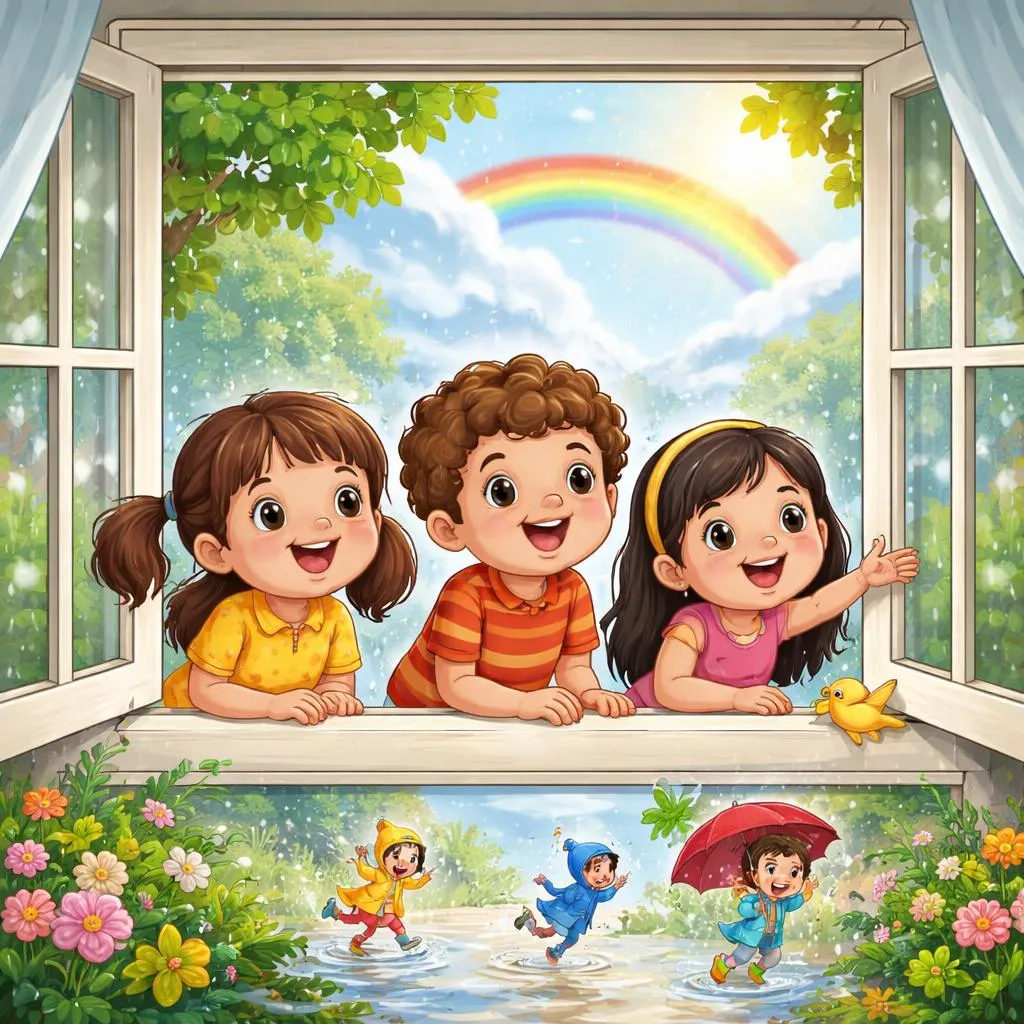

Hello, dear teachers and parents! Today brings a wonderful opportunity to explore one of the most cherished nursery rhymes. This simple tune has comforted children for generations. It expresses a feeling every child knows well. The desire for sunny playtime instead of rainy indoors. The "Rain Rain Go Away Come Again Another Day" rhyme offers so much more than a sweet melody. It teaches weather vocabulary through repetition. It introduces polite requests and emotional expression. Let us discover together why this rhyme remains a favorite in classrooms everywhere.
What Is the "Rain Rain Go Away" Nursery Rhyme? The "Rain Rain Go Away Come Again Another Day" rhyme is a classic English nursery rhyme. It dates back to at least the 17th century. The earliest written version appeared in 1659. Children have sung it for hundreds of years. The rhyme expresses a simple wish. Rain should stop so children can play outside.
The basic version contains just four lines. The singer asks rain to go away. They invite it to return another day. Then they mention specific children who want to play. Little Johnny or other names appear in different versions. This personal touch makes each child feel included.
What makes this rhyme special is its universal theme. Every child understands wanting to play outside. Every child feels disappointed when rain spoils plans. The rhyme validates these feelings. It gives children words to express their wishes about the weather.
The "Rain Rain Go Away Come Again Another Day" rhyme also teaches through its simple structure. The words flow in an easy, sing-song pattern. Children learn it quickly. They remember it forever. The rhyme becomes part of their cultural knowledge.
The Lyrics of the "Rain Rain Go Away" Nursery Rhyme Let us look closely at the words of this beloved rhyme. The basic version remains simple and memorable. Here are the traditional lyrics:
Rain, rain, go away Come again another day Little Johnny wants to play Rain, rain, go away
Many variations exist with different children's names. Parents substitute their own child's name. Teachers use names of students in the class. This personalization makes the rhyme feel specially written for each child.
Rain, rain, go away Come again another day Little Sarah wants to play Rain, rain, go away
Some versions include multiple verses with different children. Each verse names another child who wants to play outside. This extends the rhyme and includes more participants.
Rain, rain, go away Come again another day All the children want to play Rain, rain, go away
Other versions add actions or weather descriptions. Some mention puddles or umbrellas. The core message remains the same throughout. Rain should stop so playtime can begin.
The simple repetition makes this rhyme perfect for young learners. After hearing it once, children can join in. They anticipate the pattern. They feel proud when they can sing along.
Vocabulary Learning from the Rain Rhyme The "Rain Rain Go Away Come Again Another Day" rhyme introduces essential weather vocabulary. Young learners encounter the word "rain" repeatedly. This builds strong recognition of this weather term.
Weather words form the foundation of learning. Rain describes water falling from clouds. Children learn to connect the word with their experience of rainy days. They understand what rain means when they hear it in other contexts.
Action words appear in the rhyme. "Go away" expresses movement and departure. "Come again" describes return. "Wants to play" expresses desire and activity. These verbs help children describe actions and wishes in their own lives.
Time words enrich the vocabulary. "Another day" introduces future time concepts. Children learn that "another day" means a different time, not now. This builds understanding of time sequences and waiting.
Names personalize the learning experience. Little Johnny, Little Sarah, or the child's own name appears. This personal connection makes vocabulary more meaningful. Children engage more deeply when they hear their own name.
Emotion words emerge from the rhyme's meaning. The desire to play implies disappointment about rain. Children can discuss feelings connected to weather. They learn that it is okay to feel disappointed when plans change.
Phonics Points in the Rain Rhyme Phonics learning happens naturally with this rhyme. The rhythm and rhyme draw attention to word patterns. Children hear specific sounds again and again.
The long "a" sound appears prominently. "Away" and "day" share this sound. "Play" also contains the same long "a" pattern. Children hear the similarity clearly. They start to notice that rhyming words often share spelling patterns. This builds foundational reading skills.
The "ain" word family emerges from "rain" and "again." These words look and sound similar. Children learn that changing the first sound creates new words. Rain, pain, main, gain, and train all follow the same pattern. This understanding supports decoding skills for reading.
The "ay" word family appears in "away," "day," and "play." These words share the same ending sound and spelling. Children can generate other "ay" words like say, may, and stay. This builds confidence in reading and spelling.
Consonant blends appear throughout. "Play" begins with the "pl" blend. This combination requires precise mouth movement. Children practice blending the "p" and "l" sounds smoothly. The rhyme provides many opportunities for this practice.
The repeated phrases give children confidence with familiar sound patterns. Each repetition reinforces the phonics learning. Children internalize the sound-spelling relationships without conscious effort.
Grammar Patterns Emerging from the Rhyme Grammar teaching becomes effortless with this rhyme. The natural language provides perfect models. Children absorb correct structures without formal lessons.
Command forms appear in "go away" and "come again." These are imperative sentences. The subject "you" is understood, not stated. Children learn that commands start with the verb. They can later create their own commands using this model.
The phrase "another day" introduces adjective-noun order. "Another" modifies "day." Children learn that describing words come before the noun in English. This basic word order becomes familiar through repetition.
"Wants to play" shows verb + infinitive structure. "Wants" is the main verb. "To play" is the infinitive showing what the subject desires. Children encounter this pattern naturally. They absorb that some verbs are followed by "to" + verb.
Personal names appear as subjects. "Little Johnny wants to play" shows a proper noun as sentence subject. Children understand that names replace "he" or "she" in sentences. This builds flexibility in sentence construction.
Prepositions appear in context. "Away" shows direction. "Again" shows repetition. These small but important words gain meaning through the rhyme's context. Children understand them without explicit instruction.
Learning Activities for the Rain Rhyme The "Rain Rain Go Away Come Again Another Day" rhyme inspires countless learning activities. These ideas extend the rhyme into deeper language practice. Each activity builds different skills while maintaining the fun.
Weather observation connects the rhyme to real life. Each day, look outside and identify the weather. Is it raining? Is it sunny? Cloudy? Windy? Record observations on a simple chart. When rain appears, sing the rhyme together. This builds connection between the song and actual experience.
Umbrella craft brings the rhyme into art. Provide paper plates cut in half. Children decorate them as umbrellas. Add a craft stick handle. While singing, children hold up their umbrellas. On "go away," they hide umbrellas behind their backs. On "come again," they bring them back. This adds movement to the song.
Rainstick making creates musical instruments. Use paper towel tubes. Cover one end. Add rice or beans inside. Cover the other end. Decorate the outside. Children shake their rainsticks while singing. The sound mimics real rain. This multisensory experience deepens engagement.
Name substitution game personalizes the rhyme. Sing the rhyme using each child's name. "Little Maria wants to play." Children light up when hearing their own name. This builds community and inclusion. It also helps children recognize their written names when displayed.
Weather sorting activity builds categorization skills. Collect pictures of different weather. Sunny, rainy, cloudy, snowy, windy. Children sort them into categories. Discuss which weather allows outdoor play. Connect back to the rhyme's message about wanting to play.
Printable Materials for the Rain Rhyme Printable materials support learning at home and school. These resources give children something to hold and use. They extend the rhyme into independent practice.
Weather picture cards provide versatile learning tools. Print cards showing sun, rain, clouds, snow, and wind. Children match words to pictures. They sort by weather type. They use them while singing to show the weather mentioned. Laminating extends their life for repeated use.
Name cards personalize the rhyme experience. Print each child's name on a separate card. During circle time, hold up different name cards. Sing the rhyme using that child's name. Children practice name recognition while enjoying the song.
Mini books let children own the rhyme. Create a simple folded book with pages for each part. Each page shows weather illustrations. Simple text guides singing. Children color the illustrations. They practice reading their books to family members. This builds pride and reading confidence.
Umbrella template inspires creative projects. Print simple umbrella outlines. Children decorate them with patterns and colors. Cut them out for display. Add raindrops with blue paper or glitter. This connects art to literacy learning.
Word cards focus on key vocabulary. Print each important word separately. Rain, away, again, day, play appear on cards. Children match words to pictures. They arrange words in rhyme order. They use cards for spelling practice. Multiple uses from one simple resource.
Educational Games Based on the Rhyme Games turn learning into pure joy. These game ideas use the "Rain Rain Go Away Come Again Another Day" rhyme as their foundation. Children practice language skills while having fun.
Rainy Day, Sunny Day movement game builds listening skills. Designate one area as "inside" and another as "outside." Play music or sing the rhyme. When the rhyme says "rain," children move to the inside area. When it says "play," they move to the outside area. Call out different weather conditions for children to respond. This builds listening comprehension and quick responses.
Weather Charades explores different conditions. One child acts out a weather type without speaking. They might shiver for snow, fan themselves for sun, or wiggle fingers for rain. Others guess the weather. When someone guesses correctly, everyone sings the appropriate weather song, including the rain rhyme for rainy day guesses.
Name that Tune builds listening skills. Hum the melody of the rain rhyme without words. Children guess which song it is. Once identified, everyone sings together. This builds musical memory and song recognition.
Umbrella Hide and Seek brings movement to learning. Hide small paper umbrellas around the room. Children search for them while singing. Each time someone finds an umbrella, everyone stops and sings the rhyme together. Continue until all umbrellas are found. This combines physical activity with language practice.
Weather Dress-Up connects to real-life preparation. Provide dress-up items for different weather. Rain boots, umbrella, and raincoat for rain. Sunglasses and hat for sun. Scarf and mittens for snow. Children dress appropriately for weather cards shown. They explain why they chose each item using weather vocabulary from the rhyme.
The "Rain Rain Go Away Come Again Another Day" rhyme continues teaching long after the final note fades. Its simple words carry rich language learning potential. Weather vocabulary becomes concrete through repetition. Command forms become familiar through natural use. Name recognition develops through personalization. Emotional expression gains words through the rhyme's message. Every child connects to the universal desire for sunny play days. Through this beloved rhyme, children learn English without even trying. They absorb vocabulary, grammar, and phonics through joyful participation. That is the lasting magic of nursery rhymes in language teaching. Rain or shine, this rhyme brings smiles to young faces everywhere.