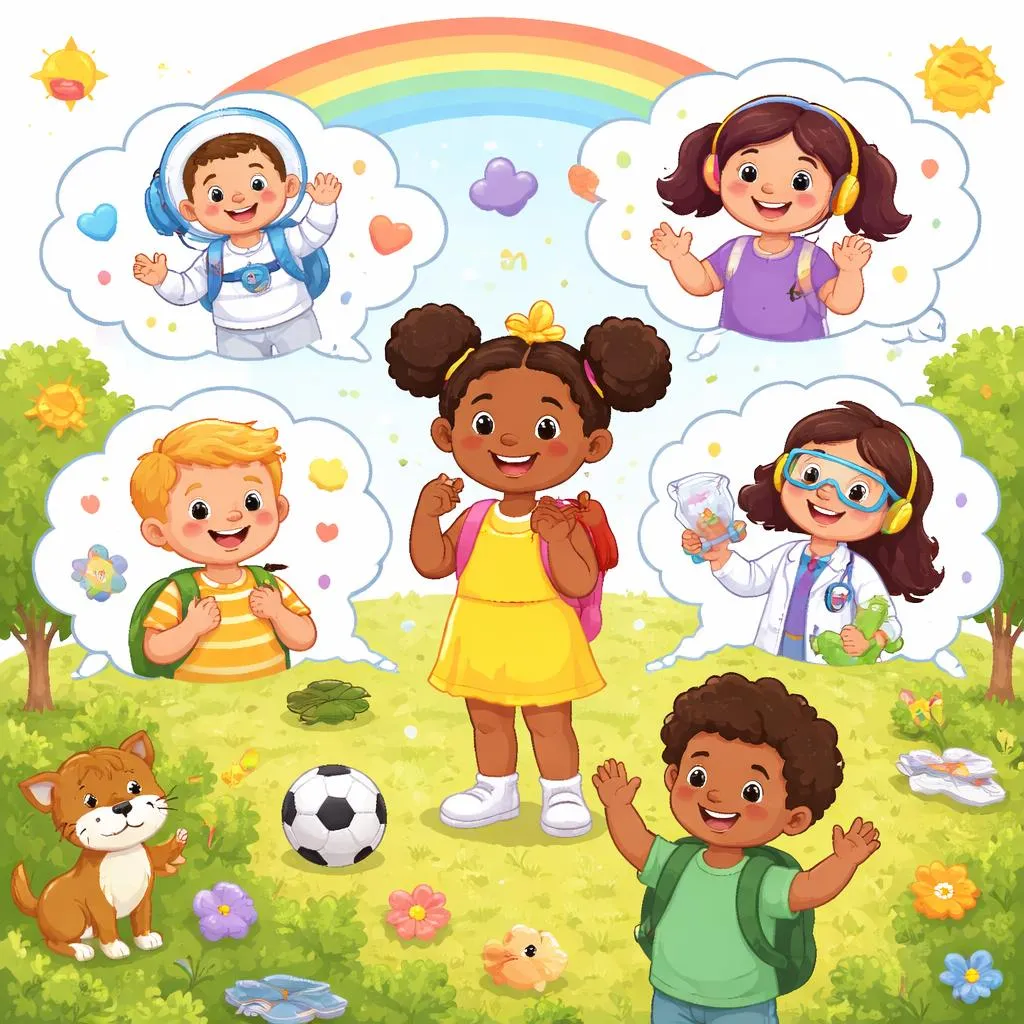

Hello, wonderful students! Today marks an exciting step in our English journey. We are going to explore a very special verb combination. These two small words appear in almost every conversation. They help us introduce ourselves. They let us describe how we feel. They tell others who we are. The "verb I am" forms the foundation of self-expression in English. By the end of this lesson, using this structure will feel completely natural. Let us discover the magic of these powerful little words together.
Meaning: What Does "I Am" Really Tell Others? When we say "I am," we are talking about ourselves. The word "I" means the person speaking. It always refers to oneself. The word "am" is a special form of the verb "to be." Together, "I am" connects the speaker to a description or state.
Think about introducing yourself. A new friend asks who you are. You can say, "I am Maria." This tells them your name. Someone asks how you feel today. You can say, "I am happy." This shares your emotion. A teacher asks what you want to be when you grow up. You can say, "I am going to be a doctor." This expresses your dream.
"I am" also helps us describe where we are. In the classroom, a student can say, "I am here." At home, someone might call, "I am in my room." These simple sentences give important information about location.
The meaning of "I am" changes based on what follows. An adjective describes how we feel or look. "I am tired." "I am tall." A noun tells who or what we are. "I am a student." "I am a brother." A location tells where we are. "I am at school." This flexibility makes "I am" incredibly useful.
Conjugation: How Does "I Am" Fit into the Verb "To Be"? Conjugation is a big word. It simply means changing the verb to match who is speaking. The verb "to be" changes more than any other English verb. Let us look at how this works.
For the pronoun "I," we use "am." This is unique. No other pronoun uses "am." We say "I am" and never "I is" or "I are." This special form makes "I" easy to identify in sentences.
For "you," we use "are." We say "you are." For "he," "she," and "it," we use "is." We say "he is," "she is," and "it is." For "we," we use "are." We say "we are." For "they," we also use "are." We say "they are."
The good news is that "I am" stays the same every time. It does not change based on anything else. Whether talking about the present, describing feelings, or giving names, "I am" remains constant. This makes it easy to remember.
Once students learn "I am," they can build thousands of sentences. It becomes the foundation for self-expression. Every child can talk about themselves using this simple, powerful structure.
Present Tense: Using "I Am" for Things Happening Now The present tense talks about things happening right now. It also describes things that are always true. "I am" fits perfectly into the present tense.
Let us imagine a typical morning. A child wakes up and gets ready for the day. They might say, "I am awake now." This describes their state at that moment. At breakfast, they can say, "I am hungry." This expresses a current feeling. Before leaving for school, they might announce, "I am ready to go!"
"I am" also works for permanent characteristics. A tall student can say, "I am tall." This describes something always true about them. A child who loves animals can say, "I am an animal lover." This expresses a lasting part of their identity.
In the classroom, "I am" helps students participate. When taking attendance, they respond, "I am here." When choosing activities, they say, "I am in the reading group." When sharing about themselves, they say, "I am from Mexico" or "I am seven years old."
The present tense with "I am" helps students describe their immediate world. It connects words to their current experiences. This makes learning feel real and useful.
Past Tense: Talking About What "I Was" Before When we want to talk about yesterday or last week, we need the past tense. The past tense of "I am" is "I was." This small change opens up many new conversations.
Imagine a child describing yesterday's events. They might say, "I was at the park yesterday." Another child can share, "I was sick last week." These sentences describe states that are finished.
"I was" also helps us talk about how we felt in the past. After a fun day, someone might say, "I was so happy at the party." After a scary movie, they might admit, "I was frightened last night." These expressions share past emotions.
For describing past locations, "I was" works perfectly. "I was at Grandma's house on Sunday." "I was in the library during recess." These sentences give information about where someone used to be.
Using the past tense takes practice. Start with simple sentences. Ask students to share one place they were yesterday. This builds confidence with the new form. Remind them that "I am" becomes "I was" when talking about the past.
Future Tense: Describing What "I Will Be" Later The future tense lets us dream and plan. To use "I am" in the future, we add helping words. We say "I will be" or "I am going to be." Both expressions work well.
Picture a child thinking about tomorrow. They might say, "I will be at school tomorrow morning." Another can share, "I am going to be seven years old next month." These sentences look forward to future states.
The future tense also helps with hopes and dreams. A student can say, "I will be a teacher when I grow up." Another might announce, "I am going to be in the school play." These expressions share aspirations and plans.
For describing future feelings, we use the same forms. "I will be nervous before the test." "I am going to be excited for my birthday party." These sentences predict emotional states.
Sometimes we use "I am" with present tense to talk about the future. "I am going to the store later" actually describes a future action. This special use confuses some learners. Explain that context helps us understand time. Words like "tomorrow" or "later" signal future meaning even with present tense verbs.
Questions: Asking with "Am I" and More Asking questions is a huge part of learning. To form questions with "I am," we change the word order. We put the verb before the subject. We ask, "Am I late?" This checks if something is true.
We can also use question words at the beginning. "Where" asks about location. "Where am I?" helps when lost. "Who" asks about identity. "Who am I?" appears in guessing games. "How" asks about condition. "How am I doing?" checks on progress.
For negative questions, we add "not." "Am I not invited?" expresses concern about exclusion. In spoken English, we often use contractions. "Aren't I lucky?" means the same as "Am I not lucky?" This form is common but irregular. English speakers say "aren't I" instead of "am not I" because it sounds better.
For past tense questions, we use "Was I." "Was I helpful yesterday?" checks on past performance. "Was I too loud last night?" asks about past behavior. For future questions, we use "Will I be." "Will I be ready on time?" expresses concern about preparation.
Teaching question forms takes time. Start with simple "Am I" questions about visible states. "Am I standing?" "Am I holding a pencil?" This makes the structure clear and easy to copy.
Other Uses: Expressing Feelings and Identity "I am" does more than state facts. It helps us express deep parts of ourselves. This makes it a very powerful phrase for young learners.
Think about identity. A child can say, "I am a good friend." This expresses their values. Another can say, "I am a hard worker." This shows their self-image. These statements build positive self-concept along with language skills.
"I am" also introduces opinions. "I am sure this is correct." "I am certain we turn left here." These express confidence. "I am afraid of spiders" shares a fear. "I am in love with reading" shares a passion.
Sometimes "I am" appears in common expressions. "I am sorry" offers an apology. "I am pleased to meet you" shows politeness. "I am kidding" means joking. These phrases appear everywhere in English conversation.
For describing physical states, "I am" works perfectly. "I am cold." "I am thirsty." "I am tired." Children express needs and sensations using this structure. Adults can respond appropriately when children can express themselves clearly.
The versatility of "I am" makes it essential. It covers identity, emotions, opinions, physical states, and more. Mastering this phrase gives children a voice in English.
Learning Tips: Making "I Am" Stick in Memory Learning a new grammar point requires smart strategies. Here are some helpful tips for mastering "I am." These ideas work well for young learners.
Use mirrors for self-expression practice. Have children look at themselves in a mirror. Ask them to describe what they see. "I am a girl." "I am wearing a blue shirt." "I am smiling." The visual connection strengthens learning.
Create identity charts together. Draw a circle with "Me" in the center. Around it, write sentences starting with "I am." "I am seven." "I am a soccer player." "I am funny." This builds vocabulary along with self-awareness.
Practice feelings check-ins each day. During morning circle, ask how everyone feels. Model responses with "I am happy." "I am tired." "I am excited." Children learn to connect emotions with language through daily routine.
Use songs that feature "I am." Many children's songs repeat this structure. "I am a pizza" and similar songs provide musical reinforcement. The tune helps memory. The repetition builds confidence.
Point out "I am" in stories and videos. When reading aloud, emphasize this phrase. Ask children to listen for it. When they notice it on their own, celebrate. This builds awareness of language in context.
Educational Games: Playing with "I Am" Games make learning feel like play. Here are some engaging activities to practice "I am" in the classroom or at home.
The "Who Am I?" guessing game builds vocabulary and reasoning. One child thinks of an animal, person, or object. Others ask yes or no questions. "Am I big?" "Am I furry?" "Am I in the zoo?" The child answers until someone guesses correctly. This practices question forms along with vocabulary.
Feelings Charades explores emotions. One child acts out a feeling without speaking. They might look sad, happy, or tired. Others guess by saying, "You are sad!" The actor then confirms, "Yes, I am sad" or corrects, "No, I am not sad. I am tired." This builds emotion vocabulary and sentence practice.
Mirror Me partners practice together. Pair up children. One makes a face showing an emotion. The other mirrors it and says, "I am happy too!" or "I am surprised like you!" This builds connection while practicing the target phrase.
Name Tag Circle builds自我介绍 skills. Children wear name tags. Go around the circle. Each child says, "I am [name]." Add more information as skills grow. "I am [name] and I am six years old." "I am [name] and I am from China." This builds confidence in self-expression.
Story Chain encourages creativity. Start a story with "I am walking in the forest." The next person adds a sentence starting with "I am." "I am looking for my lost dog." Continue building the story together. This shows how "I am" can appear in many different contexts.
The "verb I am" opens endless possibilities in English. It helps children share who they are. It lets them express how they feel. It gives them words for where they are and what they want. Through consistent practice, this simple structure becomes automatic. Children stop thinking about grammar and start expressing themselves freely. That is the goal of language learning. That is the power of "I am." Practice using it every day. Point out when you hear it in songs or conversations. Soon, using "I am" will feel completely natural. The journey of learning English continues, and I am so proud of every step you take!