
Opening Introduction
Leo was having dinner at his friend Ben's house. He reached across the table for the bread. His elbow knocked over a glass. "Oops!" he said, his face turning red. Ben's family was kind, but Leo felt a little embarrassed. The next day, his grandma said, "Dinner time is special. It's about sharing food and happy talk. Good manners are like invisible tools that make the meal nice for everyone. Let's create a fun manners at the dinner table checklist. It's not about strict rules. It's about showing care and respect. When you know what to do, you feel confident and make others feel happy too." Leo liked the idea of a checklist. It was like a game with steps. Let's learn the steps together.
Core Knowledge Explanation
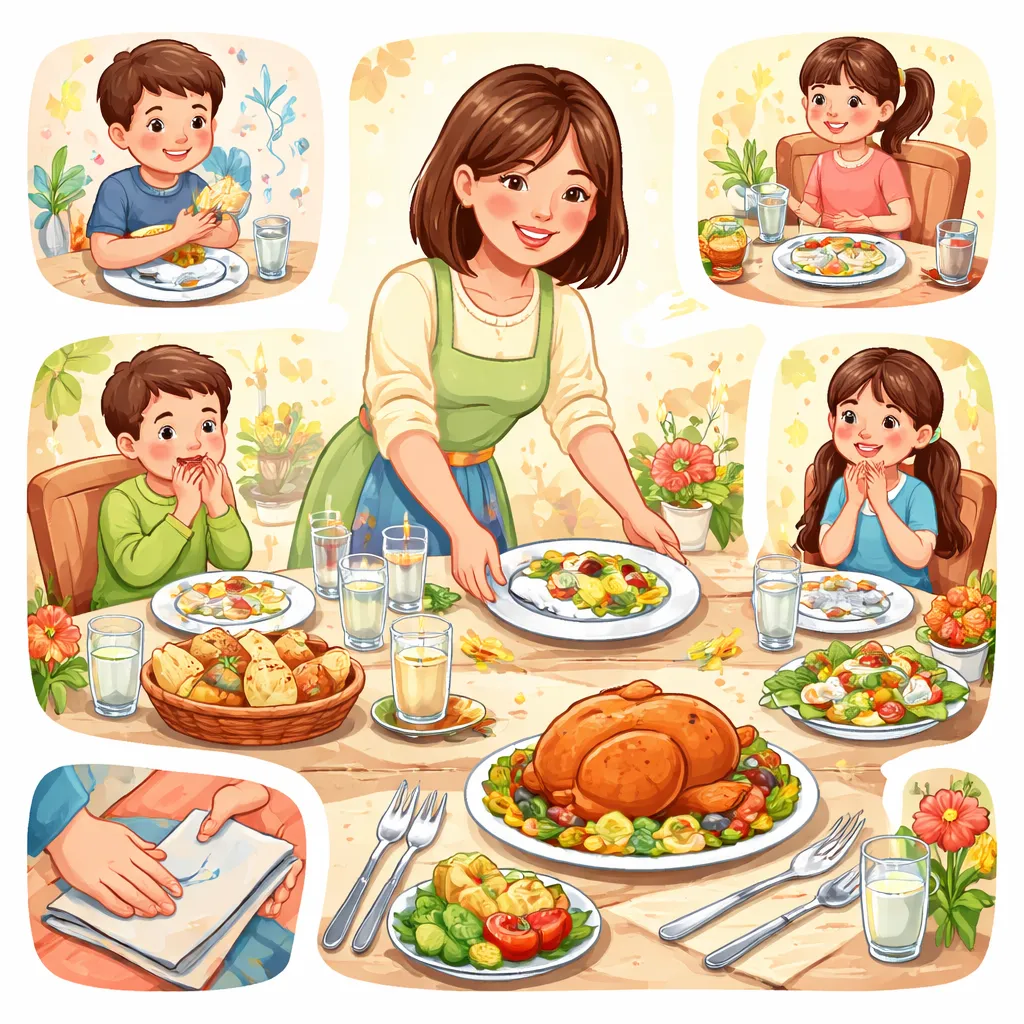
What are manners? Manners are kind and polite ways to behave. At the dinner table, they help everyone enjoy the meal. They show you respect the food, the cook, and the people with you. Our manners at the dinner table checklist is a simple guide. Let's go through it step by step. First, before the meal. Check one: Wash your hands. Clean hands are important. You are about to touch food. Check two: Help set the table. You can put out the napkins or the spoons. It is a nice way to help.
Now, when you sit down. Check three: Put your napkin on your lap. The napkin is for wiping your fingers and mouth. Check four: Wait until everyone is served. Do not start eating right away. Wait for the host or for everyone to have food. This shows patience. Check five: Say a nice word. You can say "Thank you for the meal" or "This looks delicious." In some families, they say a prayer. This is about being grateful.
During the meal. Check six: Use your utensils. Use your fork, spoon, and knife. If you are not sure which one to use, watch the adults or start from the outside. Check seven: Take small bites. Do not fill your mouth too full. It is safer and more polite. Check eight: Chew with your mouth closed. No one wants to see the food in your mouth. Check nine: Don't talk with food in your mouth. Finish chewing, swallow, then talk. This prevents accidents and is easier to understand.
Check ten: Use polite words. Say "Please pass the potatoes" and "Thank you" when you get them. Do not reach across the table. Ask for things to be passed. Check eleven: Sit up nicely. Try not to slouch or put your elbows on the table while eating. Check twelve: Try a little of everything. Even if you are not sure, try one bite. It is polite to the cook. These are the main points on our manners at the dinner table checklist. They make the meal smooth and pleasant.
Fun Interactive Learning
Let's play a game called "Manners Detective." During your next family dinner, be the detective. Use your manners at the dinner table checklist in your head. Did you remember to wash your hands? Check! Did you put your napkin on your lap? Check! Did you say "please" when you asked for the butter? Check! You can also gently notice when others use good manners. "Dad, thank you for passing the peas!" This turns dinner into a fun mission.
Another activity is to make your own "Manners Placemat." Take a big piece of paper. Draw the outline of a plate, fork, knife, spoon, and cup. Around the edges, write or draw pictures of the checklist items. Draw a soap bar for "wash hands." Draw a napkin. Write "Please" and "Thank you." Decorate it. Laminate it or put it in a clear plastic sleeve. Use it at dinner. It is a colorful reminder of your manners at the dinner table checklist. You can also play "Manners Charades." Write different manners on cards: "Chewing with mouth closed," "Asking for something to be passed," "Sitting up straight." Act them out for your family to guess. This is a silly way to remember.
Expanded Learning
Table manners are different all over the world. In some countries, it is polite to slurp your noodles. In others, it is rude. In some places, you eat with your hands. In others, you use chopsticks. The idea behind every manners at the dinner table checklist is the same: to show respect and make the meal comfortable for others. Long ago, kings and queens had very strict table rules to show they were noble. Today, our manners are simpler and about kindness.
Knowing good manners gives you confidence. If you are invited to a fancy restaurant or a friend's house, you know what to do. You won't feel nervous. Good table manners are a life skill, like reading or tying your shoes. They help you in business meals when you grow up, too. They show you are considerate. Let's make a manners chant. Chants are fun and easy to remember.
Wash your hands, and set the place, with a happy smile upon your face! Napkin in your lap, sit up tall, waiting kindly for one and all! "Please" and "thank you," words so sweet, make the dinner a special treat! Small bites, chew, and close your lips, no messy, noisy eating slips! Try new foods, and pass with care, showing everyone you're aware! These are manners, learn them well, a happy story they will tell!
What You Will Learn
You are learning about social etiquette, respect, and practical life skills. You are learning a comprehensive manners at the dinner table checklist that includes: washing hands, setting the table, using a napkin, waiting to eat, saying thanks, using utensils, taking small bites, chewing quietly, using please and thank you, sitting properly, and trying new foods. You are also learning words like manners, etiquette, polite, respect, and considerate.
You are learning polite and clear sentences. You can say, "Please pass the milk." You can express, "Thank you for cooking this delicious dinner." You can ask, "May I be excused when I'm finished?" You are using English to navigate social situations gracefully and show appreciation. This builds social confidence and relationship skills.
You are building important habits and awareness. You are building self-discipline. You practice patience and control. You are building respect for others. You consider their comfort. You are building gratitude. You appreciate the effort behind the meal. You are building coordination. You use utensils properly. You are building confidence. You feel capable in any dining situation.
You are forming a considerate and graceful habit. The habit of making every meal a pleasant experience for yourself and those around you. You learn that manners are not about being fancy, but about being kind and aware. Mastering this manners at the dinner table checklist makes you a welcome guest at any table and brings joy to family meals.
Using What You Learned in Life
Use your checklist at every meal, even breakfast. Make it a habit. At home, you can be the manners helper for a younger sibling. "Remember your napkin!" When you eat at a restaurant, use your skills. The waiter will be impressed. When you are a guest, your good manners will make your parents proud and your hosts happy. If you see someone forget a manner, you can gently model it. Just do the right thing yourself.
At school, during lunch, use your manners. It makes the cafeteria a nicer place. If your class has a party or a special lunch, you can be a leader. Remember to thank the people who prepared the food. The more you use your manners at the dinner table checklist, the more automatic it will become. Soon, you won't need the checklist because it will be a part of who you are〞a polite and pleasant person to share a meal with.
Closing Encouragement
You are a manners master. You are a polite and thoughtful diner. You are a kind and considerate learner. I am so proud of you. Learning and using this table manners checklist shows you have a big heart and a respectful spirit.
May every meal you share be filled with good food, good talk, and your wonderful good manners. Remember, the most delicious ingredient in any meal is kindness. You are learning to add that ingredient every day.
You are respectful, you are aware, and you are learning the language of grace and courtesy. Great work, my wonderful dining companion.